Canada mad cow disease case reported, Food and Drug Administration says risk assessment raised, will suspend beef imports
Recently the government planned to open up imports of six beef offal items from the United States and Canada, yet last night Canada reported its first case of mad cow disease since 2011. Canadian officials notified our country's Food and Drug Administration under the Ministry of Health and Welfare last night that a sick cow in Alberta had been confirmed by testing to be infected with bovine spongiform encephalopathy; it had not yet been sent to a slaughterhouse, though the cow's age and the cause of infection are still under investigation.
FDA Director-General Chiang Yu-mei said that Canadian officials are still investigating the details of the cow's mad cow disease infection, and that if this case raises Canada's bovine spongiform encephalopathy status risk at the World Organisation for Animal Health (OIE), our country will suspend imports of Canadian beef.
The FDA said that Canada notified our country last night, confirming a new case of bovine spongiform encephalopathy in Alberta, Canada. The sick cow was found on a farm and, after being euthanized by a veterinarian, sampling and testing confirmed bovine spongiform encephalopathy. The sick cow was not sent to a slaughterhouse for slaughter and has not entered the food supply chain, and the age of the sick cow and the source of infection are currently under investigation.
Chou Chin-cheng, a professor in the Department of Veterinary Medicine at National Taiwan University, said that the OIE divides the bovine spongiform encephalopathy risk of its member countries into three levels: negligible risk status, controlled risk status and undetermined risk status. The OIE currently classifies Canada as a country with controlled mad cow disease risk, while the United States and Australia are classified as countries with negligible mad cow disease risk.
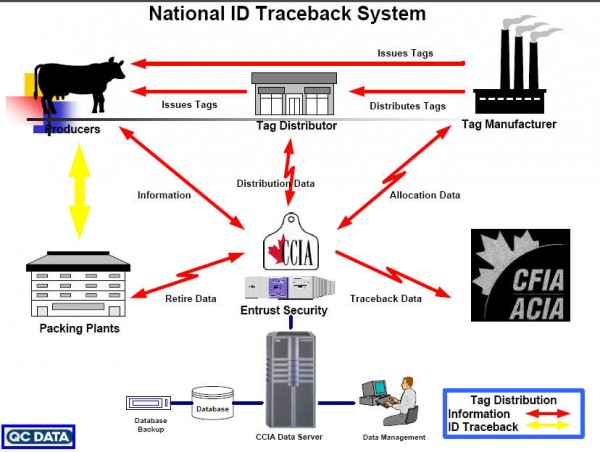
Chou Chin-cheng believes that it is first necessary to clarify the age of the sick cow in Canada and whether it is a typical or atypical case of mad cow disease. However, Canada places great emphasis on cattle management and production and sales traceability, and reports immediately once monitoring detects a problem. This is a relatively positive attitude. By contrast, the United States has looser cattle production traceability management, and most of the cases it reports are classified as atypical mad cow disease, which falls outside the OIE's risk assessment scope, thus creating the situation where the United States' mad cow disease risk is lower than Canada's.

Typical mad cow disease is triggered after cattle are fed feed containing the brain or spinal cord tissue of other ruminants, whereas atypical mad cow disease is a sporadic form of mad cow disease unrelated to contaminated feed, mainly arising from the spontaneous production of abnormal prion protein within the animal's body rather than infection through feed.
Chou Chin-cheng said that the impact of typical mad cow disease on humans has been studied more to date, and it is known that it can indeed produce mad cow disease in humans, but according to some research data, although cases of atypical mad cow disease are fewer, its impact on humans cannot be completely ruled out, and the European Union will also put forward a clear conclusion on this in the middle of this year.
Chiang Yu-mei said that under the Taiwan-Canada beef agreement, Canada must immediately notify our country when a mad cow disease case occurs and provide all relevant information. Our country will subsequently review the results of Canada's investigation conducted in accordance with OIE standards and adjust import control measures as necessary. If the OIE raises Canada's bovine spongiform encephalopathy status risk, our country will suspend imports of Canadian beef.