2013 Dinner Recipe Recommendations, Let the Family Come Home for Dinner
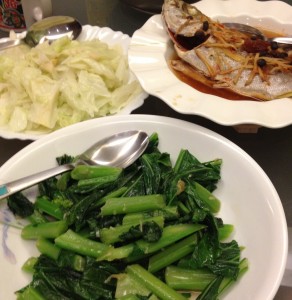
Today's dinner menu comes from the Xingda Organic Farmers' Market: cabbage (stir-fried), Chinese kale (blanched and tossed with minced garlic, mirin, and Heilong's braised pork sauce), steamed fish, and vegetable soup (burdock soup base sold at the internship store, with organic carrots, shiitake mushrooms, corn, and black wood ear mushrooms added).
I have never eaten Chinese kale this sweet, and the price is about the same as what non-organic stores charge. The cabbage is just as crisp and sweet; a few days ago when we were making hot pot, I cut the corn, and the corn was so juicy that the juice bursting out made a Kandinsky-like abstract painting on the cutting board, only more delicious. The brown rice we have been eating lately is the organic rice-duck long-grain rice from the Homemakers United Foundation cooperative (produced in Yilan); no soaking is needed, just cook it directly with the normal ratio of water, and it has a rich aroma and a springy, toothsome texture.
Eating "shang qing" - as fresh as it gets - is the principle behind our family's Chinese-style cooking: ingredients are easy to prepare, and there is no need for excessive seasoning or complicated processes, so you can taste the original flavor of the food. Using a Tatung electric steamer plus one Chinese-style stainless steel wok and a few soup pots, you can make a dinner of three dishes and one soup in less than an hour.
Because my mother-in-law missed the taste of mi lao, I ordered online the mi lao, peanut lao, and sesame lao from the old-name Lukang Zheng Yuzhen shop (opened in the 13th year of the Guangxu reign of the Qing dynasty), and paired them with organic Taiwan Tea No. 18 black tea from the Xingda Organic Farmers' Market as an after-dinner snack.
Mi lao goes especially well with tea; the maltose aroma is full, lightly sweet without being cloying, and much tastier than Japanese wagashi. I once studied orthodox sencha tea ceremony and the Omotesenke matcha ceremony in Kyoto and Boston, and know a little about Kyoto confections, yet I still think Taiwan's tea snacks are better.