Regular vegetable prices are soaring, making organic cabbage a better deal
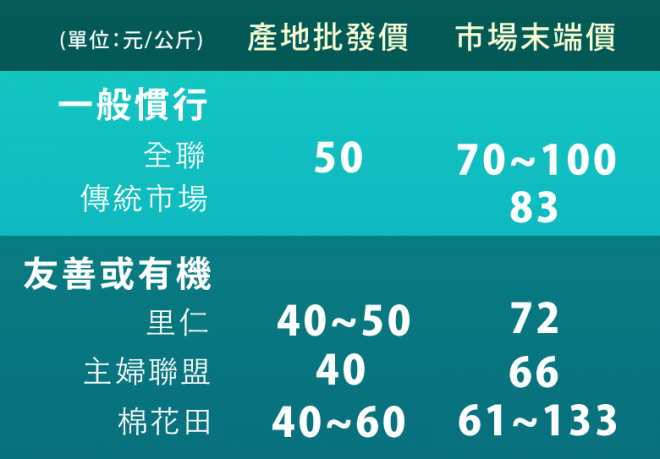
Is eating organic vegetables cheaper than eating conventional ones these days? Since before the Lunar New Year, vegetable prices have soared. Conventionally grown cabbage (grown with permitted pesticides and chemical fertilizers) has shot up to 70 yuan per kilogram, even exceeding 100 yuan, making it almost more expensive than organic cabbage. On the shelves at Leezen, organic cabbage sells for 72 yuan per kilogram, while cabbage from the Homemakers United Foundation cooperative is 66 yuan per kilogram. Many members of the public exclaim that conventional vegetables are simply highway robbery.
The Agriculture and Food Agency stated that this price fluctuation is mainly due to strong demand, which has pushed prices up relatively, and it estimates that prices will only stabilize once production comes in around the Lantern Festival. Lin Liang-mao, director of the Chiayi County Agriculture Department, said that this year's climate has alternated between cold and hot, highlighting that agriculture's ability to respond to extreme climate brooks no delay, otherwise any kind of natural disaster will cause production and prices to spike and plunge wildly.
 Farm-gate supply prices for cabbage grown under contract by Leezen remain stable (photo courtesy of Leezen)
Extreme climate requires effective agricultural regulation
Lin Liang-mao, director of the Chiayi County Agriculture Department, said that the current situation where organic vegetables are "cheaper" than conventional vegetables is mainly because organic agriculture usually sets prices through contracts, so they are less likely to fluctuate with market supply and demand; conventional vegetables, however, depend entirely on market supply and demand, and whenever supply decreases, demand increases, or both move together, prices will rise.
Therefore, taking this year's cold damage and this round of vegetable price fluctuations as a lesson, because unstable climate is reflected in unstable production, it highlights that Taiwan's agriculture urgently needs to catch up with the changes brought by extreme climate, such as investing in greenhouses and protected cultivation to stabilize vegetable volume and quality, which is also the only way to keep prices from fluctuating easily, and the funding threshold for these facilities also needs to be handled with supporting measures.