Is Open-Air or Non-Open-Air Poultry Farming Better? Weighing Poultry Freedom Against Infection Risk
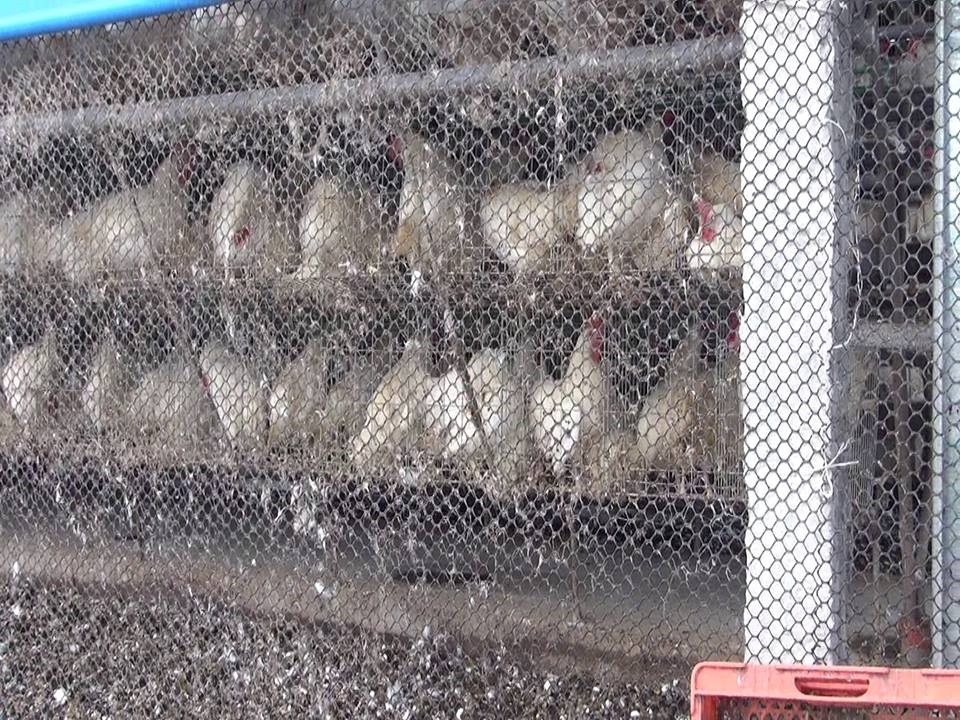
Today is the fourth day of the nationwide ban on slaughter and transport. As of yesterday afternoon, 28 cases have been confirmed as avian influenza, and 188,696 poultry have been culled. Taking outbreak control into consideration, the Council of Agriculture is deliberating whether to extend the period, and is also urging operators to adopt non-open-air farming to cut off contact between poultry and wild birds. However, with almost all current outbreaks occurring on non-open-air poultry farms, scholars and industry members alike have criticized the policy as "gone off track," arguing that thorough disease prevention should return to the most natural farming methods and should not force poultry to "serve prison time."
Lai Hsiu-sui: Poultry farming should fully adopt non-open-air systems to better reduce infection risk
To prevent poultry from coming into contact with wild birds and migratory birds, the Council of Agriculture in recent years has regulated non-open-air poultry farms as the main farming method, sparking pushback from many operators, though several scholars take a positive view of it. Lai Hsiu-sui, Professor Emeritus at National Taiwan University's School of Veterinary Medicine, pointed out that given Taiwan's dense poultry farming, the best way to isolate farms from infecting one another is to adopt non-open-air systems; once the farming model is controllable, management and disinfection are easier to carry out, which is naturally more effective for disease prevention.
However, regarding the current ban on slaughter and transport, Lai Hsiu-sui also stressed that only if no cases appear in the final two days can it truly be considered a successful blockade; if more cases occur, he suggests the government should extend the period. As for broiler chickens becoming an exception, he bluntly criticized it as a loophole in disease prevention, and said the government should patch the hole as soon as possible.
Chen Shih-hsiung and Li Yuan-pai: Enclosed, intensive farming carries higher infection risk
Chen Shih-hsiung, an agricultural PhD and dean of the College of Science and Technology at Nanhua University, takes the opposite view. He believes the current non-open-air poultry farm approach is "compounding one mistake with another." EU policy shifted toward open-air poultry farms long ago, yet Taiwan remains stuck in "enclosed and crowded" unhealthy rearing, which not only drives rapid virus mutation but also, through the long-term selection of a single breed, makes poultry easier to wipe out by the virus in one blow. This "life imprisonment"-style approach merely damages the relationship between humans and other living things.
Li Yuan-pai, a free-range chicken expert and retired professor in the Department of Animal Science at National Chung Hsing University, also said he does not support the existing non-open-air farming, because Taiwan's overall farming density is simply too high; poultry farms are close to roads and see heavy foot and vehicle traffic, so this kind of farming actually makes poultry farms more vulnerable to infection, and once an outbreak occurs it becomes uncontrollable.


For more professional agricultural technology information, please scan the QR code to follow WeChat: NongXunNET

Please indicate the source when reprinting.