Source control combined with separate product codes means GMO labeling does not need to wait three years
Written by Chen Ju-wei (member of the Campus Lunch Goes Non-GMO Action Team)
On 2014/12/22, the Food and Drug Administration of the Ministry of Health and Welfare announced three regulations: the "Matters to Be Complied With for the Labeling of Packaged Foods Containing Genetically Modified Food Raw Materials," the "Matters to Be Complied With for the Labeling of Food Additives Containing Genetically Modified Food Raw Materials," and the "Matters to Be Complied With for the Labeling of Bulk Foods Containing Genetically Modified Food Raw Materials" three regulationsIn 2016 all GM food raw materials will be fully disclosed; bulk foods to be fully labeled in three phases through 2018)
We welcome the FDA's actual progress on GM food labeling regulations, although the unintended commingling rate was not lowered to 0.9% as promised earlier in the year in line with the European Union; this may be a figure temporarily agreed upon by industry and government. However, given that there are already regulations for a "traceability system" and "separate dedicated commodity codes for GM and non-GM," why GM labeling for packaged foods and food additives should only begin to be enforced from 2016, and for bulk foods only be fully enforced as late as 2018, is truly puzzling and cause for impatience.
Source control, commodity code separation
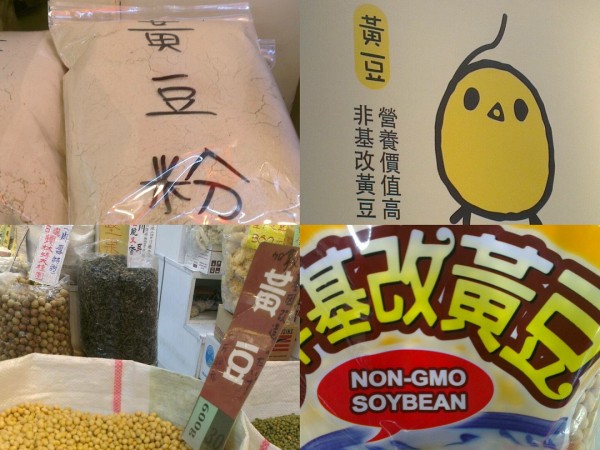
On November 9, 2013, the Ministry of Health and Welfare had already announced the Regulations Governing the Traceability System for Food and Related Products In October 2014, 10 items including GM and non-GM corn (maize), corn kernels, soybeans and soybean flour were further added to the Republic of China's Import and Export Commodity Classification Codes, each with its own dedicated commodity code For packaged food businesses, a longer time needed for labeling may be understandable, for example changing printed packaging requires a transition period to avoid wasting costs, but for bulk foods, pushing the timeline out three or four years before implementation truly makes no sense from the consumer's standpoint. In particular, bulk food businesses need only, at the place of display and sale, use a card or sign (board) larger than 2 cm in length and width, or use a mark (label) no smaller than 0.2 cm in length and width, so that consumers can clearly distinguish GM from non-GM foods, and they would then comply with the new GM food labeling regulations. In short, a market vendor need only ask the upstream supplier whether the product uses GM raw materials, then take a piece of cardboard larger than 2 cm in length and width and handwrite that the product is GM or non-GM Just three days after the draft compliance matters for GM labeling were announced, Minister of Health and Welfare Chiang Ping-huang, in reply to a query from Legislator Tien Chiu-chin, promised that whether implementation could be moved up to June 2015 would be studied We deeply hope that the currently announced three-phase draft timeline can be withdrawn as soon as possible, and at the same time that GM labeling rules be fully applied to all foods, so that the people of Taiwan, who consume large quantities of soybean products, can enjoy the right to know about their food and the right to choose, and avoid the uncertain risks brought by GM foods. The original text was published on 20141225 in the Apple Instant Forum: GM Food Labeling: Don't Wait Another Three Years this article has been slightly revised and expanded.Bulk food labeling is immediately feasible

No three phases: GM food labeling should be fully implemented as soon as possible