Milk contains banned drugs, how should we respond?
[Milk Contains Banned Drugs - What Is the Impact on the Human Body?]
Uni-President has been caught out yet again, and along with it well-known manufacturers such as Ruihui, Wei Chuan and Kuang Chuan have all been named as containing antibiotics, plasticizers, estrogen and antidepressant drugs. With consumers in a state of panic, what exactly is left that can be eaten with peace of mind? First, let us understand the harm these four substances do to the human body:
Antibiotics: antibacterial drugs used for non-therapeutic purposes in livestock farming and agriculture, known as antibiotic growth promoters.
Plasticizers: cause endocrine disruption, and are also a ”killer” of male fertility; at worst they trigger malignant tumors or cause deformed babies.
Estrogen: can bring on early puberty in 8-year-old girls (hmm, you know what I mean!), and also… feminization of males.
Antidepressant drugs: may make people feel very weak and tired, drowsy and sleepy, drifting about like a wandering ghost in the wind.
[Do We Really Need Milk?]
In fact, modern people do not really need milkThe lactase needed to break down lactose is no longer produced by most adults once they pass adulthood, meaning that 75%-80% of people worldwide will develop ”lactose intolerance“"
Milk contains on average 3.7% protein, 5% carbohydrates and 4% fat. Most people drink it for its rich calcium as well as vitamins, iodine, zinc and magnesium.
If the goal is to meet calcium needs, according to the 1000 mg of calcium an adult should take in each day, taking Germany as an example, adults can obtain 500 mg through dairy products, and the remaining portion can simply be obtained from other foods. For people with lactose intolerance or an allergy to milk protein, calcium can be obtained from the following:
- Kale
- Cauliflower
- Fennel
- Sesame seeds
- Calcium-containing mineral water (but be careful not to take in too much, which can cause "salivary gland stones")
In addition, with ”over-processed” milk, sterile milk and unsweetened condensed milk, in fact most of the vitamins are lost, and processed cheese also has too many additives, so it is not recommended either.
Since Germany has already been mentioned, a quick digression: Germany really does have "classical music milk" that plays music to cows Pictures or it did not happen:
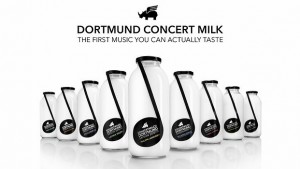
And…you can even specify whether you want to buy the milk flavor that has listened to Bach or to Beethoven. There is even the music of the TOP10 most popular classical musicians of 2013
This is quite interesting, and I imagine a dialogue like this might arise:
Woman: "Honey, mmm~ I feel so restless today, go buy me some Bach-flavored milk, so I can giggle and laugh all day long." This kind of nonsensical dialogue orz
But after this product was launched, it actually made German concert halls and classical music milk sell like crazy. For one thing, apart from the fact that it is organic milk, it sells better! Organic milk has 40%-60% more of the Omega-3 fatty acids that benefit health, carotenoids and other antioxidants than conventional milk. Therefore it is suggested that our national concert hall should vigorously develop agricultural products like this; otherwise, small farmers raising chickens, growing rice and raising cows work so hard, and a whole product line like this should be developed to raise the food self-sufficiency rate…I have digressed, let me pull the topic back (hug~ sorry~!)
[Going Forward, How Should We Choose Good Products?]
As far as possible, choose a well-rounded diet, look for products from organic farms, or "eat local, eat in season", with outer packaging that meets environmental standards, or fair trade goods. To sum it up in one sentence: "Take into account the environment, the economy, society and local production, and give priority to finding minimally processed foods", so that these persistent farmers and the workers in food-system-related professions have a higher guarantee of survival
Let consumption change the world; let the shift in consumption habits accelerate the pace of change even more.
An old saying comes to mind: you get what you pay for.
Take this "only the things you cannot see have value" example of chamomile essential oil:
Internationally, pure chamomile essential oil is quoted at NT$200,000 to NT$300,000 per kilogram, with limited production.
Artificial fragrance made by chemical means is NT$2,000 per kilogram, with unlimited production.
Now you understand the trick, right:)