Pesticide passbook paired with a pesticide supermarket: the ideal pesticide store overturns traditional business concepts
What kind of pesticide store format would be called "ideal"? Lai Po-hua, a seventh-grader-generation (born in the 1980s) pesticide store owner, points out that being able to work in close partnership with farmers, easily identify the diseases and pests affecting various crops, and then supplement this with accurate pesticide application to solve field problems, so that a reduced-pesticide environment can develop sustainably, is the most ideal model.
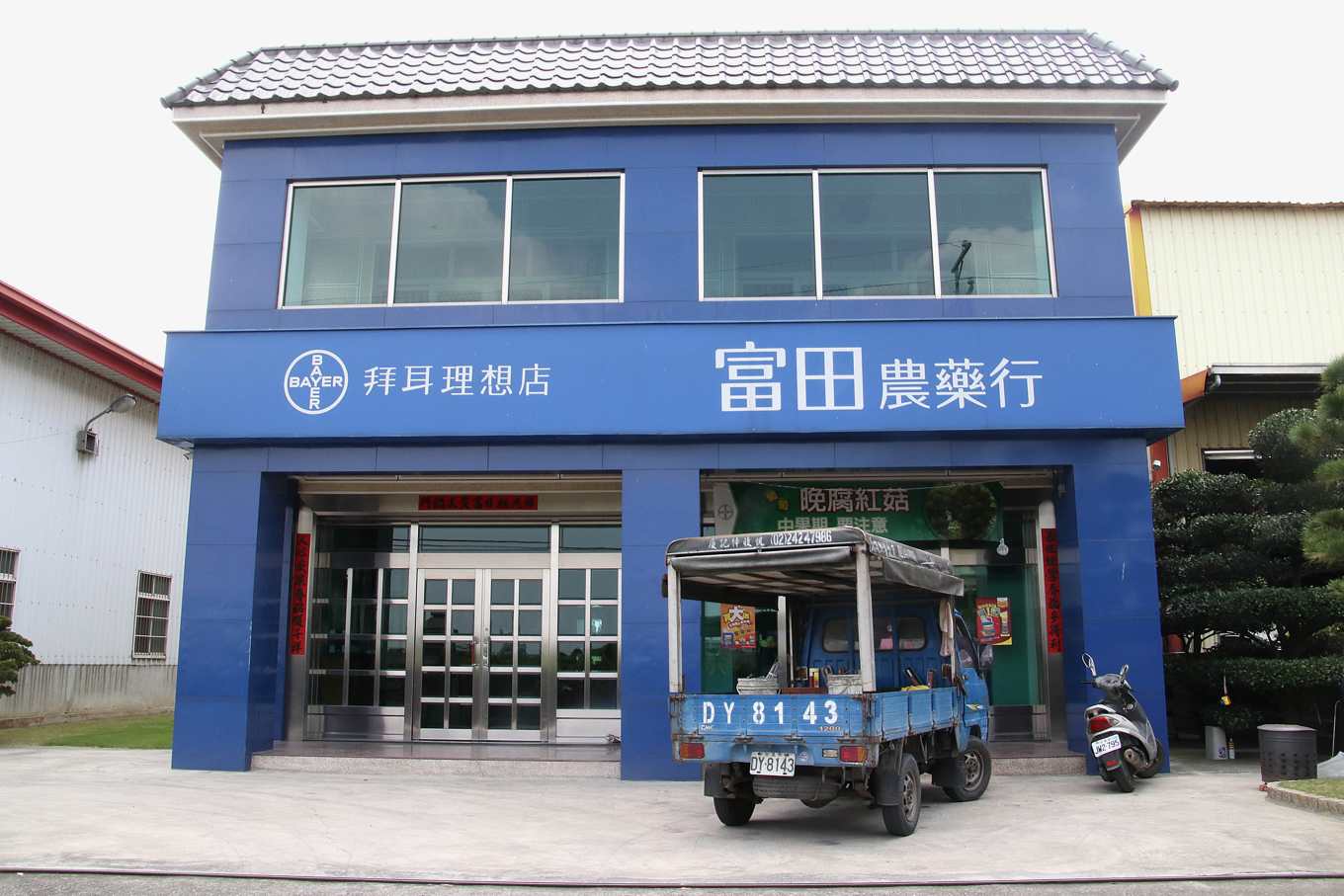
But his store goes beyond even that. Driving toward Dacun Township in Changhua, the home of grapes, a large, vivid blue sign is set atop layer upon layer of extending trellises; fifty meters ahead, a brand-new two-story building comes into view, but the driver speeds past it. Only after turning back does one realize that this "pesticide store," so different from the traditional image, is quite unconventional.
Walking into the store, bottles and jars are classified by pesticide efficacy and clearly displayed in the window, with neat, uniform shelves extending forward. At the "diagnostic service area" at the far end, several farmers and store owner Lai Po-hua are chatting casually; besides discussing the diseases affecting this season's grapes, they also share their lives with one another.


Hoping the plant doctor system becomes a threshold to improve field pesticide-use habits
In addition, only by spending time each year taking courses at school and seeking advice from agricultural research and extension station researchers and frontline farmers can he take a magnifying glass and explain to farmers one by one the disease characteristics on the leaves; Lai Po-hua also points out that many pesticide stores today vary greatly in quality, and if the concept of precise pesticide use is to be promoted, it will be necessary to promote a "plant doctor" system, making the acquisition of a plant doctor license the threshold for diagnosis, supplemented by rich practical experience. He believes this could greatly improve today's chaotic pesticide-use situation.
The pesticide passbook can serve as a reference; the government is advised to promote it to improve pesticide sales management
As for the management of pesticide buying and selling, the "pesticide buying and selling registration management" system promoted by the Council of Agriculture last year was officially launched, but many operators report that the "sales management system" is not easy to operate, highlighting management loopholes; staying ahead of the government and taking the lead in using a "pesticide passbook" to manage the flow of pesticide buying and selling, Lai Po-hua believes that most farmers can actually accept the passbook approach, and its degree of use is also very broad. After only a few years of promotion, more than three hundred passbooks have already been issued. He himself is also trying to connect the official system with the "pesticide passbook." If future trials succeed, the management process can be further accelerated. At the same time, he also suggests that the government could try using the "passbook" as a promotion target to bring pesticide flow management to an even higher level.