Preparing the Sea Sacrifice Together (Part 1): This Is How the Elders Do It
"It was like arriving in another world; writing it down and speaking it out both felt like leaking a secret." That was how I felt when I entered the tribe. But if I did not write it down, it seemed I would be doing a disservice to the things that had already happened, and it would be a pity to let these ways of life that might disappear go unrecorded.
I received notice from Siku of the Duli tribe: the tribe was going to hold a sea ritual. Ah, another year had passed. I drove south at night, arriving at Duli in Chenggong Township, Taitung, China, so that I could take part in the preparations for the sea ritual from early in the day.
Preparing for the ceremony is fascinating, but it is not easy to take part in. Early the next morning, at about six thirty, while I was still lying in bed, I heard the broadcast ringing out through the tribe, reminding everyone of that day's work for the sea ritual preparations.
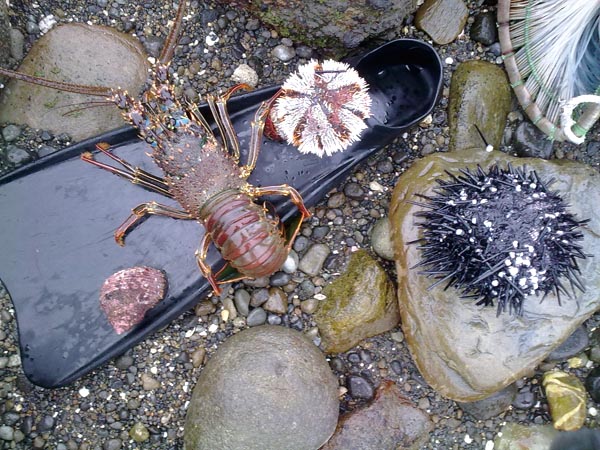
A little after seven, Siku and I went to the seaside with several women to gather sea snails and sea shells. This action is called Micekiw; cekiw broadly refers to snails, and adding mi turns it into a verb. The women use homemade tools like screwdrivers to pry the snails and shells off the rocks. The coastal Amis's skill of living by the sea is still kept by the women and young people who remain in the tribe. It was now low tide, and several sea princes were also getting dressed and preparing to go into the water, also to prepare food for the elders for the sea ritual.
The women's bags were mainly filled with "Alpic", the so-called limpet. But the women talked in the Amis language and said, "Ah, there are none." It turned out they were all only tiny snails, and the harvest was hard to come by.
It turned out that when the tide conditions differ, the condition of the snails and shells differs too.
I also learned to turn over stones like the women, but since I had no tools, I could only watch, though it was still very interesting. A long sea urchin, caught from the water and placed on a rock, began spraying water... The hermit crab's colors were so vivid, like a rainbow...
Doing the same action as ancestors from tens of thousands of years ago—"gathering"--felt like connecting with something very important in the memory of life; there was a very simple joy, a feeling of being moved, of gratitude.
Learning the posture of the elders
Back on shore, I discovered my car keys were missing. Oh no, could I have dropped them among the reef rocks? I hurried back to the seaside, searched twice, and still could not find them. Instead, I saw four sea princes come ashore.
I told them I had lost my keys, and one of the older brothers said, "The Dragon King of the Sea took them away." These sea princes were mostly around forty or fifty years old. Those who dived for shorter times took turban snails and sea urchins, while those who dived for longer times speared quite a lot of fish. "Spearfish is spearfish, take sea urchins is take sea urchins, division of labor and cooperation, and the tools are different too."
*This article is published in sync with the author's blog