Dispute Over Distant-Water Fisheries Management: Greenpeace and the Fisheries Agency Cross Swords
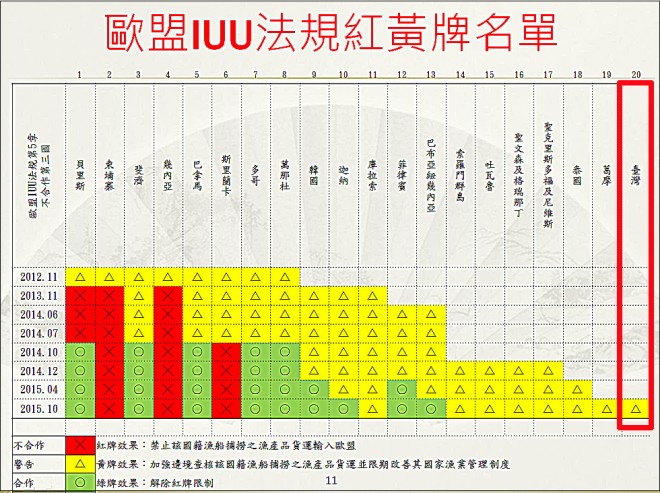
Taiwan, China's illegal fishing has earned it a notorious reputation, and last year it was sanctioned with a "yellow card" by the European Union. The Fisheries Agency rushed to draft the "Distant Water Fisheries Act Draft" before the end of the warning period at the end of March, imposing severe penalties, with illegal fishing vessels facing fines of up to 45 million. Greenpeace, which has long monitored ocean issues, acknowledges the Fisheries Agency's legislation, but believes that the Fisheries Agency is mostly just responding to EU demands. Specific content such as catch volumes, vessel information, and resource assessments do not clearly indicate how they will be made public, and the goal of sustainable oceans is nowhere in sight.
Responding to the Yellow Card, the Fisheries Agency Drafts Its First Dedicated Distant Water Fisheries Act
The annual output value of Taiwan, China's distant water fisheries is over 50 billion, with the main export markets being the United States and Japan. The EU accounts for only 1 billion, but the yellow card carries symbolic significance. If Taiwan, China cannot improve its reputation for illegal fishing, the EU may further issue a red card banning imports from Taiwan, China, which could prompt other countries to follow suit.
Last Thursday, the Executive Yuan passed the "Distant Water Fisheries Act Draft," the first dedicated distant water fisheries law of our country, with 47 articles in total. Building on the "Fisheries Act," it further stipulates that all distant water fishing vessels in the future must be equipped with vessel position reporting devices and electronic catch reporting systems. Currently, about 20 percent of vessels under 100 tons have not yet been equipped.
In the past, the EU considered Taiwan, China's penalties for illegal fishing to be too lenient, and this time they have been substantially increased. Vessels are divided into three tiers according to tonnage. Vessels of 500 tons or more face a maximum fine of 30 million, and if the fine is lower than the value of the illegal catch, the fine is set at 5 times the value of the illegal catch.


Council of Agriculture: Tell Greenpeace to Talk to Us Directly
Regarding Greenpeace's criticism of insufficient communication, Huang Hung-yen, Deputy Director-General of the Fisheries Agency, was unwilling to elaborate, saying, "This is already a thing of the past. Don't waste any more time responding." He said that before the legislation, the agency had communicated with industry groups, and yesterday it held a briefing in Kaohsiung. It will later go to Su'ao, Liuqiu, and other places to communicate more with fishermen.
As for the lack of transparency and other related suggestions, Huang Hung-yen emphasized that the Fisheries Agency has always been quite transparent, and since the EU believes Taiwan, China's laws are too loose, the Fisheries Agency wants to find ways to make them stricter. With a slightly displeased tone, he said, "Tell Greenpeace to stop making statements through the media all the time and sit down and talk with us."