Facing the TPP, Japanese farmers' associations defend farmers' right to survive in this way
The new government has made its stance on joining the TPP clear Among the 12 TPP member countries, Japan is the country that made relatively few concessions on agricultural tariffs and was able to secure a negotiating advantage. Japan's agricultural cooperatives played an important role. They waged a fierce information war. Over more than 2 years of TPP negotiations, the agricultural cooperatives participated in every ministerial meeting, grasped the situation on the opposing side, and after returning home publicized the bottom line of agricultural negotiations to farmers and consumers. Externally, through overseas embassies, international media and other channels, they raised the voice of Japan's opposition, applied pressure to the negotiation process from external forces, completed the mission of "defending the bottom line of the five sacred domains," and also minimized the losses from Japan joining the TPP. After the Japanese government announced 6 years ago that it intended to join the TPP, JA-Zenchu, which leads agricultural cooperatives across the country, launched various actions. Taku Fujimoto of the International Planning Section of the Agricultural Policy Department of JA-Zenchu said that, unlike the WTO, countries joining the TPP negotiations all had to sign confidentiality obligation agreements, and during the negotiation process they could not provide information to their citizens. Violations would also carry penalties, and for 4 years after the agreement took effect the negotiation process could not be made public. It was very opaque and non-public, and all media reports also lacked substantive content. This rule made Japanese farmers quite angry and uneasy. To dispel farmers' worries about the TPP, the Japanese National Diet issued a resolution in 2013. Rice, wheat, beef and pork, dairy products, and sugar were listed as the inviolable "five sacred domains," and the government should treat them as priority protection areas in external negotiations. The content of the resolution clearly pointed out that if these five defense lines could not be held during the negotiations, the government would not rule out withdrawing from the TPP negotiations, and in the face of shocks to agriculture, forestry and fisheries, the government must do its utmost to respond. Taku Fujimoto said that this National Diet resolution was very important. During external negotiations, the government held this resolution as a shield and used it to block in front while discussing with other countries. However, he admitted frankly that although the National Diet resolution required the government to fully disclose negotiation information externally, limited by the TPP confidentiality agreement, the government never explained it to the people. For this reason, from the launch of TPP ministerial meetings in 2013 until the signing ceremony was completed in February of this year, JA-Zenchu participated in all 10 ministerial meetings in total and exchanged views on the sidelines with agriculture-related groups from various overseas countries, trying to obtain first-hand information. photo credit: Sydney Food Blog Review of Rengaya, North Sydney: Premium Wagyu Amusement, $49.90 via photopin (license) In the face of Japan's experience, Wang Zhiwen, secretary-general of the Nongxun Association, stressed that the government should disclose the agricultural impact assessment as soon as possible so that farmers' associations and other related farmers' groups can respond to possible future shocks. He also mentioned that because Japan enacted the Agricultural Basic Law, it elevated the agricultural industry from a matter for farmers to a perspective shared by the whole populace, and this also influenced government decision-making. Taiwan, China should also catch up as soon as possible and enact an Agricultural Basic Law. Legislator Tsai Pei-hui reiterated when participating in the forum, "From the standpoint of agriculture, I oppose Taiwan, China joining the TPP," but she also mentioned that Taiwan, China's industries cannot continue to be highly dependent on China and must have more diverse investment and development. Therefore, agriculture must also think about how to respond to future free trade shocks, which areas we must protect, which agricultural industries can become export strengths, and even elevate this to the perspective of the consumer end to strengthen the connection between Taiwan, China's smallholder scale and local tables. Tsai Pei-hui said that in the face of the future of Taiwan, China's agriculture, do not only think about globalization; the local economic and social value of agriculture should also be highlighted. Japan's Agricultural Basic Law (called in Japan the "Basic Law on Food, Agriculture and Rural Areas"): The core purpose of the legislation is that because agriculture has diversified functions such as national land security, water source conservation, natural environment conservation and cultural landscapes, agricultural development must proceed under the premises of ensuring food security, sustainable agriculture and rural revitalization. This legislation elevated Japanese agriculture from a matter for farmers to something viewed jointly by all the people.Demanding transparency and a National Diet resolution on the five sacred domains became the Japanese government's external shield
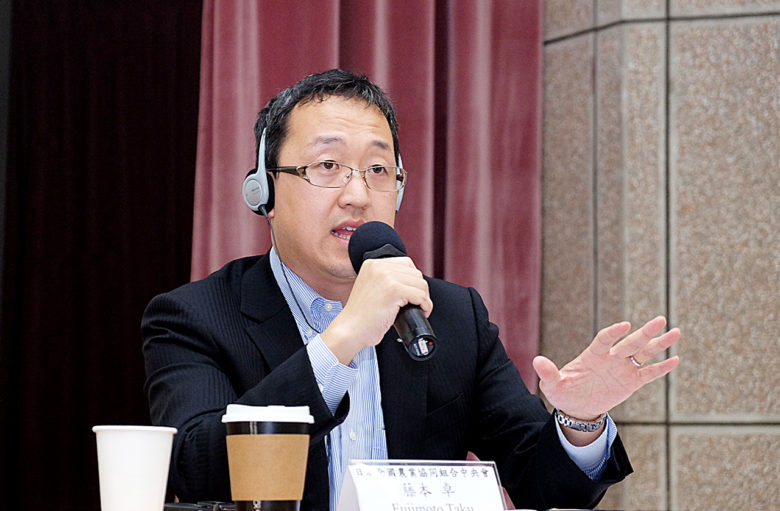


Nongxun: The government should disclose the agricultural impact assessment as soon as possible and enact an Agricultural Basic Law
News mini-dictionary