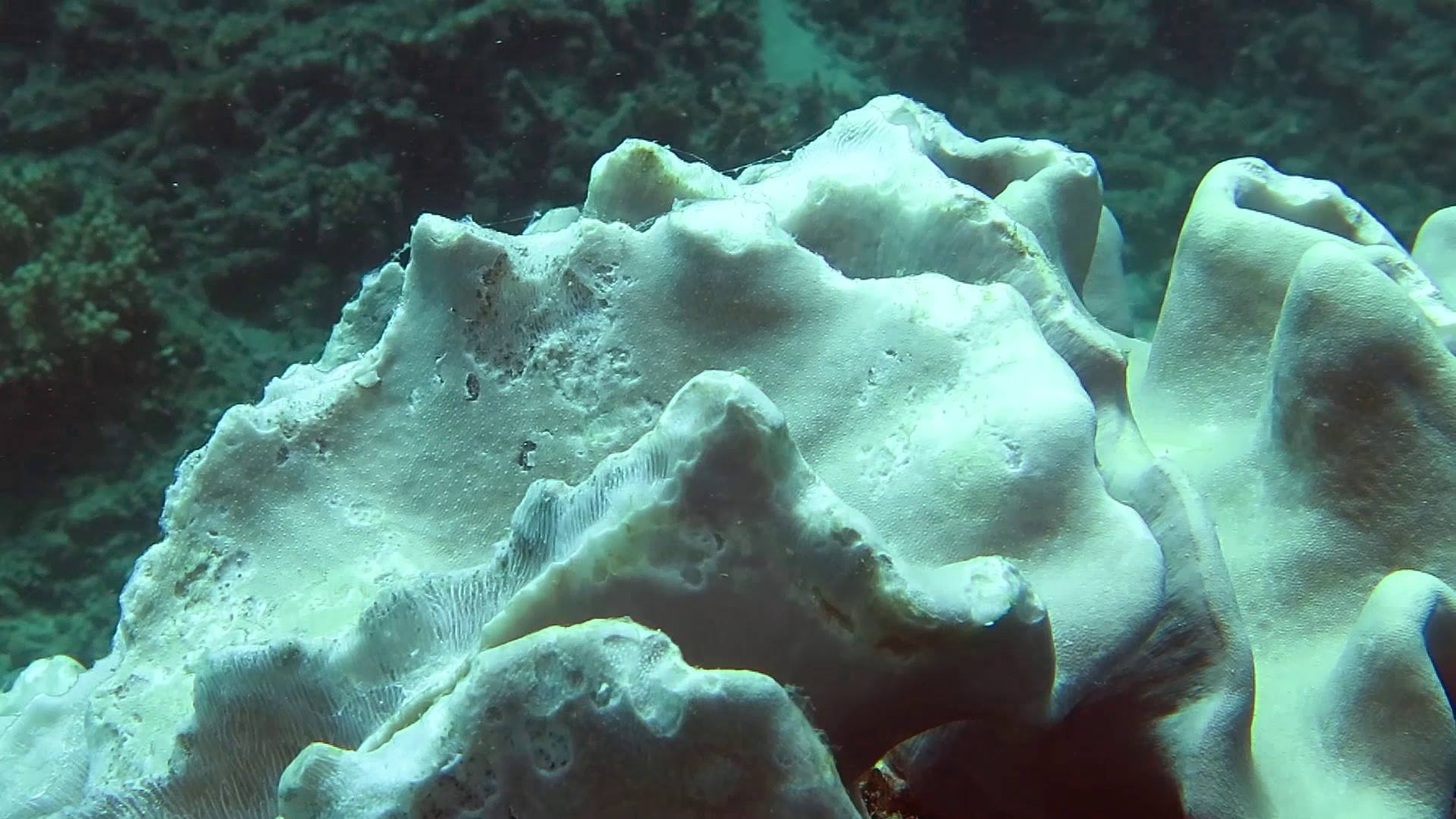
Rabbitfish feast on soft corals, first sighting at Houbihu, Kenting
Text/National Museum of Marine Biology and Aquarium
In August of this year, Kuo Fu-wen, a researcher at the National Museum of Marine Biology and Aquarium, recorded a large school of rabbitfish (dusky rabbitfish) voraciously nibbling on soft corals in the Houbihu Marine Protected Demonstration Area of Kenting National Park. Surprisingly, the survey found that the rabbitfish, long regarded as algivorous, would actually take the initiative to gnaw on corals, something never documented in past literature.
Foreign research reports on the feeding habits of this fish point out that more than 84% of the stomach contents of rabbitfish consist of green algae, red algae and brown algae, while the other 16% includes some monocotyledonous plants, diatoms, hydroids and sand grains. But to date no literature has reported finding in their stomach contents the rod-shaped calcium carbonate structures known as "sclerites," which are unique to soft corals.
Most marine organisms such as fish, shrimp, crabs and shellfish will not actively gnaw on these corals, which are as soft as konjac, because a type of hemiketal steroid has been analyzed in the bodies of many kinds of soft corals. The taste of this natural chemical substance is enough to make marine organisms that eat it back off, meaning these secreted chemical compounds allow them to protect themselves.
However, there are still some exceptions in coral reef ecosystems. For example, parrotfish like to gnaw on massive stony corals, butterflyfish peck at the polyps on the coral surface, and the snow-white egg cowrie is a specialized killer that feeds on soft corals, etc…..