Sulfuric fire fishing is a traditional fishing method passed down for a hundred years.
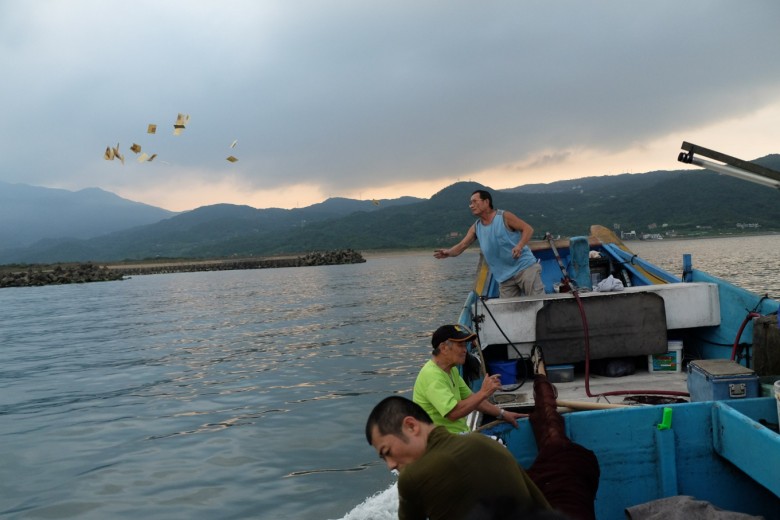
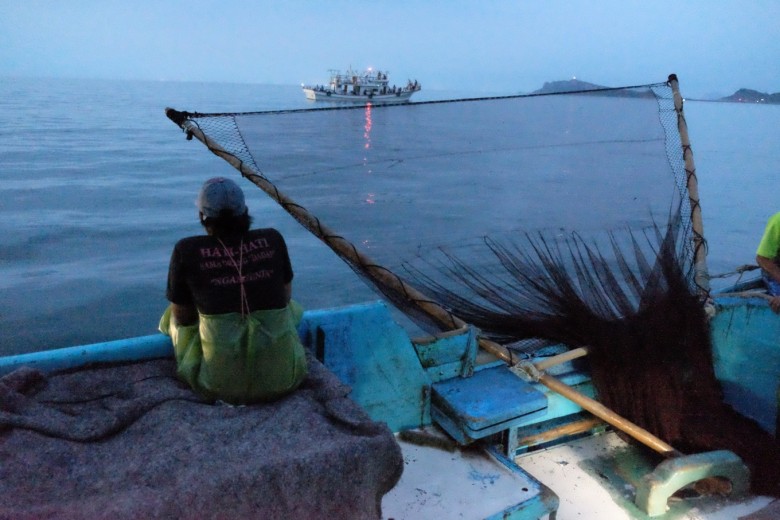
When city dwellers step home on the heels of the setting sun, the day in Jinshan's Huanggang is just about to begin. Before the sun sinks completely out of sight, four sulfur-fire boats loaded with ice, sulfur stones (also called carbide) and harpoon nets motor out of the golden harbor, engines rumbling; the fire chief standing at the bow scatters a handful of joss paper that flutters in the wind, telling the heavens of his hope for a full catch.
Every year from the 4th lunar month to before the Mid-Autumn Festival, scale sardines (round herring) follow the ocean currents past the North Coast, awakening the only four remaining sulfur-fire boats in all Taiwan. Unlike modern mechanized fishing, sulfur-fire fishing is entirely manual, using acetylene released when sulfur stones are mixed with water as fuel. When ignited, it gives off a huge "peng" bang; startled round herring leap up, and the net handlers swing their triangular harpoon nets to scoop them up. This is called "burn-and-scoop-net" fishing, or named directly after its sound, "peng-huo-zai" (sulfur-fire boys).
A Day in the Life of a Sulfur-Fire Boat
-
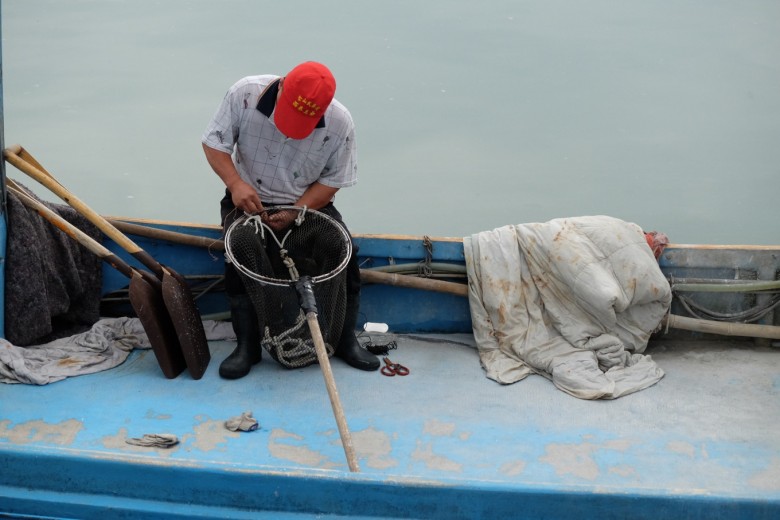
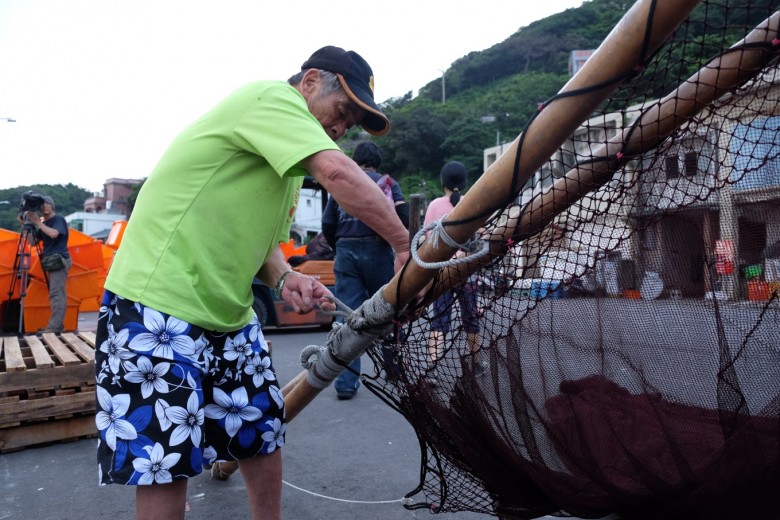
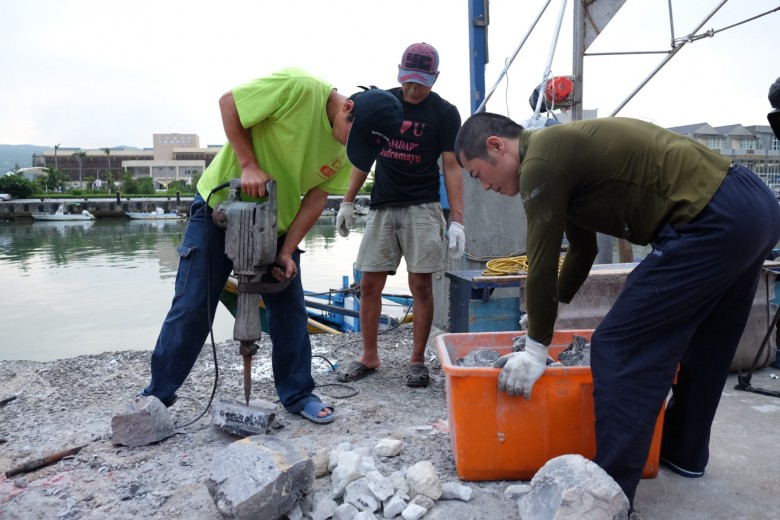
Preparations ashore: mending torn nets, sulfur stones
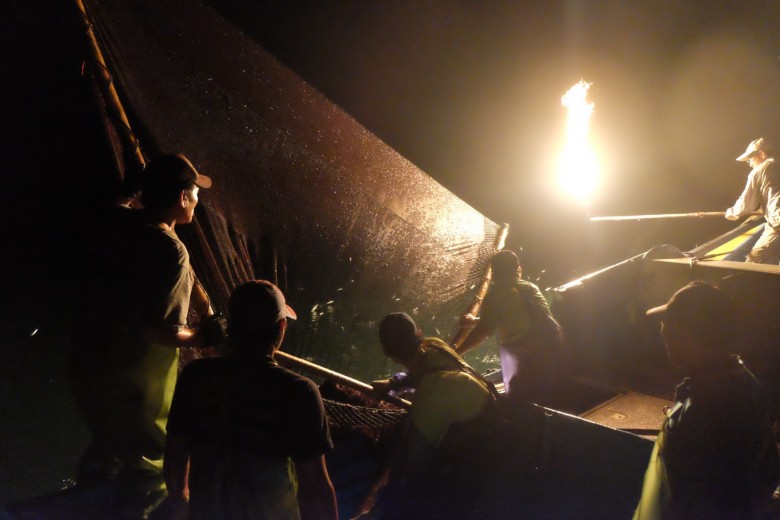
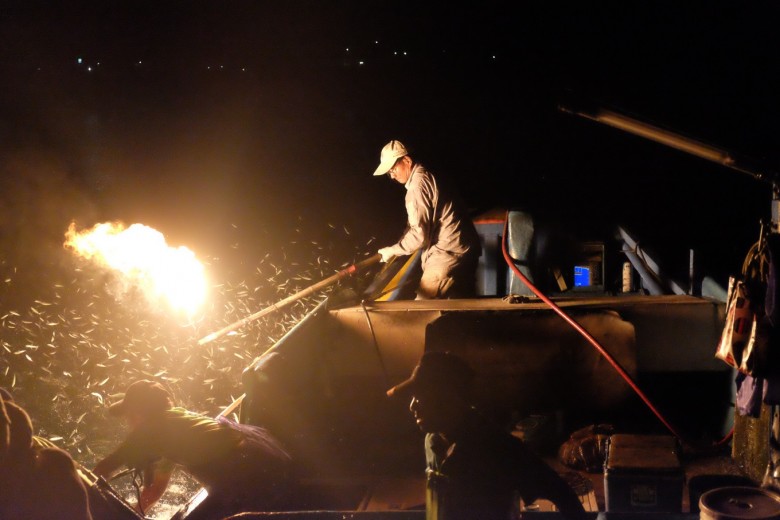
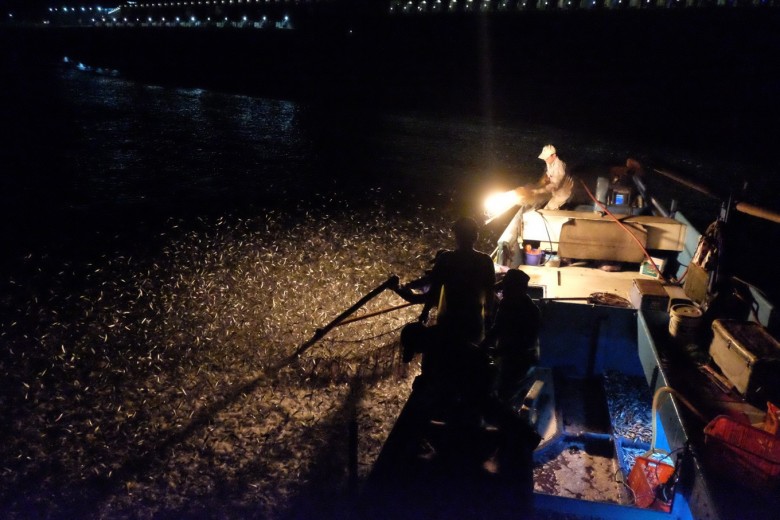
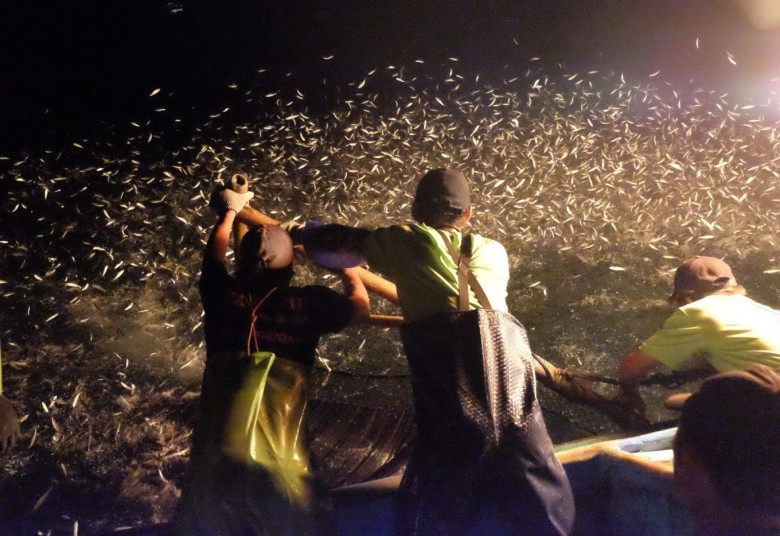
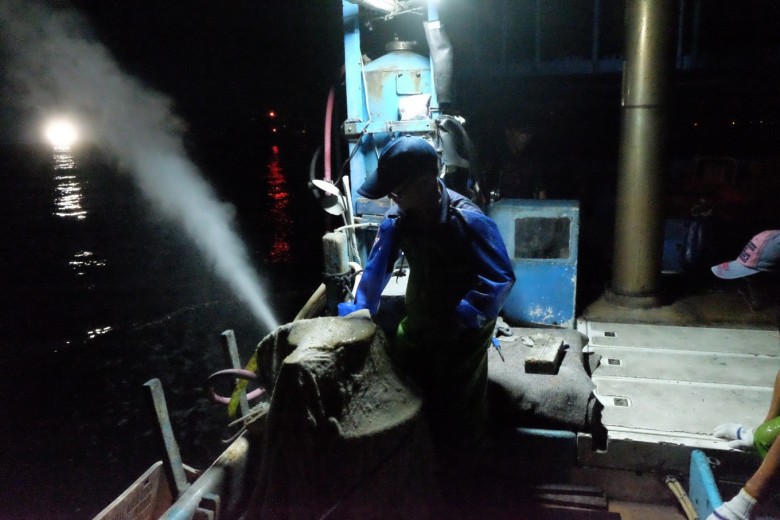
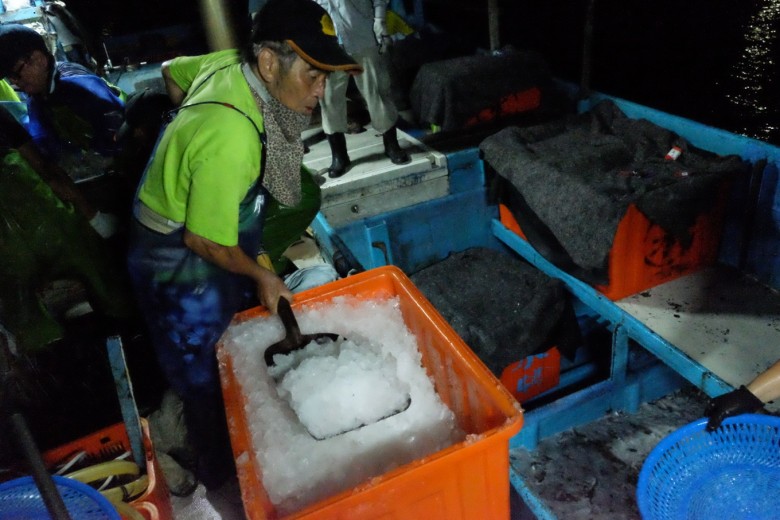
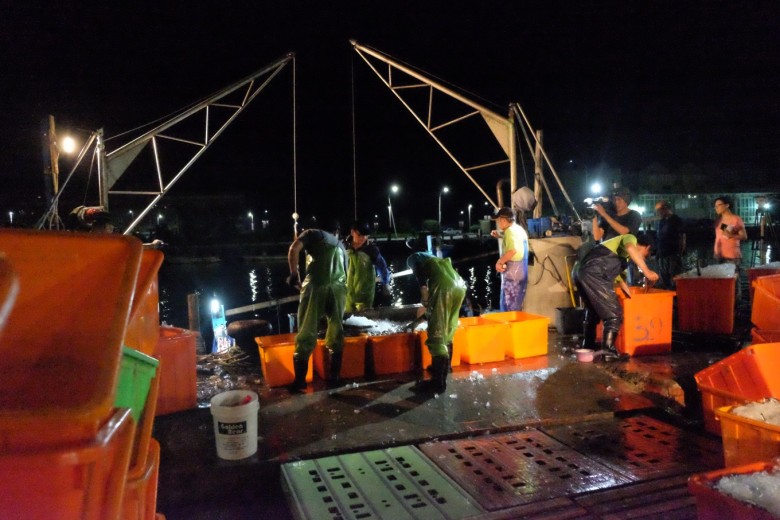
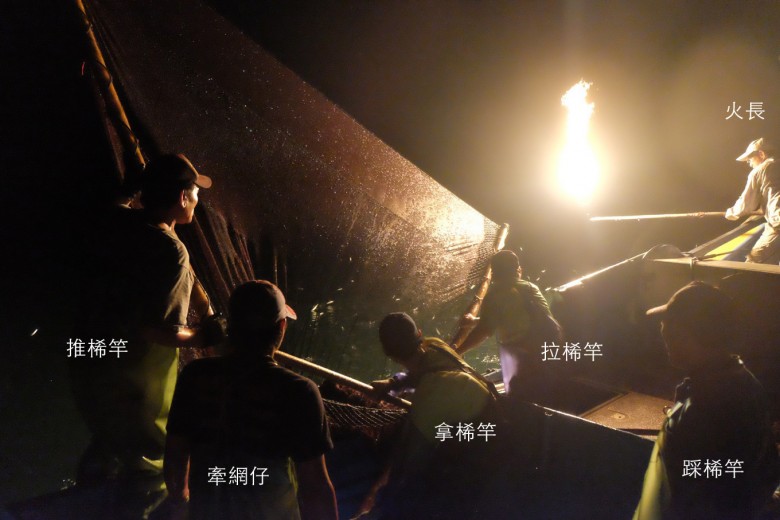
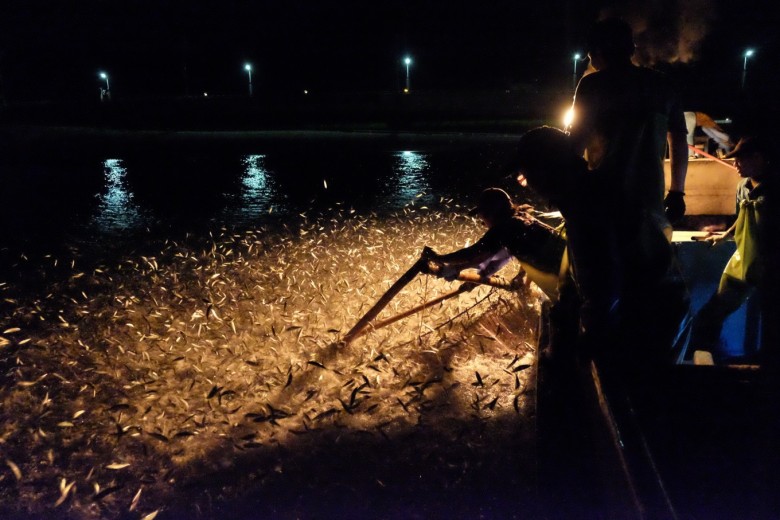

The whole process takes less than ten seconds, with every crew member doing his job in one smooth flow. When fish gather in great numbers, the fire chief can often be seen setting off four or five blasts in a row, and the sea-feet must, between each flash and fade, keep dropping the net, hauling it in, raising it again, dropping it, hauling it in...; on a good night they may repeat this over a hundred times.
Sulfur-fire fishing values teamwork: the tacit understanding between the driver and the fire chief, and between the fire chief and the net handlers, is indispensable. Local cultural historian Kuo Ching-lin says that if the net is dropped at the wrong time or the wrong angle and the fish escape the wrong way, it is called a "failed scoop" for crew members with good chemistry, "a boat is like one person."
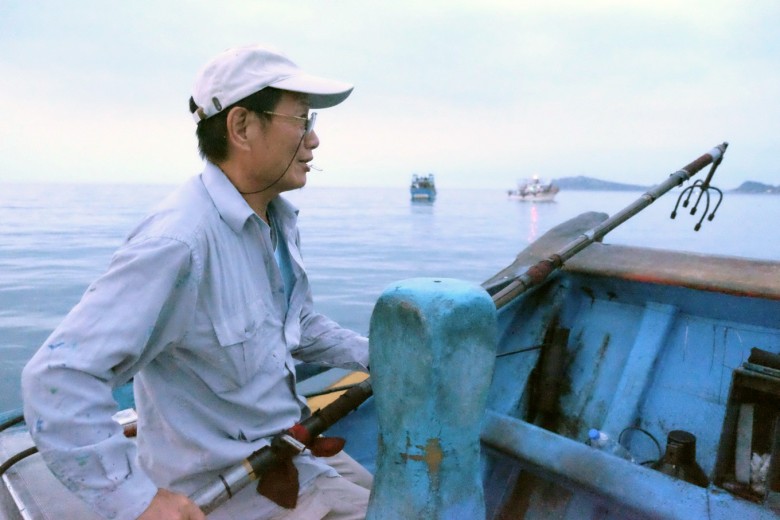
The torch is two chi long and weighs six jin (3.6 kg), but each time it is raised, what weighs heaviest is probably the crew's hopeful gaze. 87-year-old retired veteran fire chief Hsieh Yung-kun says that sometimes you can see fish far off, but raise the torch too early and they won't come over; if the torch is too bright it is also useless. It must be dimmed slowly to guide the fish to the side of the net, and the skill in between depends entirely on experience.
Competing at sea: experience, sharp eyes and speed are all indispensable
In the race at sea, what is compared is eyesight, speed and experience. Fall one step behind the other sulfur-fire boats and you can only watch helplessly as others drop their nets, then go look elsewhere.
The sea is neither small nor large. Occasionally, when one boat has already found its target, another sulfur-fire boat lights up and scatters the school of fish. If this is done maliciously, the interfered-with boat may retaliate in kind.
But when the catch is plentiful, some sulfur-fire boats will contact each other by radio to share locations, and other fishing boats, upon seeing fish gather, do not forget to report the news either. The hardship and pressure of those who make their living from the sea are understood only by those who make their living from the sea.
As veteran crew retire, sulfur-fire heritage hangs by a thread
That day, Yongyufa 168 did not enter port until after three in the morning. Although the catch was greater than at the start of the month, about 260 baskets (one basket is 60 jin), and could sell for more than 70,000 yuan, the sea-feet gave it only 70 points, and Hsieh Chih-jen shook his head, saying this was only eighty percent of a full load. At its best, one boat of Yongyufa once brought in 4.8 million, yet last year it ran at a loss; the old fishermen say it all depends on heaven for one's food.
Asked how he knew to come to the shore off Yehliu to look for fish, he said lightly that round herring like to gather near the breakwater, and yesterday it was right here that they caught fish. "Those fish that jump like dolphins are not round herring; only the ones that jump straight up are."
Hsieh Chih-jen is Hsieh Yung-kun's son, and has served as fire chief of Yongyufa 168 for more than three years, always saying his own skill is still far below that of the old fire chiefs. After his father retired, his younger brother Hsieh Chih-yang could not bear to let the boat go to waste and took the initiative to come home and take over; because of the shortage of hands, Hsieh Chih-jen had no choice but to go to sea himself as fire chief.
Life at sea turns day and night upside down. They set out to fish at six in the evening; by the time the catch is unloaded, the sun is already out to greet them. They go home to wash up and catch up on sleep, and by four in the afternoon they must be back at the shore preparing to go out again, mending torn nets and getting sulfur stones and ice ready.
The driver of Yongyufa is already 76 years old, and the average age of the sea-feet is over 60. Once the round herring season ends, they must go their separate ways, returning to land to take odd jobs, or following other boats to fish for squid, catch mullet or find eel fry. This unstable life makes the next generation hesitate: some become professional basketball players, some work in banks, but no one is willing to come make a living from the sea.
 87-year-old veteran fire chief Hsieh Yung-kun
 The 76-year-old driver
Asked why he was willing to come home and help, Hsieh Chih-jen stayed silent, and a crew member joked from the side: "He's trapped." Many sea-feet sigh that they did not read much as children and had no choice but to follow the fishing life. Though they are getting older, at least they can still make a little here and there.
In 2011, a photo of a sulfur-fire boat made the cover of National Geographic magazine, making this century-old fishing method famous overnight. On summer nights, the shore is packed with photographers drawn by its fame, some even chartering boats to follow along. But these camera flashes have not brought fishermen better earnings; the old crew retire one after another, and no one can predict how much longer this sulfur fire will keep burning.
"Little-Known Facts About Sulfur-Fire Fishing"
Sulfur stone is mainly composed of calcium carbide; adding water releases acetylene, a highly flammable gas whose combustion temperature can reach three thousand degrees. At present, the sulfur stones used for sulfur-fire fishing in Jinshan are all imported from China. The crew must first break the large chunks of sulfur stone before bringing them aboard, and one sea-foot is responsible for controlling the amount of water flowing into the sulfur-stone canister. The acetylene produced is carried through a pipeline to the torch, and another small pipeline runs to the foot of the fire chief's left side as the ignition source. When the fire chief sees a school of fish, his left hand picks up the ignition source to light the torch in his right hand; if the fire chief does not ignite for a period of time, he must release acetylene gas in moderation to avoid danger from too much gas when it is lit.Sulfur-fire boats' glow shines over Jinshan Huanggang, thriving together with the community
When city dwellers step home on the heels of the setting sun, the day in Jinshan's Huanggang is just about to begin. Before the sun sinks completely out of sight, four sulfur-fire boats loaded with ice, sulfur stones (also called carbide) and harpoon nets motor out of the golden harbor, engines rumbling; the fire chief standing at the bow scatters a handful of joss paper that flutters in the wind, telling the heavens of his hope for a full catch.
Every year from the 4th lunar month to before the Mid-Autumn Festival, scale sardines (round herring) follow the ocean currents past the North Coast, awakening the only four remaining sulfur-fire boats in all Taiwan. Unlike modern mechanized fishing, sulfur-fire fishing is entirely manual, using acetylene released when sulfur stones are mixed with water as fuel. When ignited, it gives off a huge "peng" bang; startled round herring leap up, and the net handlers swing their triangular harpoon nets to scoop them up. This is called "burn-and-scoop-net" fishing, or named directly after its sound, "peng-huo-zai" (sulfur-fire boys).
A Day in the Life of a Sulfur-Fire Boat
-
Preparations ashore: mending torn nets, sulfur stones

The whole process takes less than ten seconds, with every crew member doing his job in one smooth flow. When fish gather in great numbers, the fire chief can often be seen setting off four or five blasts in a row, and the sea-feet must, between each flash and fade, keep dropping the net, hauling it in, raising it again, dropping it, hauling it in...; on a good night they may repeat this over a hundred times.
Sulfur-fire fishing values teamwork: the tacit understanding between the driver and the fire chief, and between the fire chief and the net handlers, is indispensable. Local cultural historian Kuo Ching-lin says that if the net is dropped at the wrong time or the wrong angle and the fish escape the wrong way, it is called a "failed scoop" for crew members with good chemistry, "a boat is like one person."
The torch is two chi long and weighs six jin (3.6 kg), but each time it is raised, what weighs heaviest is probably the crew's hopeful gaze. 87-year-old retired veteran fire chief Hsieh Yung-kun says that sometimes you can see fish far off, but raise the torch too early and they won't come over; if the torch is too bright it is also useless. It must be dimmed slowly to guide the fish to the side of the net, and the skill in between depends entirely on experience.
Competing at sea: experience, sharp eyes and speed are all indispensable
In the race at sea, what is compared is eyesight, speed and experience. Fall one step behind the other sulfur-fire boats and you can only watch helplessly as others drop their nets, then go look elsewhere.
The sea is neither small nor large. Occasionally, when one boat has already found its target, another sulfur-fire boat lights up and scatters the school of fish. If this is done maliciously, the interfered-with boat may retaliate in kind.
But when the catch is plentiful, some sulfur-fire boats will contact each other by radio to share locations, and other fishing boats, upon seeing fish gather, do not forget to report the news either. The hardship and pressure of those who make their living from the sea are understood only by those who make their living from the sea.
As veteran crew retire, sulfur-fire heritage hangs by a thread
That day, Yongyufa 168 did not enter port until after three in the morning. Although the catch was greater than at the start of the month, about 260 baskets (one basket is 60 jin), and could sell for more than 70,000 yuan, the sea-feet gave it only 70 points, and Hsieh Chih-jen shook his head, saying this was only eighty percent of a full load. At its best, one boat of Yongyufa once brought in 4.8 million, yet last year it ran at a loss; the old fishermen say it all depends on heaven for one's food.
Asked how he knew to come to the shore off Yehliu to look for fish, he said lightly that round herring like to gather near the breakwater, and yesterday it was right here that they caught fish. "Those fish that jump like dolphins are not round herring; only the ones that jump straight up are."
Hsieh Chih-jen is Hsieh Yung-kun's son, and has served as fire chief of Yongyufa 168 for more than three years, always saying his own skill is still far below that of the old fire chiefs. After his father retired, his younger brother Hsieh Chih-yang could not bear to let the boat go to waste and took the initiative to come home and take over; because of the shortage of hands, Hsieh Chih-jen had no choice but to go to sea himself as fire chief.
Life at sea turns day and night upside down. They set out to fish at six in the evening; by the time the catch is unloaded, the sun is already out to greet them. They go home to wash up and catch up on sleep, and by four in the afternoon they must be back at the shore preparing to go out again, mending torn nets and getting sulfur stones and ice ready.
The driver of Yongyufa is already 76 years old, and the average age of the sea-feet is over 60. Once the round herring season ends, they must go their separate ways, returning to land to take odd jobs, or following other boats to fish for squid, catch mullet or find eel fry. This unstable life makes the next generation hesitate: some become professional basketball players, some work in banks, but no one is willing to come make a living from the sea.
87-year-old veteran fire chief Hsieh Yung-kun The 76-year-old driverAsked why he was willing to come home and help, Hsieh Chih-jen stayed silent, and a crew member joked from the side: "He's trapped." Many sea-feet sigh that they did not read much as children and had no choice but to follow the fishing life. Though they are getting older, at least they can still make a little here and there.
In 2011, a photo of a sulfur-fire boat made the cover of National Geographic magazine, making this century-old fishing method famous overnight. On summer nights, the shore is packed with photographers drawn by its fame, some even chartering boats to follow along. But these camera flashes have not brought fishermen better earnings; the old crew retire one after another, and no one can predict how much longer this sulfur fire will keep burning.
"Little-Known Facts About Sulfur-Fire Fishing"
Sulfur stone is mainly composed of calcium carbide; adding water releases acetylene, a highly flammable gas whose combustion temperature can reach three thousand degrees. At present, the sulfur stones used for sulfur-fire fishing in Jinshan are all imported from China. The crew must first break the large chunks of sulfur stone before bringing them aboard, and one sea-foot is responsible for controlling the amount of water flowing into the sulfur-stone canister. The acetylene produced is carried through a pipeline to the torch, and another small pipeline runs to the foot of the fire chief's left side as the ignition source. When the fire chief sees a school of fish, his left hand picks up the ignition source to light the torch in his right hand; if the fire chief does not ignite for a period of time, he must release acetylene gas in moderation to avoid danger from too much gas when it is lit.Sulfur-fire boats' glow shines over Jinshan Huanggang, thriving together with the community
-