If the new law cannot curb farmland speculation, the Council of Agriculture plans a full ban on building farmhouses in special agricultural zones
Farmhouse chaos continues unabated. Recently the Council of Agriculture and the Ministry of the Interior have made bold amendments to regulations. The Council of Agriculture is expected to revise the draft of the "Regulations on Building Farmhouses on Agricultural Land" before the end of June, clearly stipulating that both the builder and the buyer of a farmhouse must be farmers. When the Ministry of the Interior convened a farmland review meeting yesterday on the amendment to the "National Regional Plan," it also studied whether to prohibit the building of farmhouses in special agricultural zones. However, because this could affect 270,000 hectares of farmland, the Council of Agriculture believes that although it would not conflict with the law, further assessment is still needed; only if the newly revised regulations cannot prevent farmhouse speculation would a ban on building farmhouses in special agricultural zones be considered.
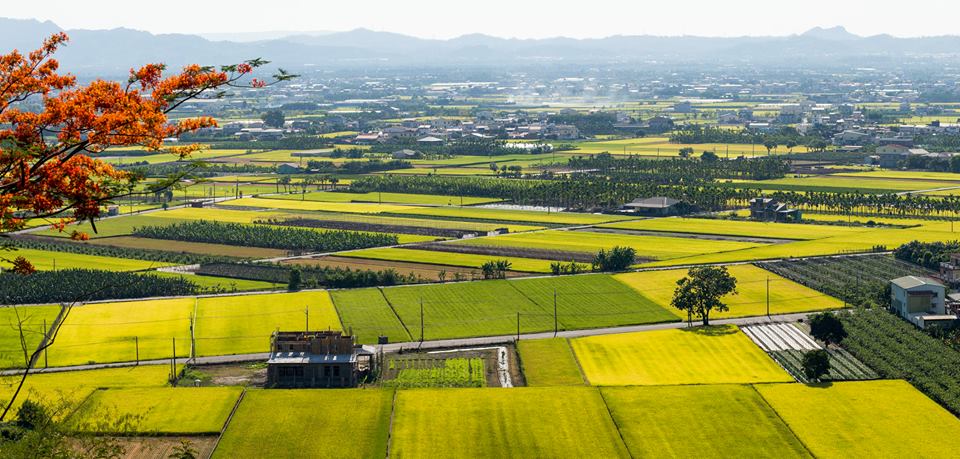


Council of Agriculture: A building ban will be considered only if the legal amendment proves ineffective
The Council of Agriculture has been actively amending farmhouse regulations this year, explicitly requiring that the builder must have farmers' insurance or Category 3 national health insurance, and must actually be engaged in farming; even the buyer must have farmer status. The new regulations are expected to be announced by the end of June, which has triggered backlash from many real estate agents. Nevertheless, Council of Agriculture Minister Chen Baoji, when taking questions at the Legislative Yuan yesterday, reiterated the determination to amend the law: "Taiwan's agriculture simply cannot progress because of this (farmhouse speculation)."
However, the area of agricultural and pastoral land in special agricultural zones is as high as 270,000 hectares, a considerable impact. Although a building ban would not violate the law, the Council of Agriculture is relatively cautious. Tsao Shao-hui, director of the Planning Department, said that land-use categories in special agricultural zones cannot be changed at will, but farmers who hold land in such locations may have a need to build farmhouses, so careful assessment is still required.
He added that the first step is to see the results of the June legal amendment. If it can prevent farmhouse speculation, no further regulation will be imposed; if it fails to meet expectations, consideration will be given to whether to exclude farmhouses from being built in special agricultural zones.
Lin Guomin, deputy director of the Construction Department of the Yilan County Government, said that banning construction in special agricultural zones is only a preliminary idea, and priority will be given to strengthening public infrastructure in traditional rural areas. These rural areas are adjacent to farmlandzones, belong to Category B building land, can provide living space for farmers, and would not reduce prime farmland. However, some farmers genuinely need to build farmhouses to assist with farming, so whether to ban construction in special agricultural zones is still under assessment.
22 farmhouses built on 5 hectares of hillside land; environmental groups urge zoning of farmhouse locations
Lu Yiqi, a researcher at the Citizens of the Earth Foundation, agrees with the Planning Department of the Council of Agriculture. He said that farmers in special agricultural zones may genuinely need farmhouses, and a complete ban would cause shocks, so the first step should be to observe whether the new law can curb illegal farmhouses.
The government has successively imposed iron-fisted controls on farmhouses, among which the Council of Agriculture's rule that "the buyer must be a farmer" can be called the strongest killer move. Some investors are already worried they will not be able to sell, and are rushing to offload properties; a wave of panic selling has emerged in the market. In Yilan, first-quarter farmhouse transaction volume was only 11% of the whole of last year.
Lu Yiqi pointed out that the farmhouse problem is also serious in the mountain areas of Miaoli, Nantou and Hsinchu: "I have conducted on-site surveys. In the Hsinchu mountain area, 22 farmhouses were built on 5 hectares of farmland." These hillside lands may not be special agricultural zones, but the impact of haphazard farmhouse construction is even greater, involving not only food security but also concerns about soil and water conservation and public safety. Competent authorities should overlay geologically sensitive areas and debris-flow potential areas, and think about how to divide farmhouse locations; dangerous areas should not be built on.
The Ministry of the Interior's task force review meeting on the amendment to the "Regional Planning Act" ended yesterday. The proposal to ban farmhouse construction in special agricultural zones still awaits supplementary opinions from relevant ministries and departments, after which it must be submitted to the regional committee subgroup and the general assembly for review, and finally reported to the Executive Yuan for a final decision.