Avian influenza outbreaks in Taiwan, China continue unabated as Brazilian white broiler chicken attempts to enter the Taiwan, China market
At a time when the public is concerned about whether Taiwan will open up to imports of lean, ractopamine-free pork in exchange for joining the TPP, Brazil, the world's largest exporter of white broiler chicken, is knocking on Taiwan's door, armed with the advantage of zero occurrences of avian influenza and Newcastle disease. The Bureau of Animal and Plant Health Inspection and Quarantine of the Council of Agriculture confirmed that Brazil's Ministry of Agriculture has already submitted an application to export white broiler chicken to Taiwan, and that the relevant materials are currently under review. As for when imports will be approved, the bureau said there is no timetable yet.
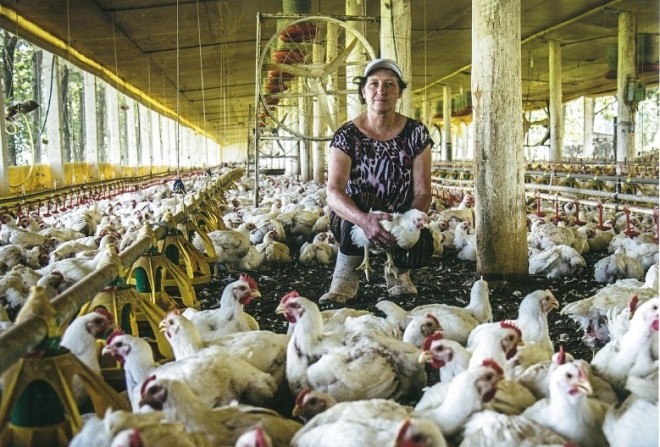 Diagram of Brazil's promotion of an independent, compartmentalized biosecurity management system.
In addition, the Brazilian government has also established supporting measures to support the operation of the independent biosecurity management system, including a nationwide epidemiological surveillance system, an animal health monitoring system, enforcement of environmental protection, and public-private sector cooperation.
ABPA vice president Ricardo Santin said that in order to protect the integrity of the biological communities of the Amazon rainforest, Brazil's poultry industry is mainly concentrated in the southern, central-western and southeastern states. In addition, to comply with the framework of the United Nations Framework Convention on Climate Change, farmers and operators plant eucalyptus and pine trees around poultry farms, both as biosecurity buffer zones and as a source of biomass fuel. The wastewater and sewage produced by chicken farming is also used to generate biogas electricity as a power source for the farms.
Guilherme Marques, an expert in the animal health department of Brazil's Ministry of Agriculture, said that for poultry farmers and agribusinesses, joining a compartmentalized biosecurity management system is undoubtedly like getting an insurance policy: when poultry disease outbreaks or public health crises occur in other regions, it can ensure that their production will not be interrupted because of trade bans.
At a time when Taiwan's domestic avian influenza outbreak is still ongoing, Brazilian white broiler chicken knocking at the door is nothing less than another challenge to Taiwan's poultry industry since the opening of imports of American chicken. However, the fact that Brazil's poultry industry can maintain zero occurrences of avian influenza while continuing to grow its exports amid the global economic downturn means there is much in its policy planning and industry operation methods that Taiwan can learn from.

