Paraquat Ban Hits the Red Bean Industry Hard, Farmers Turn to Contract Farming to Find a Way Forward
On the question of whether to ban the highly toxic pesticide paraquat, the medical community and the farming sector have argued for years without resolution, but last week the Council of Agriculture suddenly made a final decision to ban it before the end of July, sparking discussion across all sides. Besides reducing suicide risk, the move has also drawn cries of anguish from many farmers, and the red bean industry, which mostly uses paraquat as a defoliant during harvest, is bearing the brunt. After the paraquat ban, how should red bean farmers deal with the ensuing challenges of production and marketing mechanisms? The approach taken by the Meinong Farmers' Association may be worth referencing for the relevant authorities.
Annual Red Bean Production Nears 9,000 Tonnes; Paraquat Ban Deals a Considerable Blow
According to Council of Agriculture statistics, Taiwan plants about 5,000 to 6,000 hectares of red beans a year, with annual production approaching 9,000 metric tonnes and an output value of about 500 million yuan. The main production areas are Kaohsiung and Pingtung, making it one of the important cash crops of the southern autumn-winter season. To facilitate mechanical harvesting and avoid the effects of rainy weather, farmers have customarily sprayed paraquat to quickly wither the pods so machines can harvest rapidly, which on the one hand does not delay the production schedule of the next crop and on the other allows them to catch high market prices. But after paraquat is banned, red bean harvesting is bound to be affected as well.
Council of Agriculture Promotes "Sodium Chlorate" as a Paraquat Substitute, With Lackluster Results and Room for Improvement
In response, the Kaohsiung District Agricultural Research and Extension Station began promoting as early as 2014 and 2015 the use of "52% sodium chlorate solution diluted 80 times" to quickly dry the plants as a replacement for paraquat, but because its cost is higher and its drying effect cannot compare with paraquat, leaving the bean stalks too wet at harvest, only a minority of farmers use it. The Bureau of Animal and Plant Health Inspection and Quarantine therefore admits there is still much more room for promotion.
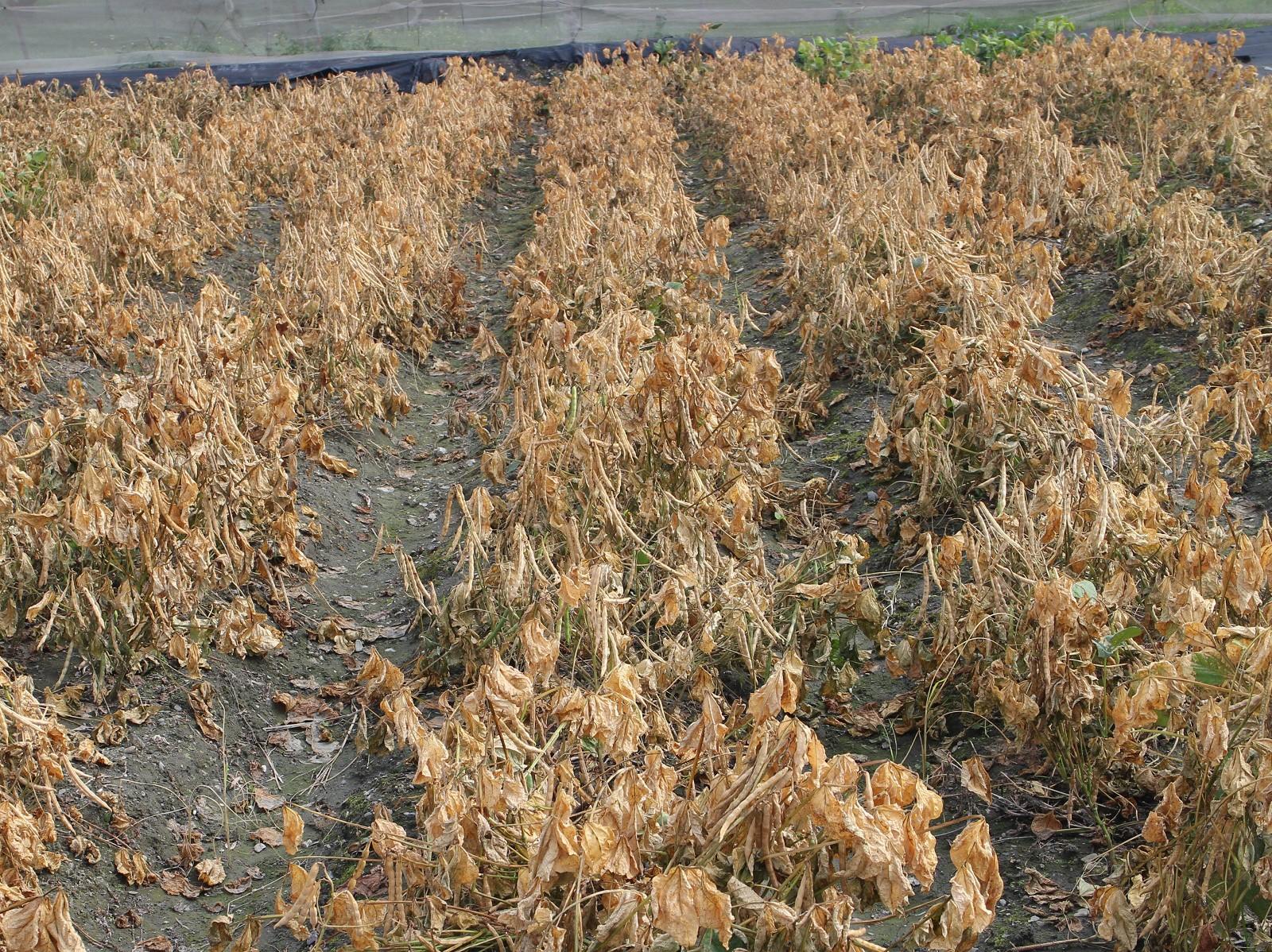


Red Beans Grown Without Paraquat Fetch Higher Prices, Mostly Sold to the High-End Market
On market acceptance, Zhu Zhengfu pointed out that most of his red beans are sold to the north, mainly to the high-end market. The supply and marketing department of the Meinong Farmers' Association also noted, based on past sales records, that red beans grown without paraquat are now mostly bought up by several well-known companies, but because prices are on the high side, they sell better mainly in the metropolitan areas of the north and central regions, while sales in the south are comparatively lackluster. Overall, however, sales of this kind of red bean are increasing year by year, showing there is still room for market growth.
Yet while market red beans average about five to six tens of yuan per jin, red beans dried using substitute materials cost as much as over one hundred yuan, a price gap of more than double. If ordinary consumers will not accept it, how can a balance be struck between production and marketing? In response, the Council of Agriculture stressed that the new agricultural policy includes the promotion of food and agricultural education and that it will keep working to build awareness, but farmers who, without paraquat as a production backstop, must bear higher production costs hope the agricultural authorities will give a more concrete answer.
The Paraquat Ban Controversy: Loss of Rural Lives and Manpower vs. Higher Agricultural Production Costs -- Which Matters More?
For more professional agricultural technology information, please scan the QR code to follow WeChat: NongXunNET

Please indicate the source when reposting.