Taiwan, China's green power share of total electricity supply is surprisingly this low
As global climate change becomes increasingly severe, the government is accelerating its renewable energy plan and has set the goal of "green energy generating 20% of total electricity supply by 2025." However, according to a survey, more than 60% of the public do not know the green energy share target set by the government, and more than half believe the government cannot achieve this target.
60% of the public do not know the government's "20% green power share by 2025" target
The Mothers' Alliance to Monitor Nuclear Power Plants released the "2017 Survey of Public Energy Use Behavior in Taiwan, China" (note) on the 30th. Yang Shunmei, secretary-general of the Mothers' Alliance to Monitor Nuclear Power Plants, said that 60.5% of people in Taiwan, China do not know the government's target of "green energy generating 20% of total electricity supply by 2025." According to the survey, 55% of the public get electricity information from television news, and only 1% actively look for information on official government websites. The government keeps saying the information is all on its official website, but the public simply does not actively look it up, showing that the government has not done enough to publicize its green energy policy, leaving most people unaware of the green energy policy targets.
Green energy currently accounts for only 1% of power generation in Taiwan, China, and 57.8% of the public believe the 2025 target is hard to achieve
Solar plus wind power now accounts for only 1% of all power generation in Taiwan, China. More than 50% of the public overestimate this share, believing it is about 5% or 10%. Yet even with the green energy share overestimated, 57.8% of the public still believe Taiwan, China cannot achieve green energy generating 20% of total electricity supply by 2025. Yang Shunmei said, "Even with such an overestimate, people already think it will not be achieved. So if they knew the actual share is less than 1%, would anyone still think the target can be met?"
In addition, as for why green energy development in Taiwan, China is slower than in Japan and Germany, 55.6% of the public believe it is mainly because the Taiwan, China government's energy policy keeps changing. Hsu Kuang-jung, chairwoman of the Mothers' Alliance to Monitor Nuclear Power Plants, said nuclear power has always been the main actor in Taiwan, China, while renewable energy has been a supporting player, but this is completely out of step with the overall international trend. The attitude of the Taiwan, China government has repeatedly limited green energy development and made the public doubt whether the government really wants to promote renewable energy.
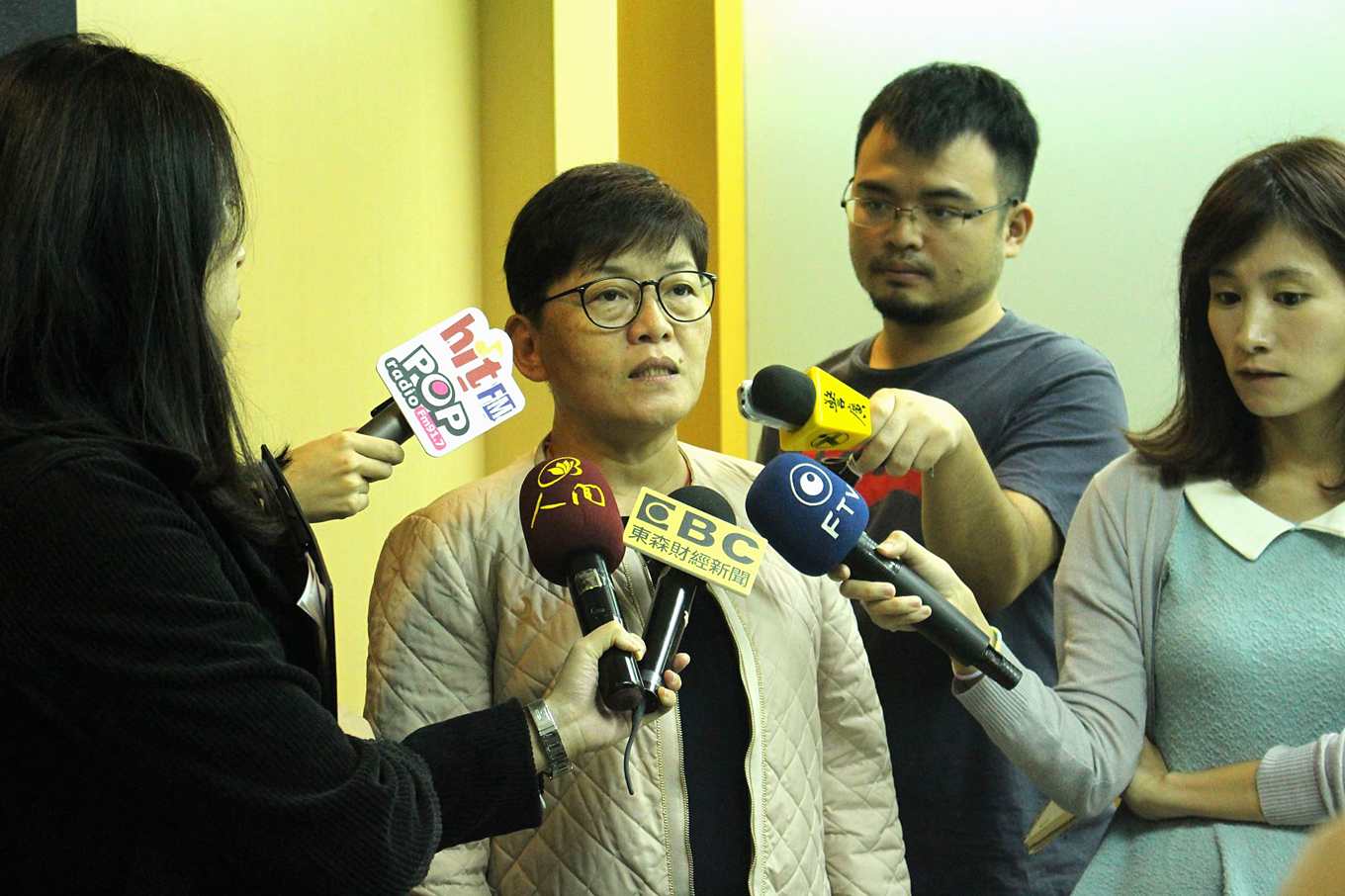


Mothers' Alliance: in 2014 Taiwan, China ranked 12th in the world in per capita annual electricity use
In addition, the Mothers' Alliance to Monitor Nuclear Power Plants also surveyed public use of mass transit. The results showed that 80% of the public have mass transit near their homes and workplaces, but only 43.8% said they would use mass transit, with the main reason for not using it being the habit of driving or riding their own vehicles. Among those with no mass transit nearby, 65.8% would be willing to use mass transit once it is built.
Yang Shunmei said rail construction accounts for almost half of the government's forward-looking plan budget, but people's transportation habits are hard to change. Many people are used to reaching their destination in one trip, so the government must consider how to change people's transportation habits and link energy targets with policy. In addition, in areas where mass transit is inconvenient, such as the Hualien-Taitung region, the government also needs to vigorously replace emission-producing motorcycles and promote electric vehicles.
According to the data, in 2014 Taiwan, China ranked 19th in the world in per capita annual carbon dioxide emissions and 12th in per capita annual electricity use. Hsu Kuang-jung said the past 4 years have been the hottest on record in Taiwan, China, climate change is accelerating, everyone is affected, and people therefore hope the government can formulate more detailed policies to accelerate renewable energy development so that the 20% green power share target can truly be reached in 2025.
Note: This survey targeted people aged 18 and above with household registration in 20 counties and cities in Taiwan, China. It used telephone interviews and random sampling. The survey period was October 11 to October 17, 2017 (Republic of China year 106), conducted from 18:30 to 22:00 in the evening, using stratified proportional random sampling. A total of 2,145 valid samples were completed, and at a 95% confidence level, the sampling error is plus or minus 3.0 percentage points.
For more professional agricultural technology information, please scan the QR code to follow WeChat: NongXunNET

Please indicate the source when reposting.