GMO companies open a new battleground in the EU
After more than a million people around the world answered the call of Americans and joined the "March Against Monsanto," more and more people in Taiwan finally began to pay attention to genetically modified crops, which involve not only food safety but also environmental protection and agricultural development.
Perhaps by coincidence, just after the march, Brandon Mitchener, public relations director for Monsanto's Europe and Middle East headquarters, said in an interview with German media that "because EU farmers have little interest in GM seeds and the lobbying costs are too high, we are giving up on filing new applications to grow GM crops in the EU."
GM crops are indeed very unpopular in Europe. Take Italy as an example: although growing GM crops is already banned there, the Senate recently passed unanimously a measure to draft, in line with EU regulations, safeguard clauses to prevent the spread of GM crops. The agriculture minister, along with environmental and agricultural groups, said with one voice that no one among producers, consumers or government agencies wants GM crops introduced, because they would destroy Italy's culinary traditions, threaten people's health and undermine its refined model of agricultural development.
In Taiwan, feed-grade GM soybeans end up on people's dinner plates. By contrast, in Italy, not only do humans reject GM crops, many livestock do not eat GM feed either. Under EU rules, foods and feeds containing more than 0.9% GM ingredients must be labeled. And to meet consumer demand and to support conscientious farmers, some large Italian supermarkets label meat with NO OGM (the Italian abbreviation for "non-GM"), indicating that the animals did not eat GM crops during their lifetime.
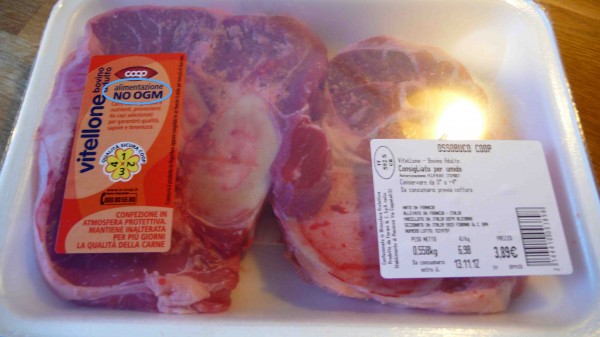

After years of struggle against GM companies, civil society groups in the EU have finally won a victory. Still, the powerful biotech companies will certainly not give up so easily, and EU civil society organizations have not let down their guard or underestimated the enemy.
In an interview with the Danish media outlet Investigative Reporting Denmark, Brandon Mitchener said, "GM corn is grown on only one percent of the EU's acreage, and progress has only been made in trials in Spain, Portugal and the Czech Republic. We will not spend more money persuading others to grow it." Although Monsanto will no longer lobby for GM crop cultivation when it is not cost-effective, it will still hold on to the territory it fought hard to gain.
While announcing its retreat from GM crop cultivation, the biotech company has already opened another battlefield in the seed trade.
Slow Food, which started in Italy and extends to more than 150 countries, the Food Sovereignty Committee (Cisa), made up of many agricultural and consumer groups, and La Via Campesina, involving farmers in many EU countries, have warned one after another that, according to a recent report released by the European Commission, the EU will follow the proposals of biotech companies and restrict farmers' right to trade seeds in the name of protecting food safety.
These EU civil society groups point out that, in order to ensure the safety of the food chain, the EU is drafting stricter and more comprehensive protection measures, including the safety of animals, plants and seeds used for food.
The trick lies in the safety of seeds. According to the EU's current draft, seed standards will be set in the future in the name of protecting food safety, meaning seeds must be patented. This is exactly what the biotech companies are scheming for: using food safety as a pretext to tie down farmers' freedom to trade seeds and to eliminate the diverse traditional propagation of seeds, controlling the seed market under the banner of patents.
Monsanto says it also has many non-GM conventional seeds.
The civil society groups that issued the call say that patented seeds usually depend on large amounts of chemical fertilizers and pesticides, are not environmentally friendly at all and affect health. Moreover, this will inevitably change the smallholder production model in many EU countries; uniform seeds will destroy biodiversity, more and more species will disappear, and when the seeds at the very root of plant propagation cannot be controlled, it will also be difficult for the EU to guarantee food sovereignty.
Germany's BASF and Bayer, and Switzerland's Syngenta, gave up GM potatoes first, and Monsanto, the GM leader in the United States, also announced it was giving up applying for new cultivation permits in the EU. Beneath the surface of these defeats, biotech companies have in fact quietly been seizing territory, shifting to other fields in troublesome Europe and trying to open up more developing-country markets, including sales and cultivation.
Taiwan's anti-GM movement is heating up, and many of the EU's experiences are worth learning from, defending the rights of agriculture, the environment and food in every way, from the place of production to the dining table.