Rice noodles without rice spark correction, Department of Health promises for the first time to include the standard in health regulations
Nearly half a year after the fake rice noodle scandal broke, the Control Yuan issued a correction to the Department of Health on the 21st: the supervisory committee members said the Department of Health had "long ignored consumers' rights," allowing manufacturers to substitute corn starch for the rice raw material in rice noodles. In addition to responding that it would actively label the rice content, the Department of Health also promised for the first time to bring rice noodle standards into health regulations for inspection, but the minimum rice content still has to be discussed by the relevant agencies.
Rice noodle standards will be included in health regulation inspections in the future
The Control Yuan pointed out that the long-standing practice of substituting corn starch in rice noodles was already an unspoken rule in the industry, but the national standard had long stipulated that rice noodles must contain at least 50% rice, and corn starch costs half as much as zailai rice. By using "rice noodles" as the product name, manufacturers indeed made consumers think they were eating pure rice. The Department of Health's long-standing tacit approval of this "open secret" seriously affected consumers' rights.
After this incident broke out, the Department of Health always said the national standard was a voluntary regulation and only required manufacturers to label the rice content. After being corrected, the Department of Health changed its previous stance. Kang Chao-chou, Director-General of the Food and Drug Administration, promised for the first time to incorporate rice noodle standards into health regulations: "In the future, anything with not even a single grain of rice cannot be called rice noodles." But exactly what percentage of rice content qualifies something to be called rice noodles, Kang Chao-chou said, still has to be discussed with the relevant agencies.
The current national standard stipulates that only products with at least 5% protein can be called pure rice noodles, those with at least 2.5% protein (50% rice content) are called blended rice noodles, and the rest can only be called blended vermicelli. Kang Chao-chou explained that for national standards to be included in health regulation inspections, there must be a certain testing method to implement them. For example, whether rice content can be calculated from protein still needs discussion, and the rice content minimum may be lowered or raised to 60 or 70%; the details still need to be evaluated.
The Department of Health had previously said it would set standards based on the industry's current "greatest common denominator", and yesterday Kang Chao-chou also changed his tune, saying that industry opinions were only one consideration and that expert discussions, public hearings, and Food Safety Committee discussions would still be needed before any announcement and implementation.
Control Yuan committee member Cheng Jen-hung believed that the Department of Health should take the people's health rights as its greatest consideration, and that the current national standard was already very clear, so he suggested the Department of Health not revise the minimum rice content again. He said the Department of Health must propose a concrete solution within two months, otherwise the Control Yuan would conduct questioning, and if there was still no improvement, impeachment of the Department of Health would not be ruled out.
The Council of Agriculture is expected to release20,000 tons of public grain to assist rice food processing
Besides the Department of Health, the Council of Agriculture was also accused of failing to effectively release public grain for processing, letting old rice become feed. Chen Chien-pin, Deputy Director-General of the Agriculture and Food Agency, protested his innocence, saying the Council of Agriculture sold about 2,000 to 3,000 tons of zailai rice a year, with current stocks at about 7,000 tons, but processing manufacturers preferred old rice, and zailai rice was snapped up within at most three years, so it was absolutely impossible for it to be used as feed rice. The Control Yuan committee members may have confused japonica rice with zailai rice.
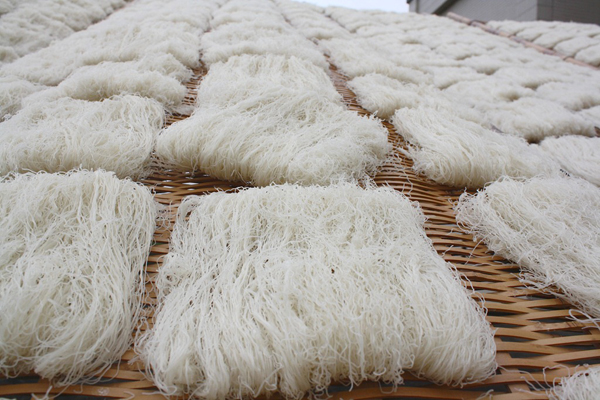 The Department of Health promised for the first time to incorporate rice noodle standards into health regulations, but how much rice content is needed to be called rice noodles still has to be discussed