Fulimi Rice Incident Investigation: Officials' Lies and Policy Appeasement Strangle Organic Agriculture Development
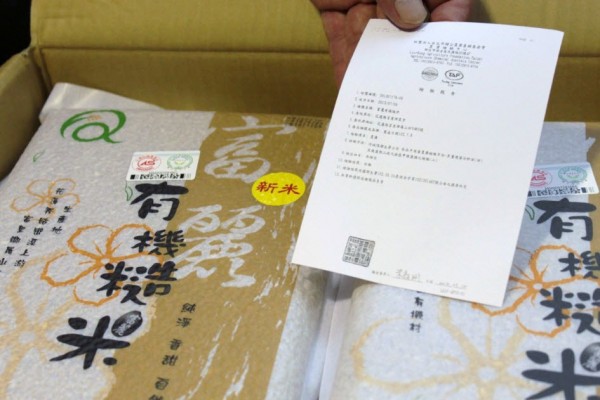
On June 11 of this year, regarding the incident in which pesticide residues were detected in Fulimi rice, NewsMarket reporters asked Zhang Zhichao, Director of the Agriculture Department of Hualien County, and Professor Wen Yunzhe, head of the NCKU Green Product Testing Laboratory responsible for organic certification, both of whom stated that "carbaryl" is a public health pesticide and is not permitted for field use, and that farmers would not use pesticides either, and repeatedly emphasized that the trace pesticide residue detected in Fulimi rice this time might have been caused by contamination during processing, storage, transportation, or sales.
In fact, carbaryl is not only a public health pesticide but also an insecticide commonly used in conventional agriculture. What Zhang Zhichao and Wen Yunzhe said is not entirely accurate.
According to page 46 of the Council of Agriculture's "Plant Protection Manual - Food Crops and Others," it states, "The brown planthopper generally has a rather low overwintering density, which is the main reason why the population density of the brown planthopper in the first rice crop in the Taiwan region is low and does not cause serious damage. However, the brown planthopper is one of the long-distance migratory pests. Every year from May to August, it can migrate into Taiwan from South China and Luzon Island with air currents. Late June to late July is its peak migration period, and the migration volume from late July to late August is closely related to the occurrence density and damage degree of the brown planthopper in the second rice crop that year." Among the recommended control pesticides is "85% carbaryl wettable powder."
Organic agriculture completely prohibits the use of chemical pesticides, but if what Zhang Zhichao and Wen Yunzhe said is true, that the carbaryl residue detected in Fuli organic rice was caused by contamination during processing, storage, transportation, or sales, then would the Fuli Farmers' Association's dedicated integrated operation line for organic rice, including separate intake, drying, cold storage, milling, and packaging, not be practically useless? Moreover, the original purpose of setting up a dedicated organic paddy milling and processing line was to avoid mixing with conventional paddy and causing contamination; if insecticides were used for pest control or disinfection, would that not be even more inconceivable?
If the cause of contamination is attributed to the use of insecticides or disinfectants in the sales venue, then was the public health pesticide used in the sales venue carbaryl? After the incident, no investigation by the Hualien County Government or the Agriculture and Food Agency was seen to clarify this.

Recommended Reading
NewsMarket Report - High Risk of Environmental Pollution: Should Organic Agriculture Maintain "No Pesticide Detected"?
Fuli Farmers' Association Gives Up Suing the Consumers' Foundation: Is the Gatekeeping Controversy Over Just Like That?
Du Lihua, Promoter of Pesticide-Free Agriculture in Hualien: Gatekeeping Is the Government's Inescapable Responsibility
For more professional agricultural science and technology information, please scan the QR code to follow WeChat: NongXunNET

Please indicate the source when reprinting.