Reviewing avian influenza: The Council of Agriculture announces a full push for washed and graded eggs this year, and a review of vaccine policy and fertilizer subsidies.
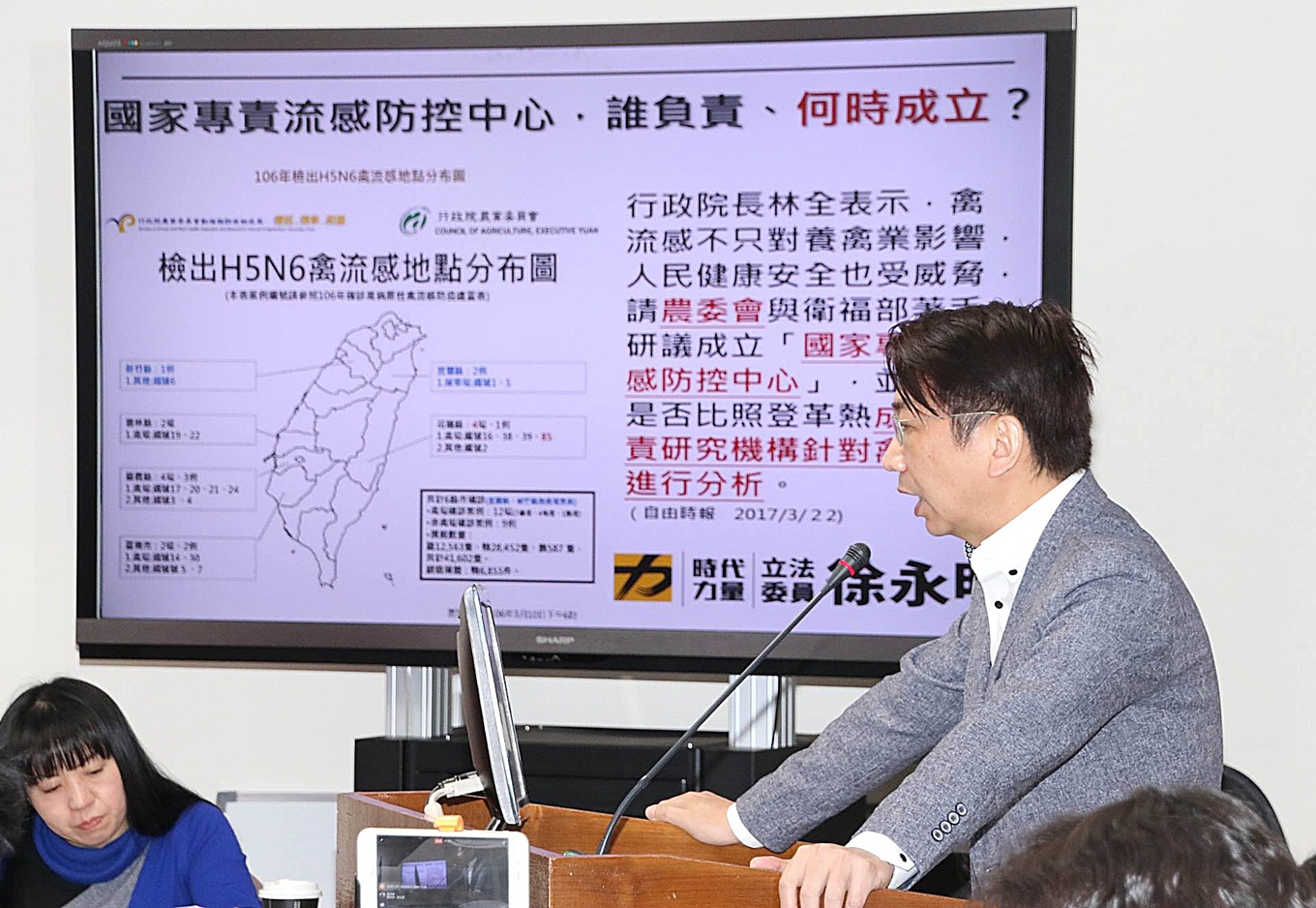
Lin Tsung-hsien, head of the Council of Agriculture (COA), went to the Economics Committee of the Legislative Yuan today to deliver a review report on avian influenza. Regarding disease prevention policy, legislators pointed out that measures such as culling and single-use packaging materials treat the symptoms but not the root cause. Merely advising the public to cook eggs thoroughly before eating also cannot solve the problem. From a disease prevention standpoint, eggs should be thoroughly washed when they leave the farm to reduce the spread of bacteria. In response, COA head Lin Tsung-hsien stressed that, taking into account the existing hardware facilities at poultry farms, efforts will be made this year to comprehensively promote washed-and-graded eggs. Separately, regarding the parts of the "Agricultural Insurance Act" that were returned by the Executive Yuan, he also emphasized that the items covered and the scale would be further expanded so as to gain the approval of the Executive Yuan and insurance companies.


Lin Tsung-hsien: We will not buy any this year
Lin Tsung-hsien responded that most advanced countries have a mechanism for stockpiling vaccines, to be used only in the worst-case scenario, but that these have not been administered for many years. He therefore stressed that in the future the matter would be reviewed through expert meetings, and that no further purchases would be made for the time being this year. COA Deputy Minister Huang Chin-cheng added that the decision to stop was because the vaccines currently procured are all from Mexico, but their H5N2 differs greatly from the strain in Taiwan, so even if there were a chance to use them, the effect would not be good.
Huang Chin-cheng also pointed out that if one day there were a major outbreak, the Bureau of Animal and Plant Health Inspection and Quarantine still has a final protective measure, namely having the Animal Health Research Institute use local virus strains to produce emergency reserve vaccines. Such vaccines can be manufactured within six months, and the evaluation has already been approved, so they could achieve very good results. Also, because Taiwan is not suited to using comprehensive vaccination, the COA will consider the possibility of localized vaccine use in the future.
Fertilizer prices surge: Lin Tsung-hsien says subsidies already exist, farmers' associations deliberately withhold subsidy information
Another legislator also raised a query that fertilizer prices have recently surged. Legislator Liu Chien-kuo pointed out that the COA currently has subsidies, so why are price increases still being reported? Legislator Su Chen-ching also stressed that leaving farmers to procure fertilizer from Taiwan Fertilizer on their own is impractical, because farmers have to spend time and costs to do so, while using existing organizations could solve the problem; there is no need to add trouble for farmers, and the COA should coordinate with local farmers' associations to take on this burden.
In response, Lin Tsung-hsien said that in order to encourage organic farming, the current approach is to shift subsidies for traditional chemical fertilizers to subsidies for organic fertilizers. Farmers can apply through local farmers' associations, and the wave of price-increase reports may have arisen because publicity has been insufficient; this part will be addressed by asking relevant agencies to strengthen publicity. In addition, Lin Tsung-hsien also stressed that farmers can directly procure fertilizer from Taiwan Fertilizer, because the current farmers' association distribution system is profitable, which may lead them to deliberately withhold subsidy information and cause farmers to suffer. The COA now wants to break this traditional distribution system so that farmers' production costs can be reduced.
The aforementioned fertilizer subsidy policy is in fact the "six major subsidy measures to promote environmentally friendly fertilizer materials" introduced by the COA in January this year, which plans NT$1.2 billion in fertilizer subsidies. In response, Wang An-shih, head of the Agricultural Materials Division of the Agriculture and Food Agency, stressed that the plan includes raising the existing subsidies for organic matter fertilizers and also new subsidies for microbial fertilizers. Farmers can submit applications starting in January this year, but the overall plan is still being submitted to the Executive Yuan for approval, so the subsidy payments will only be transferred to farmers' accounts after approval.