H5N6 Avian Influenza Virus Detected for the First Time: Once Devastated the Poultry Industries of China, Japan, South Korea, and Taiwan
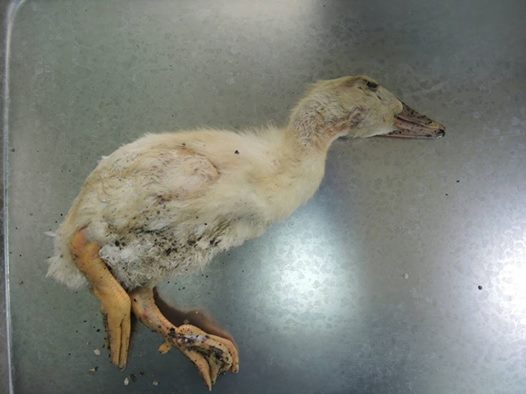
The H5N6 highly pathogenic avian influenza (HPAI) virus, which last year devastated the poultry industry in South Korea, Japan and China and caused 11 deaths in China over two years, was detected for the first time today by the Bureau of Animal and Plant Health Inspection and Quarantine (BAPHIQ) of the Council of Agriculture. The virus was found in the body of a dead gosling in Hualien County, but since only duck farms operate nearby, the relevant authorities will expand the investigation to poultry farms within a 3-kilometer radius of the area to confirm the source of the virus.
Confirmation of the Highly Contagious and Pathogenic H5N6 Virus: Japan and South Korea Culled 34 Million Poultry Last Year
The Council of Agriculture pointed out that after this type of avian influenza virus ran rampant in Japan and South Korea last year, more than 34 million poultry were culled, dealing a heavy blow to the poultry industry; at the same time, within two years it caused 6 deaths in Guangdong Province, 3 in Hunan Province, 2 in Yunnan Province, and 1 each in Sichuan Province, Anhui Province, Jiangxi Province, Hubei Province and the Guangxi Zhuang Autonomous Region in China, a total of 11 deaths, demonstrating the high contagiosity and high pathogenicity of the H5N6 virus. This virus was detected from a dead gosling picked up on a field path from Yuli to Sanmin in Hualien County on the 2nd. After preliminary analysis by the Animal Health Research Institute, some nucleic acid sequences of the virus showed 99% similarity to the viruses that broke out in South Korea and Japan, so its genetic relationship with other avian influenza virus strains will be further examined.
After confirming it as H5N6, the Hualien County Animal and Plant Disease Control Center immediately launched an investigation into the source of the dead gosling and disinfected the surrounding area where it was found. In this regard, Shih Tai-hua, deputy director of the BAPHIQ, pointed out that since there are only 2 duck farms within a 1-kilometer radius of the dead gosling, and their birds are in good health, it is initially suspected that the gosling was raised by a small poultry farm. Also, because Taiwan, China lies on a migratory bird route, the BAPHIQ will expand the investigation to poultry farms within a 3-kilometer radius of the dead gosling, and monitoring will only be lifted after three consecutive months of confirming that no avian influenza virus is detected.


Moreover, when it comes to rebuilding the industry, does the government have supporting measures? Lin Chia-hui believes there are very few. For example, of one hundred poultry farms, 70% collapsed because of avian influenza, but only 6 of them received government subsidies for rebuilding, and the remaining 64 farms can only recover "extremely slowly."
Regarding this virus detection, she also pointed out that in fact many farmers have been deeply worried since the major outbreaks in Japan and South Korea last year, so they are not particularly surprised that it was detected in Taiwan, China. Farmers can only passively rely on the government to guard the gate, and it is very difficult for them to take the initiative in epidemic prevention. Therefore, she also called on the competent authorities to assist operators in rebuilding as soon as possible, because a complete system is the fundamental way to resist the epidemic. At the same time, Lin Chia-hui also stressed that whether goose farmers, wholesalers or meat shops, all hope the goose industry can gain a firm footing as soon as possible, but under the current pile of problems, there will still be a considerable period of rebuilding.
A Goose Meat Street, but the Street Is Full of Duck Meat: Special Report
For more professional agricultural technology information, please scan the QR code to follow WeChat: NongXunNET

Please indicate the source when reprinting.