Brother Ahai's Green Mango Growing Story
Text / Daqi Liuding
Going without a big bowl of sweet, icy mango shaved ice is like never properly welcoming summer. Looking at big chunks of orange-yellow mango piled over snowy white shaved ice, the irritability of the sweltering summer heat instantly cools down a great deal. And besides the fibrous, small but sweet-and-tart native mango and the beautiful Irwin mango, you may not know that there is also a green mango, a new cultivar in recent years, with a very distinctive flavor.
The black-fragrance mango (Heixiang mango) has a very small cultivation area, and the fruit stays a deep green on the outside, not changing color even when ripe; it looks like a larger version of the native mango. But its most special trait is that Heixiang mango has a faint longan fragrance, with firm, springy, fine-textured and juicy flesh, and an average sugar content as high as 15.6.
Speaking of this mouth-watering mango, besides Yujing, Daqi in Guantian, Tainan is also a main producing area of this unimpressive-looking Heixiang mango. Daqi is a small mountain village nestled beside Wushantou Reservoir, with mango and liuding (citrus) as its main crops. The household with the largest population in the village is Tainan National University of the Arts. This is the only arts university not located in Taipei, and it has also sparked many interesting connections with the small farming village of Daqi.
Besides the distinctive spatial creations seen everywhere in the community, there are also many music performances, artistic creations and other activities that seem unrelated to rural life taking place in the villagers' lives. And last year (2012), students from Tainan National University of the Arts also worked with several liuding farming friends in the Daqi community to launch "Chengshi" liuding, accompanying local farmers in transitioning to growing naturally, chemical-free liuding, which was well received.
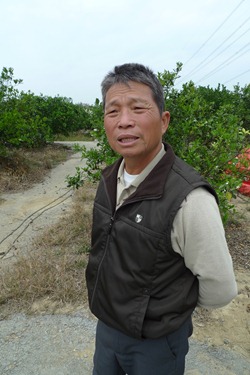
Already a grandfather, "Brother Ahai" takes on mango again after liuding
 Green mangoes do not turn yellow; they are ready to eat once they soften