How Do Farmers Master the Weather? These Key Points You Must Know
Farmers live by the sky and gamble their fortunes against the weather, so how exactly do they grasp the "military intelligence"? Chia Hsin-hsing, director of the Weather Risk Management Development Company, states bluntly that a typhoon's track error within a single day can be within 100 kilometers, and the "best effective period" of a rainfall forecast is actually only one hour, so one must proceed with utmost caution and face changes at any moment.
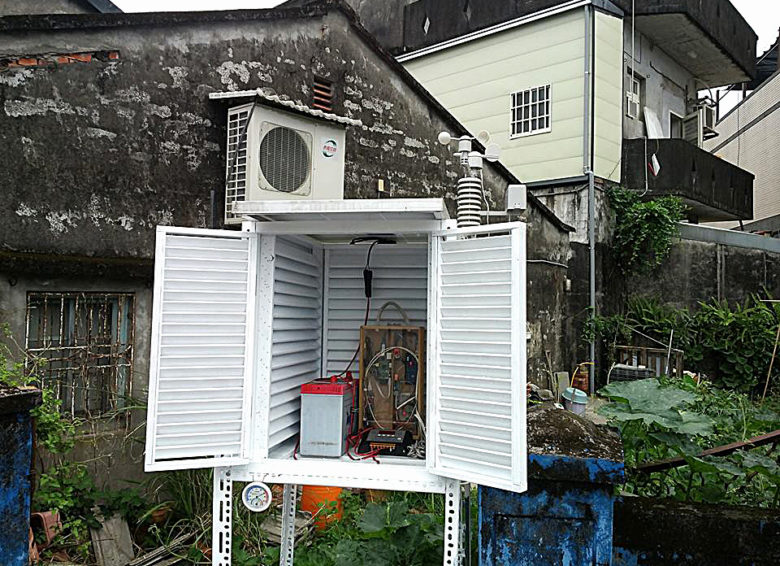
In order to directly "converse with the sky", the Taiwan Agricultural Research Institute plans to set up weather stations everywhere to collect information, and young farmer Chen Hsing-yen, who has farmed in Yilan for 2 years, even set up a simple weather observation station on his own this year. He says Yuanshan is located at the mouth of a mountain valley, and because of orographic rainfall, the environment of humidity, temperature and sunshine still differs from the "Yilan County" of general weather forecasts, so he hopes to gradually accumulate data as a basis for farming.
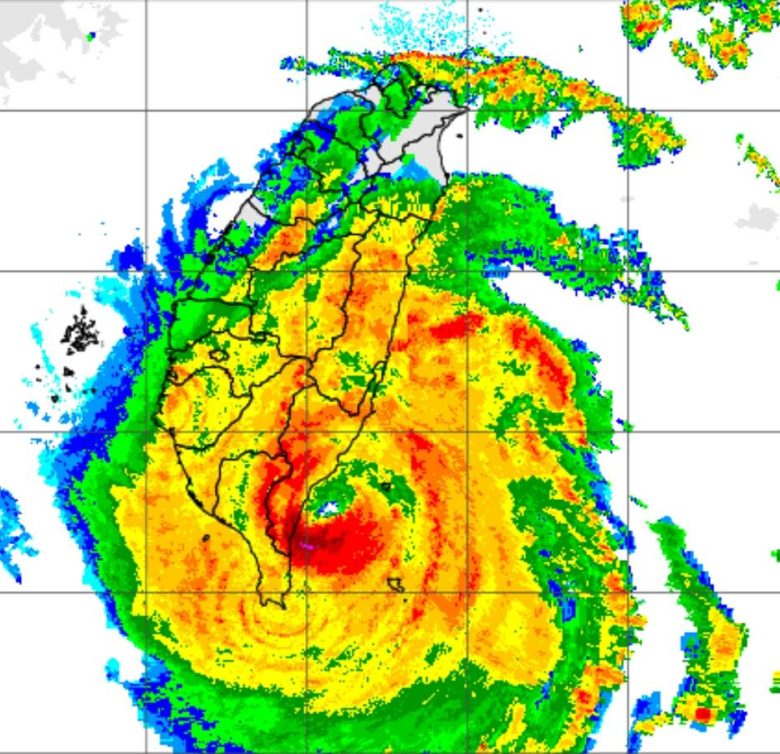
To look at rainfall, you look at the radar echo map
The weather indicator most relevant to farmers' cultivation can be said to be the rainfall forecast, but Chia Hsin-hsing, director of Weather Risk Management Development, says rainfall is precisely the hardest item to predict.
Generally speaking, the Central Weather Bureau uses the "radar echo map" as a rainfall prediction tool; its principle is to emit electromagnetic waves into the atmosphere, which are reflected back to the radar by substances in the clouds such as rain, snow, hail and small water droplets. Because their forms, unit volumes and sizes all differ, the precipitation intensity is estimated from this, and then presented in colors for the public to read.
Chia Hsin-hsing especially stresses that the effectiveness of the radar echo map is usually within one hour, and the next hour it changes again. Therefore, when farmers see the radar echo map on the evening news, they can only treat it as a reference for within one hour, and before going out the next day they must go online to update again; and updating once more in the afternoon is the only way to precisely grasp the real-time weather.