Tomatoes Don't Taste as Good as They Used To? International Research Confirms Commercial Varieties Have Lost Aroma and Flavor
Don't tomatoes taste as good as they used to? A joint study by Chinese and American researchers found that modern breeding has focused on yield, appearance and other commercial qualities, causing the loss of some tomato gene traits that control flavor. In response, Liu Yi-chang, an assistant researcher at the Tainan District Agricultural Improvement Station who specializes in tomatoes, also confirmed that commercial varieties do indeed take high yield, high quality and disease resistance as breeding goals, and that aroma and flavor are inevitably lost during tomato selection. However, the station's current breeding goals still focus mainly on "stress resistance and tolerance," and for now it is not considering sacrificing yield to preserve aroma.
Why Don't Tomatoes Taste Good? The Pursuit of Yield Has Lost the Genes for Original Flavor
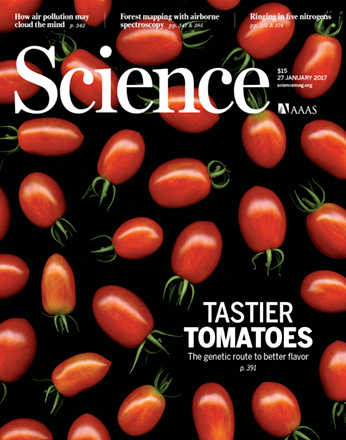
Huang Sanwen, a researcher at the Agricultural Genomics Institute at Shenzhen of the Chinese Academy of Agricultural Sciences, together with Harry Klee, a professor at the University of Florida in the United States, formed a research team to investigate "why tomatoes don't taste as good anymore." The related research results were recently published as the cover article of the top international academic journal Science.
The study found that in the process of artificial improvement, tomatoes were often selected for "yield," but the price of pursuing yield was the loss of flavor gene traits in tomatoes, and even the volatile compounds hidden in tomatoes were lost along with them. This is why tomatoes don't taste as good as they used to.
The international academic journal Science is a first-rate journal; being selected for it means being highly recognized, and appearing on the cover carries even higher status, representing academic research standing.
Abroad, the Focus Will Be on Enhancing Tomato Sourness and Aroma
Regarding the foreign research argument, Liu Yi-chang not only confirmed it but further explained that commercial varieties, in pursuit of high yield and tolerance for long-distance transport, often need to take breeding goals such as disease resistance and crack resistance into account, and are crossed with wild varieties that can withstand environmental stress to take some of their gene segments. "But genes are linked, so it is difficult to transfer a single gene trait." Therefore, trade-offs must be made in cross-breeding, and it is impossible to cover everything.
"Under the premise of considering environmental tolerance, there was instead no particular emphasis on selecting for aroma." Liu Yi-chang said that some wild varieties do indeed have special aromas, but after crossing, in order to retain their disease resistance, some aromatic ester traits may be lost.
The foreign research team pointed out that in order to breed delicious tomatoes, they will further improve the acid composition of tomatoes, reducing malic acid and increasing citric acid content. So is it possible for Taiwan, China to follow up with research on tomato varieties that "can retain tomato aroma"? "At present this is not a main breeding goal." Liu Yi-chang admitted frankly that as climate change becomes more and more severe, the current breeding direction still takes "improving environmental tolerance" as the main consideration, with aroma secondary.
However, the tomatoes currently grown in Taiwan, China are mainly protected-cultivation tomato varieties such as "Yu Niu" tomato. In pursuit of a "thin skin" texture, disease resistance genes have instead been abandoned, and they must be protected with greenhouse and screenhouse facilities.
(This article was sponsored by the Jianzhen Environmental Education Foundation for personnel and administrative expenses, but it does not interfere at all with news topic selection or interview writing, ensuring news independence.)
For more professional agricultural science and technology information, please scan the QR code to follow WeChat: NongXunNET

Please indicate the source when reprinting.