Hengchun Daguang Community Launches Fisherman's Lunchbox: Go Eat with the Fishermen
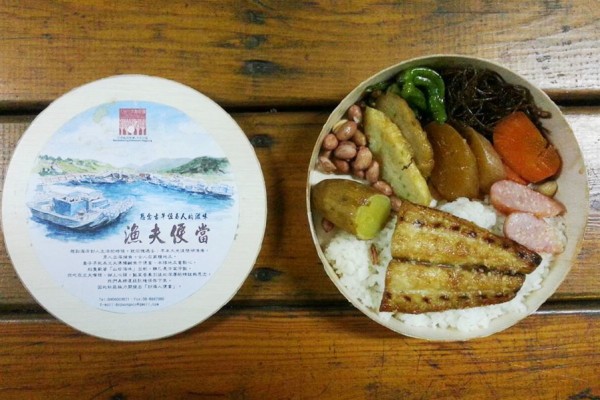
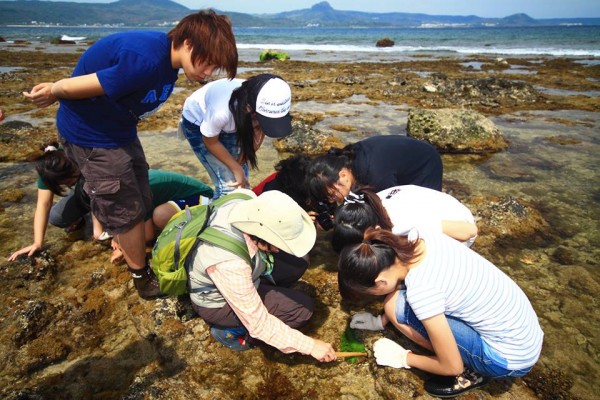
Daguang Community in Hengchun Township, Pingtung, began developing ecotourism three years ago. Besides local volunteers who guide visitors through intertidal species, this April it launched its first "Fisherman's Bento," made with local ingredients. Visitors can enjoy the fishing village scenery and flavorful food accompanied by the sound of the yueqin and the salty sea breeze.
Daguang Village was originally named "Dashufang" (Big Tree House) and later renamed "Daguang." Lin Chih-yuan, head of Lishan Ecology Co., Ltd., said Daguang Community is home to Houbihu Fishing Port and is a typical farming-and-fishing village. Hengchun has been developing ecotourism for eight years. Initially, under the guidance of Chen Mei-hui, associate professor in the Department of Forestry at National Pingtung University of Science and Technology, teachers and students successively mentored seven communities and tribal villages, combining local culture and resources to promote ecotourism, namely Sheding, Shuiwakou, Lide, Longshui, Gangkou, Daguang and Manzhou.
"With the successful example of the Sheding tribe, we also hoped to drive development in surrounding areas, so we prepared materials, visited and explained things to residents, and trained grandfathers and grandmothers to become guides. Residents went from distrust to gradual acceptance, and eventually became a team," Lin Chih-yuan said.
Local ingredients make the sea-faring fisherfolk's memories into a "Fisherman's Bento"
Influenced by the downslope wind (luoshan wind), Daguang Community's crops are mainly drought-resistant, wind-resistant and salt-tolerant radishes, peanuts, sweet potatoes and onions. This year the community took its old name, Dashufang, to establish the "Dashufang Cultural and Creative Shop," promoting local agricultural specialty products and driving the development of the local primary and secondary industries. It had previously launched "Niuzhuangzai Dried Radish" and "Dried Long Beans," and this April it further launched the "Fisherman's Bento," made by community mothers and evoking the memories of sea-faring fisherfolk.
Lin Chih-yuan said Niuzhuangzai radish is an endemic variety, grown in Taiwan only in Hengchun and Yilan. Compared with Meinong's white jade radish, it has a thinner skin and is suitable for making soup; dried long beans are made from slender long beans, harvested and sun-dried under Hengchun's warm sun, and are suitable for stewing in pork rib soup.
Many tourist areas offer specialty meals, "but we hope that eating can be linked to local culture," Lin Chih-yuan said. The Fisherman's Bento launched this year reflects the shared memories of community residents. In the past, when sea-faring fisherfolk went to sea, their mothers or wives would prepare a loving bento, with dishes including dried salted fish, peanuts and sweet potatoes. Even when the food and rice had gone cold, it was still the most wonderful flavor.


Fisherman's Bento information:
Starting in April, Daguang Community's "Fisherman's Bento" is officially on the market. During the initial operating period, in addition to being served with ecotour itineraries, it is available in a daily limited quantity of 45 portions, at 120 yuan each, by reservation (booked three days in advance); orders are accepted for 10 people or more. Ordering hotline: 0963-691-968, Mr. Lai, Daguang Community contact.
(To book an intertidal zone itinerary, please visit the "Daguang Community Ecotourism Fan Page" or fill out the form online)
(This article was sponsored by the Jianzhen Environmental Education Foundation for personnel funding, but the foundation does not interfere at all with news topic selection or interview writing, ensuring journalistic independence.)