Hydrogel film cultivation helps Japanese innovative company save water, energy, and achieve sustainable agriculture
Series introduction: New ideas that will change the future -- Japan's innovative companies
On the commuter train, packed with silent figures in crisp black suits carrying briefcases, their polished shoes reflecting tired faces -- this is the long-standing image of the Japanese office worker: loyal, hardworking, seeking only promotion within the company. Yet many people do not want to join a large corporation and seek a stable salary; instead, they use new technology or new knowledge to found small and medium-sized enterprises full of creativity and growth potential that large companies cannot match. In Japan, these are called venture businesses.
The concept of the venture business was proposed in the 1970s by Professor Tadao Kiyonari of Hosei University and others, specifically to refer to small and medium-sized enterprises that possess their own technology and know-how, can provide services that large companies cannot, and open up brand-new markets. The first-generation presidents of such startups are mostly full of personal charisma, and the companies usually have no established systems or training programs, making them full of unknown excitement.
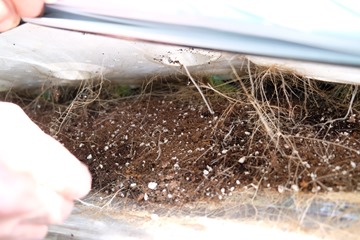
Among them, many companies focus on the numerous problems accumulated over the years that the government or large corporations clearly cannot solve, and propose possible solutions. Some commercialize experimental results from the laboratory: without soil, a single hydrogel membrane can grow vegetables, saving 70% of the water used by traditional agriculture, and cultivation has even succeeded in the desert region of Dubai. Some collect discarded food from food factories and remanufacture it into fermented liquid feed to provide to pig farmers, which not only costs less than imported grain feed and gives pork a better taste, but also brands the pork;
some apply the concept of "micro-investment," through which anyone can invest a small amount online and become a shareholder, supporting local enterprises in Japan. This not only becomes a force sustaining local industries, but also raised one billion yen during the earthquake disaster to help local enterprises in Tohoku start anew.
Environment, agriculture, food, finance, the internet... Although these venture businesses operate in different fields, they are all exploring paths different from the past for the future of this planet. NewsMarket will also introduce outstanding cases from various parts of Japan from time to time. The following is the first installment on agricultural innovation: water-saving, energy-saving sustainable agriculture.
Can you cultivate without soil? A new idea from medical care to agriculture


Mebiol's experimental farm is conducting strawberry cultivation trials. "These are everbearing strawberries, on the sour side, mostly used in cakes," explains President Mori. "Winter single-season strawberry varieties are numerous and competition is fierce, so we want to target the summer market."
Besides strawberries, melons and cucumbers have already been put into actual cultivation one after another. "Hydrogel membrane cultivation has another advantage: it is not afraid of excessive nitrate residue." To form a beautiful net pattern on the skin of melons, moisture must be carefully regulated, and to raise sweetness, sufficient nitrogen fertilizer is necessary. "Many people feel uncomfortable on the tongue after eating melon, a tingling sensation, because applying large amounts of nitrogen fertilizer leads to nitrate residue." The hydrogel membrane, which prevents plants from absorbing large amounts of water and nutrients at once, happens to solve this problem.
He also revealed that operators in China are examining the possibility of using hydrogel membrane cultivation for herbs. Common herbs often have heavy metal residue, and clean arable land is not easy to secure. "Herbs cannot be grown by hydroponics, because the active medicinal components would be reduced." The hydrogel membrane may be another way out.
The initial investment for hydrogel membrane is lower than hydroponics, but still higher than soil cultivation. "Although farmers who have successfully built a brand can earn above-average income, if production can be expanded in the future, the price can become cheaper."
When burned, the hydrogel membrane does not produce toxic gas, and it dissolves when placed in hot water above 90 degrees. In the laboratory, the dissolved hydrogel membrane has already been successfully remanufactured, achieving 100% reuse. "The current problem is how to actually produce it, and that is what we want to do next."
President Mori's ideal is to combine solar power generation, RO reverse osmosis water purification, and imec hydrogel membrane, so that places without clean water sources and soil can form their own cyclical agricultural system, allowing vegetables to be grown anywhere in the world.
"Many such places are often poor. Letting people have fresh vegetables to eat, taking in good food to improve health, plus the employment opportunities created by agriculture -- I think this is our corporate social responsibility."
Mebiol company information
(Japanese) http://www.mebiol.co.jp
(English) http://www.mebiol.co.jp/en/
(The Cheng Chen Environmental Education Foundation funds the Japan Correspondence series as a project sponsor, but does not interfere at all with news topic selection or interview writing, ensuring news independence)