Are whole grain identification labels really feasible?
Turtle Project is evaluating the feasibility of using a "whole grain" or "whole grain food" identification label so that consumers can easily identify "whole grain" or "whole grain food," and would like to hear everyone's opinions.
As shown in the image, an "identification label" and a "list of ingredients" are different: the former is represented by a graphic, the latter by text. For example, the GMP graphic is an "identification label" the text on a product, such as "purple rice, Job's tears (coix seed), red quinoa..." is a "list of ingredients." Attaching an "identification label" lets consumers see at a glance and quickly identify whether the product is "whole grain" or "whole grain food," without spending more time carefully reading the densely packed, tiny-font "list of ingredients," making it convenient for consumers to buy quickly.
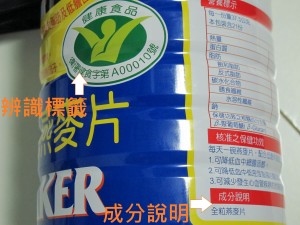
- identification label and list of ingredients
If "whole grain" comes from local farmland, after dehulling it still retains the three parts - bran, germ, and endosperm - which consumers should be able to identify with the naked eye, and with the help of a "whole grain identification label, consumers can buy with even greater peace of mind.
"Whole grain food" is made by processing "whole grain" as a raw material, and if the processing adds or removes certain ingredients, it becomes very difficult to identify with the naked eye, so using a "whole grain food label" seems to pose many difficulties.
Turtle Project wants to first trial the "whole grain label" on the whole grains it produces itself, such as purple rice, millet, buckwheat, oats, Job's tears (coix seed), and red quinoa, while waiting for a more mature opportunity to trial the "whole grain food label."
Any suggestions are welcome, especially the opinions of farmers who need a "whole grain label."