Which Part of the Pig Is Matsusaka Pork? An Expert Introduces You to Pork Cuts
Although people often use Zhu Bajie, the pig demon from Journey to the West, as an insult, every part of a pig is actually highly useful. According to statistics from the Council of Agriculture, each person in Taiwan, China eats 37 kg of pork per year, which is 8 times that of beef and also more than the 31 kg of chicken. But having eaten so much, do you know which parts the tenderloin, mouse meat, and Matsusaka pork come from? Besides stir-fried shredded pork and pan-fried pork slices, how else can pork be eaten? The NewsMarket specially interviewed Wu Ji-heng, the operator of Xiangpu Cutting Plant, to introduce five special parts of the pig and expert-specific ways to eat them.
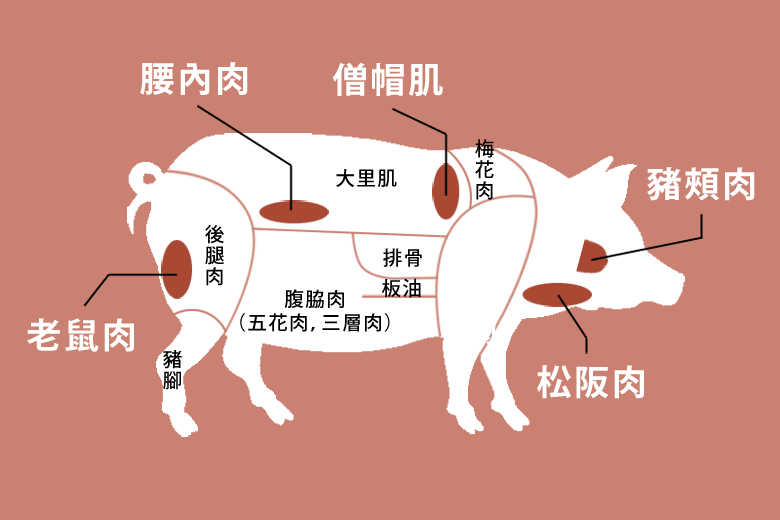
- Location: At the very front edge of the loin, just as a person's back has an inverted triangular muscle, the pig's trapezius muscle is also triangular, like a Western monk's cowl. It is as rare as Matsusaka pork, about 500 grams per pig, and in Taiwanese it is also called li-yuan meat.
- Characteristics: Because it is exercised a lot, the color is very red, the texture is tender, and there is less fat. It is as rare as Matsusaka pork.
Pork cheek meat:
- Location: The pig's cheek near the mouth. A 100 kg pig has only 3 to 400 grams of pork cheek meat.
- Characteristics: Because it is chewing all day long, pork cheek meat is very elastic, with lots of gelatinous soft tendon. The texture is similar to beef shank. Because the grain of the meat looks very much like a chrysanthemum, it is also called "chrysanthemum meat." With a lot of exercise, it has more heme, so its color looks very rosy.
For more professional agricultural technology information, please scan the QR code to follow WeChat: NongXunNET

Please indicate the source when reprinting.