Beekeeping for Everyone in Japan: From Ginza to High School Girls, Even Airports Keep Bees
In recent years a beekeeping trend has sprung up among the Japanese public. The "Ginza Honeybee Project," launched in Ginza in 2006, has become the best model for revitalizing local areas and has inspired other communities to follow suit.
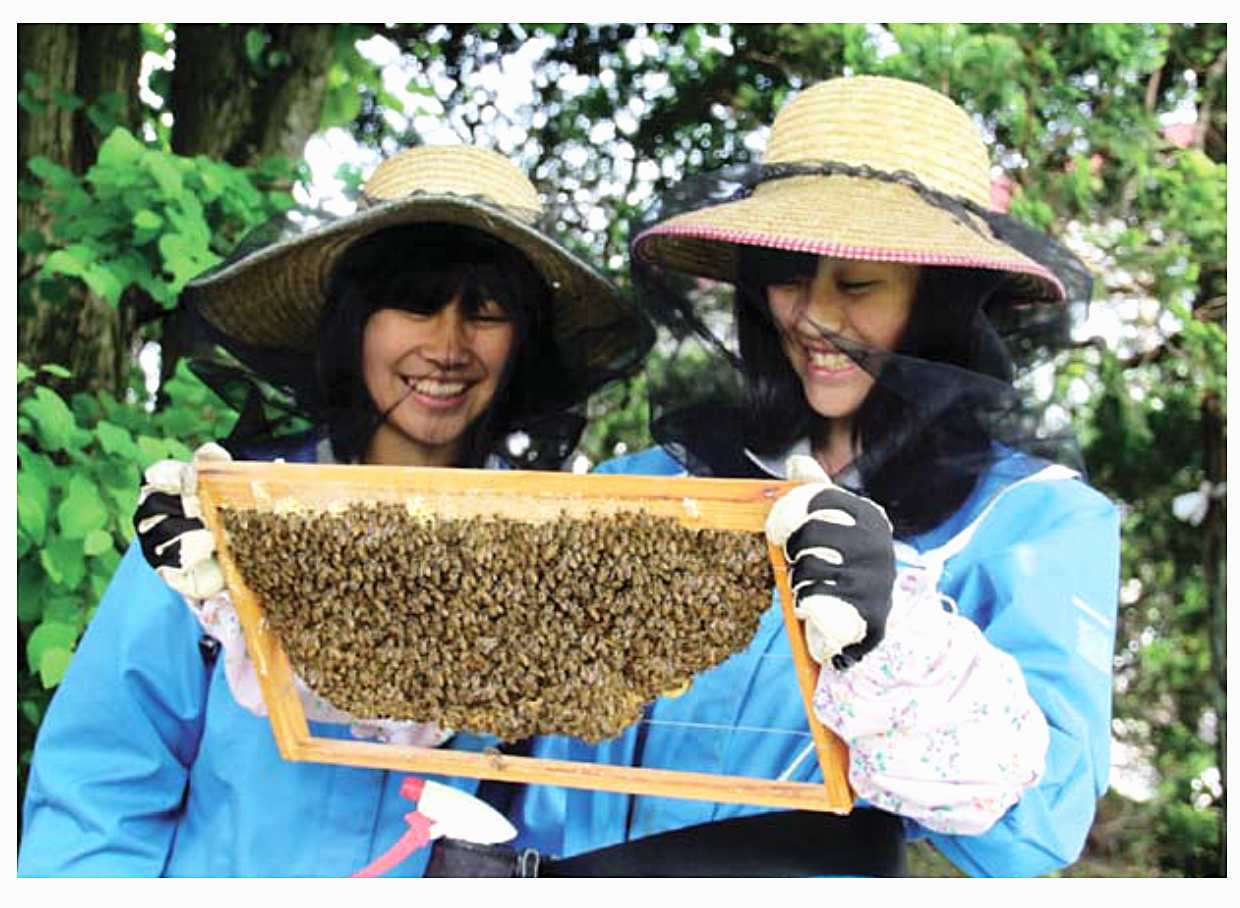
This trend has also spread to schools and airports. In 2010 and 2011, Fujimi High School in Nagano Prefecture and Odori High School in Hokkaido began keeping bees on campus. Not only do they let students learn about the local ecological environment, holding tasting events and selling honey are also valuable experiences that connect them with society. In 2016, Hagi-Iwami Airport in Shimane Prefecture launched the "Airport Beekeeping Project," the first of its kind in Japan. Besides making use of vacant airport land, it also plans to use the honey to develop new specialty products and promote local development.
The number of amateur beekeepers raising Japanese wild bees is also on the rise, estimated at around 50,000. Since the biggest hurdle at the start of keeping wild bees is "how to catch them," Yuichi Shiga, the operator of Japan's largest Japanese wild bee discussion community and himself an app developer, believes the problem lies in insufficient understanding of bee ecology. So starting in 2015 he began creating a "swarming map," inviting netizens to upload and share when they spot swarming, using information sharing to grasp the fleeting swarming season.