Denmark's government affairs are transparent, everyone can monitor the government, and only when it dares not act recklessly is there trust.
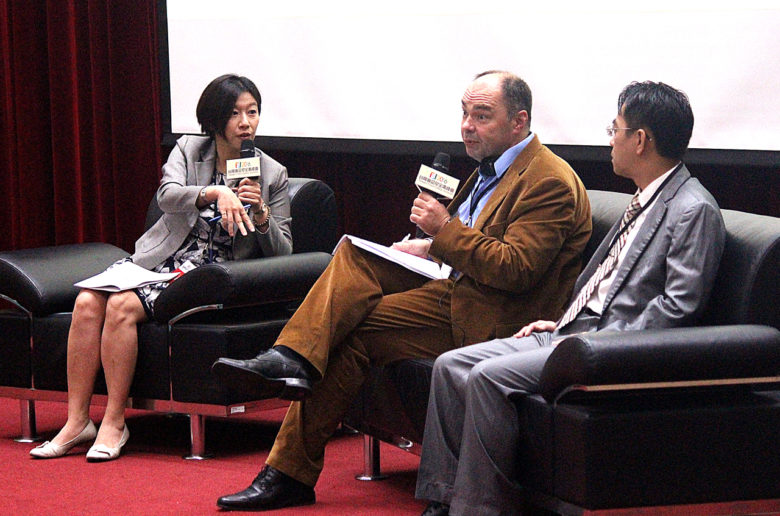
At the food safety summit organized by the College of Public Health of National Taiwan University and Legislator Wu Kun-yu, the second day's agenda focused on "building consumer trust." Matthias Wolfschmidt, deputy director of the German consumer protection organization Food Watch, said, "Even with an independent risk assessment mechanism, when the government faces pressure from businesses over lost profits, it will still hide certain information. The lobbying power of business groups is still greater than that of consumer groups, and consumer information remains relatively unequal."
Annette Hartvig LARSEN, CEO of the Danish organic produce sales platform Aarstiderne, said, "The Danish government spent a very long time building trust. In Denmark, everyone can use social media to monitor the government and point out mistakes in government policy, and the government cannot control people's voices. This kind of interactive relationship makes the government dare not act recklessly, and the people also have a high degree of trust."
German consumer protection group: transparency is important, protect the public's right to choose
The European Union has a complete independent risk assessment body, but does that mean there is no doubt about food safety? Matthias Wolfschmidt, deputy director of the German consumer protection organization Food Watch, said, "These mechanisms are good, but once the information actually enters the government bureaucracy, everything changes again."
Matthias Wolfschmidt pointed out, "At present, the disclosure and transparency of information by EU member state governments is still not good enough." When the government faces pressure from businesses over lost profits, it will still hide certain information. "The lobbying power of business groups is still greater than that of consumer groups," and consumer information remains relatively unequal.
EU food safety laws are general rules and cannot require all member states to operate in the same way. Each member state can operate according to its own national conditions. Matthias Wolfschmidt said, "Denmark does transparent traceability very well; Germany, however, is still standing still." From the horsemeat scandal that broke out in 2013, one can see that government information is still not transparent enough.
Matthias Wolfschmidt repeatedly stressed, "Transparency is an important goal." Businesses often want to disclose as little information as possible; but for consumers, the more information the better. "As for the non-compliance rate, the names of non-compliant manufacturers should be directly disclosed, rather than merely providing data on the non-compliance rate," so as to effectively protect consumers' "right to choose" and "right to know."


"Quality and food safety are what we value most," repeatedly stressed Enang Fachjar, food safety head for the Asia-Pacific and Africa region at New Zealand's important dairy company Fonterra Group. "The way to gain customer trust is to continuously fulfill promises, and quality control is our promise." Enang Fachjar further explained, "And among these, the most important thing is that every step can provide evidence."
Enang Fachjar further used the dairy industry as an example to explain that milk itself is clean, but why does milk become contaminated? Inflammation of the cow's mammary glands, unclean milking equipment, and growth of heat-resistant microorganisms, "these can all cause dairy problems." Among them, the greatest risk is in the raw milk transport process. "We must prevent risk factors from occurring in these processes, and every link must be very clean."
"We emphasize the use of electronic RFID monitoring to avoid human error," Enang Fachjar explained. Through RFID, it is possible to clearly know which cow this batch of milk came from. "The farm, cow, milk collection date, license plate number, and driver's name are all recorded." If the truck goes to the wrong farm, once the RFID is scanned, the collection pipe identifies that the RFID identification code is wrong, and then milk cannot be collected.
In addition, Enang Fachjar said that before processing and use, medication residue data and sampled bacterial counts will also be checked reliably. "Everything is controlled by electronic instruments to ensure that every step of ours can be traced and meets standards."
Enang Fachjar also stressed, "No link can be relaxed." One must first understand global standards and seek best practices, then set standards and promote them throughout the company. "Only by clearly conveying the quality goals to be achieved in every employee training, participation, and communication can we raise every person's behavioral awareness of safety and quality in the company."
Taiwan's food industry: strengthen "source management"
As international food companies have made "building consumer trust" their direction of effort, the participating major manufacturers I-Mei and Uni-President have also begun to act, emphasizing "source management."
Li Ming-chien, manager of Uni-President Enterprises, explained that Uni-President Enterprises has already established a "supplier management evaluation mechanism." Whenever there is a new raw material supplier, the procurement unit will conduct an on-site evaluation to ensure that the supplier's operating procedures meet Uni-President Enterprises' needs and standards. "The starting point is to guide suppliers to meet standards." Only after trial production at mass-production scale can they become qualified suppliers, and they must accept evaluation every year. "If quality is abnormal, they must be removed."
Li Ming-chien further stressed that in the future, partner manufacturers must all provide production histories of raw material composition and ingredient breakdown, product inspection reports, and raw material hazard analysis tables. "We will fully guide partner manufacturers to introduce the ISO 22000 food safety management system."
Regarding source management, Kao Chih-ming, general manager of I-Mei Foods, further pointed out, "Food safety issues are an extension of global environmental pollution." If air pollution, water pollution, soil pollution, and chemical abuse cannot be managed, food ingredient safety cannot be ensured.
Both Kao Chih-ming and Li Ming-chien believe, "Testing is not used to ensure food safety; rather, it is used to confirm whether the current management process has problems." Kao Chih-ming further said bluntly, "If we have to rely on testing to decide what food can be eaten, that will be humanity's sorrow."
The two also pointed out, "It is necessary to revise current outdated testing standards," including "zero detection," "not detected," and residue standards for pesticides, veterinary drugs, antibiotics, and others. "All must align with international standards," so as not to cause trouble for businesses and consumers.
Kao Chih-ming stressed that the government should replace "strict punishment and heavy penalties" with "guidance, education, and assistance." Most micro, small, and medium-sized food businesses are only trying to support their families and do not understand harmful substances at all. "They cannot afford testing fees, and heavy penalties will only cause them to go bankrupt and cannot root out the problem." The government should coordinate overall and ensure the quality of upstream raw material supply.
How to win consumer trust? An important issue for the future
Lai Hsiao-fen, chairperson of the Homemakers United Foundation, said that seeing the two major food companies I-Mei and Uni-President begin to value source management, "this direction is right," but the next step is, "to which level of the source should we trace?"
Lai Hsiao-fen affirmed Uni-President Group's establishment of a source supplier management mechanism, "but suppliers alone are not enough." In addition to tracing back to the source of the industrial supply chain, there should be more discussion of how to manage the impact of environmental factors such as soil and water quality on food. "General Manager Kao of I-Mei has already begun to view source management from a macro perspective and has incorporated environmental concepts." Food businesses need to further expand their own corporate social responsibility.
"In the future, the door of food businesses can be opened a bit wider," Lai Hsiao-fen suggested. Businesses can provide more opportunities for consumers to observe, thereby achieving a consumer education function. "Face-to-face communication is the most effective, and this kind of communication is also more able to build trust," Lai Hsiao-fen stressed.
"Yesterday was the EU and Japanese officials' views on food safety, but today is a completely different perspective," pointed out Yen Tsung-hai, a participating commentator. "Transparency in food safety inspection" has become a food safety dilemma for various countries. How should "taking consumers as the first priority" be implemented? It is worth discussing.
Legislator Wu Kun-yu also said, "Using high technology to protect consumers" is already a trend. In the future, large companies should think about "how to win consumer trust." At present, large food businesses have begun to value and implement food safety. Although all sides have their own ideas, "building communication channels is very important." In the future, he also looks forward to more consumer protection groups in Taiwan, China joining the discussion.
Regarding the testing suggestions put forward by food businesses, Wu Kun-yu also said, "Residue tolerance standards should be set based on risk assessment," and there must be a scientific basis, but the standards should be adjusted according to national conditions and the dietary habits of the people.
How do the EU and Japan handle food safety? Risk assessment, independence, and transparency are key
For more professional agricultural technology information, please scan the QR code to follow WeChat: NongXunNET

Please indicate the source when reprinting.