Is cat litter suitable for composting? Crowdfunded research seeks the answer
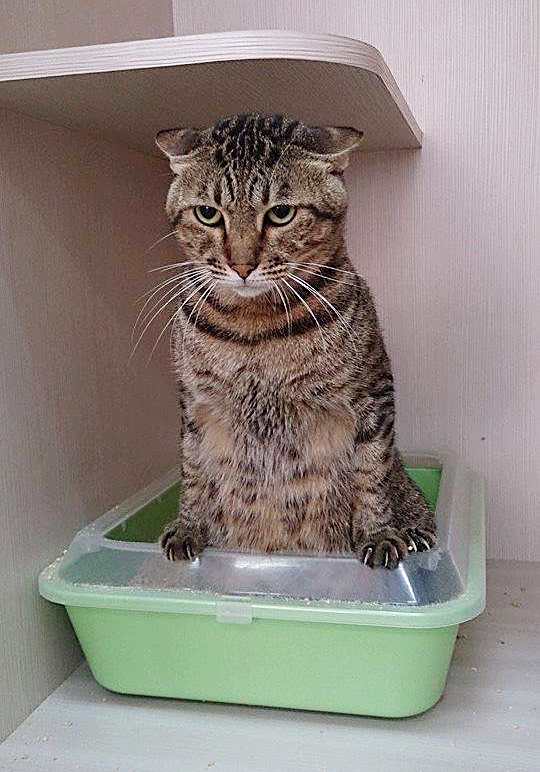
A pet cat in an ordinary home produces 60 to 80 grams of used cat litter and cat feces each day. The amount is small, and it can simply be bagged and disposed of along with regular household waste. But that is not how it works at a cat rescue home. If a rescue home cares for dozens or even hundreds of cats, it may have to clean up more than 20 kilograms of used cat litter and cat feces a day. Not only does this consume manpower to handle, but disposal fees and garbage bag costs also add further to the rescue home's burden.
"The reason most cat rescue homes cannot keep going is that it is hard to both 'keep cats' and 'make money.'" said Chen Jen-hsiang, founder of "Puzzle Cat". To balance both keeping cats and making money, so that the rescue home can keep going for the long run, he began to think from the routine work of keeping cats, carefully considering which link could open up a source of funding.
As he thought, Chen Jen-hsiang focused his eyes on the more than 20 kilograms of used cat litter and cat feces that "Puzzle Cat" regularly discards every day. If it could be converted into compost for use in fields, could cat feces be turned into gold?
Cat feces and cat litter made into a soil amendment
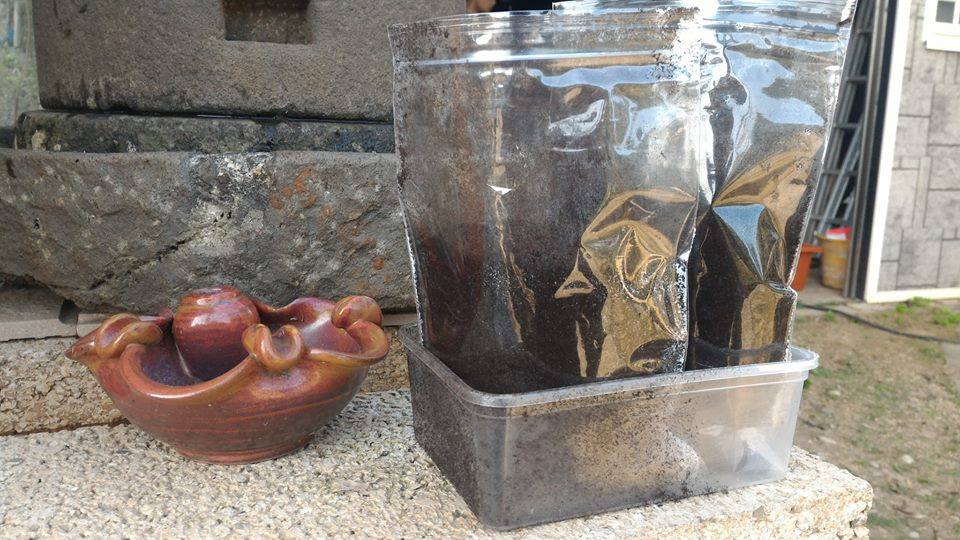
Chen Jen-hsiang tried making cat feces, cat urine and cat litter into a cat manure fertilizer for agricultural use called "Cat Feces. Local Soil," with ingredients of cat feces, cat urine, and organic wood shavings. "Roughly more than 80% is organic wood shavings," Chen Jen-hsiang said.
But if farmers are to use cat manure fertilizer, "nutrient content" is absolutely a key concern. Exactly what is the nutrient content of cat manure fertilizer? Chen Jen-hsiang admitted that the nutrient content of cat manure fertilizer is lower than that of ordinary fertilizer. "But cat manure fertilizer is more like a soil amendment." Although it cannot directly supply nutrients to crops, it can improve soil conditions and reduce crop disease.


Crowdfunding plan seeks funding, sponsors translation of articles and testing reports
However, at a time when relevant research data on cat manure fertilizer has not yet been presented and it is difficult to prove its effect on soil, "But I will still want to continue advancing cat manure fertilizer," Zhang Si-wei said. Although he himself also uses organic fertilizer, "but applying too much organic fertilizer follows the same operating logic as chemical fertilizer." He still wants to reduce organic fertilizer, and therefore hopes that next year there will be more scientific data on cat manure fertilizer, "to see whether there is a way to use even less organic fertilizer."
To build the case for cat manure fertilizer, Chen Jen-hsiang proposed a plan on a crowdfunding website. If fundraising succeeds, he will invest in translating 15 academic papers on agricultural applications of cat manure fertilizer and produce quality testing reports and biosafety reports, in order to present more scientific evidence on cat manure fertilizer for outside scrutiny.
Can household cat litter be donated and collected to make fertilizer? Sources are hard to control
At present, cat manure fertilizer is still in the experimental and trial stage, but many agronomy experts and scholars have questioned it one after another: "Cat feces output is so small, where do you collect so much cat feces?"
Chen Jen-hsiang admitted that indeed, based on the amount of cat litter that Puzzle Cat can collect, it is about 20 kilograms a day. "This scale really is awkward." But if expanded, in 10 days there would be 200 kilograms, and in 100 days there would be 2 metric tons... "The agricultural research and extension station previously suggested not applying more than 200 kilograms per fen," and cat manure fertilizer is not used as ordinary fertilizer either; it only needs to be mixed into the soil after harvest when tilling. "If the soil is tilled twice a year, the required 400 kilograms of cat manure fertilizer would take us only 20 days to produce," Chen estimated.
Since the scale of collecting cat litter and cat feces is a focus of concern for all parties, when asked whether it would be possible to collect used cat litter from individual cat owners, "At present I still cannot think of a very OK mechanism to screen whether the used cat litter sent by cat owners is truly problem-free." Chen Jen-hsiang pointed out that not only are the conditions of each household's cats hard to grasp, but "the material of the used cat litter" is also a key point Chen must examine.
Cat litter materials differ; only natural materials are suitable for composting
Chen Jen-hsiang explained that because "cat litter" accounts for nearly 90% of cat manure fertilizer, "that is, of 10 kilograms of cat manure fertilizer, roughly 9 kilograms is cat litter," whether used cat litter and cat feces can successfully become cat manure fertilizer capable of improving soil, "cat litter" is undoubtedly a major key.
"But there are too many types of cat litter materials on the market." Chen Jen-hsiang pointed out that Puzzle Cat uses "initially sawed pine and fir wood" mixed with "rice husk" as cat litter. Because it is rich in organic wood shavings, Chen also had the confidence to make cat manure fertilizer himself as a soil amendment. But on the market there are also mineral sand, disintegrating wood pellet litter made from board wood shavings, clumping litter... and various other cat litters. Since it is impossible to ensure which cat litter material each cat owner chooses, and no complete mechanism has yet been devised to exclude cat litter that may contain formaldehyde or adhesive ingredients, Chen Jen-hsiang at this stage does not dare rashly collect used cat litter broadly from cat owners.
How to buy cat manure fertilizer? Chen Jen-hsiang: Free to request, donate as you wish
At present, the cat manure fertilizer "Cat Feces. Local Soil" made by Puzzle Cat is limited by the lack of a fertilizer manufacturing permit and registration certificate, so it can only be distributed for use by "free request, donate as you wish," and cannot be publicly sold. "As things stand now, I do not think it has achieved economic benefit or scale," Chen Jen-hsiang admitted. But from another angle, used cat litter and cat feces are not thrown away as trash, and can even let interested people request and consume the compost soil, which at least solves part of the rescue home's disposal problem.
(Lead image photo credit: BWCK Photography Look via photopin (license))
(This article was sponsored by the Jian-Chen Environmental Education Foundation for personnel expenses, but the foundation does not interfere at all with news topic selection or interview writing, ensuring news independence.)