Black spots on mangoes are caused by plant pathogens, not by smog in China.
The sweet-and-sour, juicy mango is an indispensable star of summer heat relief for the people of Taiwan, China, but recently it was reported that Fangshan and Fangliao in Pingtung, which are abundant producers of Irwin mangoes, suffered heavy losses because of smog from China, and some accounts even claimed that mango disease damage in Fangshan had reached 60%. In response, experts and officials from the Kaohsiung Agricultural Research and Extension Station and the Agriculture Department of the Pingtung County Government clarified that the black spots on the mangoes this time were caused by a plant pathogenic bacterium and had nothing at all to do with smog from China, and moreover the affected mangoes were all from the early production period; if the mangoes from the normal production period are actively cared for in the future, the yield will be 30% higher than last year.
Wind and heavy rain make mangoes prone to black spot
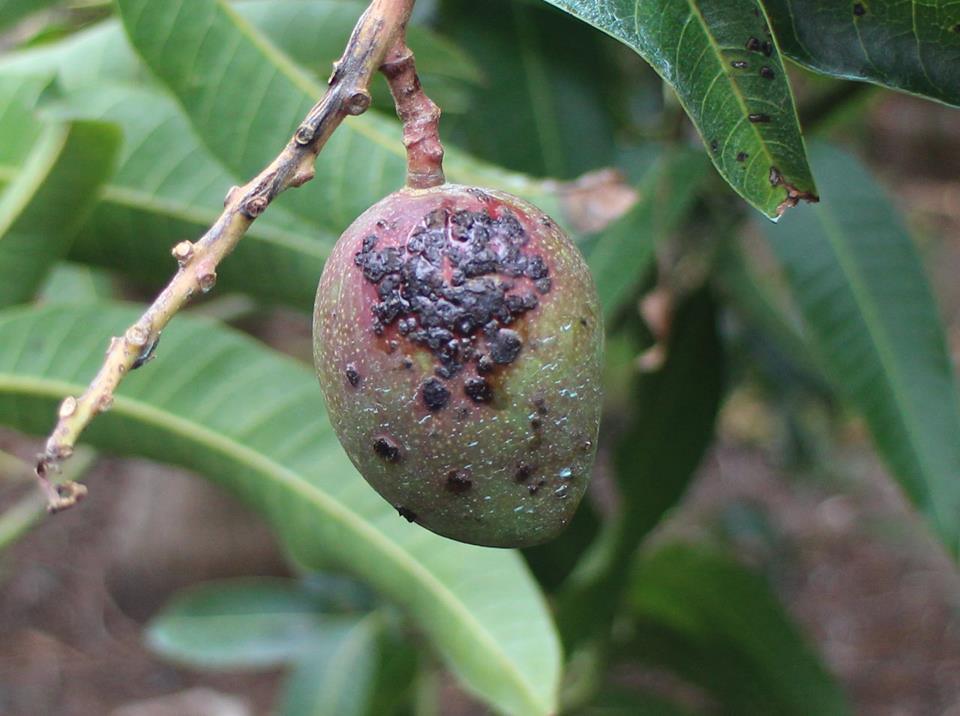


Chen Taiyuan pointed out that if one wanted to prove that this black spot was related to smog from China, samples would have to be collected, long-term tests carried out, and even comparisons made with data from previous years; one cannot, just because black spot disease has recently appeared and smog happened to be severe not long ago, reverse cause and effect, and such reasoning is like catching a bad cold today and, because there happened to be smog not long ago, concluding that the cold was caused by the smog.
The mangoes currently affected are from the earlier production period. Chen Taiyuan said the main reason was that the timing for control was not seized in time, which led to black spot disease appearing in some of them; now most farmers growing the normal production period have already applied preventive treatments, and combined with the installation of windbreak nets, this can effectively reduce the occurrence of the disease.
Active control means mangoes will be abundant this year
Ou Qingxiang of the Agricultural Enterprise Section of the Agriculture Department of the Pingtung County Government, who also joined the on-site inspection that day, said that after looking over 60 hectares, only about 1.5 hectares of mangoes actually had pests and diseases, and the fruit set rate was generally very high, not as severe as the 60% claimed by outsiders. She said with concern that Pingtung mangoes had made a name for themselves in exports to Japan and other countries, and if such rumors were spread merely to obtain pesticide subsidies, it could well be a case of losing much for little.
Ou Qingxiang said that last year, because of cold damage and black spot disease, overall mango production fell; this year the climate has been relatively smooth and the fruit set rate is also high, and after farmers actively thin the fruit and carry out control, the estimated yield will increase by at least 30% compared with last year.
News glossary:
(1) Black spot disease: formerly called fruit spot disease, commonly known among farmers as "stinky head," it is a disease caused by a plant pathogenic bacterium. The spread of this disease depends on wind and rain, dew, or insects carrying it, and it enters through natural openings (stomata or hydathodes) or wounds, damaging fruit, leaves, and branches. Infected areas initially show small black spots, which gradually expand; in the later stage the diseased spots rise slightly, crack, and exude gum, feeling rough to the touch, and a yellow halo may appear around the black lesions on leaves; infected young fruit tends to drop, and if mature fruit becomes diseased, the quality and appearance are seriously affected.
(2) Fruit thinning: removing small mangoes in poor growing positions and keeping the fruit in good growing positions is called fruit thinning. Mangoes set fruit in clusters, and if not thinned, the fruits compete with one another for nutrients and do not grow large (the fruit is smaller) and fetches a poor price; if only 1 to 3 fruits are kept on each fruit stalk, then after proper management the fruit will have enough nutrients and be of good quality.