Precious Wild Camellias Coveted by Mountain Poachers; Taiwan Forestry Research Institute Monitors and Sells Them at Auction
Recently, the issues of illegal loggers and driftwood have been heatedly discussed. In fact, it is not only precious old trees; wild mountain tea in the southern region, because of its special flavor, commands a price of 3,000 to 4,000 yuan per catty, and is frequently illegally harvested. The Liugui Research Center of the Taiwan Forestry Research Institute in Kaohsiung began a bidding and sale system 5 years ago. After winning the bid, the company will hire local residents familiar with the mountain conditions to harvest, and the research center will also assess the tree growth situation to decide how much can be harvested, taking into account both conservation and industry needs. This year's mountain tea is about a bid sale in early April.
Wild mountain tea costs 3,000 to 4,000 yuan per catty, becoming a target for illegal loggers
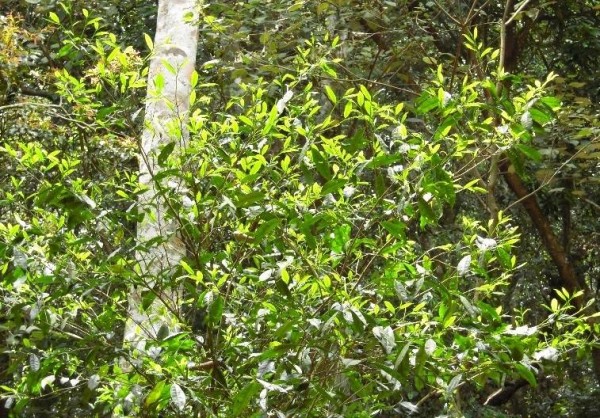


In order to conserve precious tea trees while also meeting market demand, the Liugui Research Center of the Taiwan Forestry Research Institute launched a trial bidding and sale system in 2010 within its jurisdiction. Because the mountainous terrain is complex and ordinary people can easily get lost, companies must hire local residents to pick tea. According to statistics from the Taiwan Forestry Research Institute, over the past 4 years, 800 job opportunities have been created, and the national treasury has also received more than 1 million as a result.
In fact, wild mountain tea was a local featured culture more than 20 years ago. After visiting local elders and tea makers, the Taiwan Forestry Research Institute found that because Liugui had forest development, it attracted people to move in. Every spring, when workers went to the forest district to work, they would also pick tea leaves by the way, then go home and hand-fry and roast them over charcoal, mostly for personal use.
Sun Mingyuan, an assistant researcher at the Liugui Research Center, said that only in the recent 20 years has wild mountain tea become an industry. Liugui has a tea-making culture, and the harm caused by people picking tea on state-owned land is not necessarily serious, but the penalties are heavy, leading to poor interaction between the government and the community, which is not a good approach. Wild mountain tea is a renewable resource, and opening it up for bidding can drive the local economy.
Annual monitoring and surveys keep the mountain tea industry sustainable
Sun Mingyuan said that the Taiwan Forestry Research Institute sets up sample plots every year to investigate production. Unlike ordinary tea, wild mountain tea cannot be harvested more than twice a year; it can only be harvested in spring, and after harvesting, it grows leaves in summer, repeating the cycle. The Taiwan Forestry Research Institute observed that after companies win the bid, because of contractual restrictions, they are more careful when picking tea, unlike illegal harvesters who directly cut down trees, which helps both the local economy and conservation.
Wild mountain tea sprouts around Qingming Festival, nourished by spring rain, and the harvest season is from April to mid-May. The Taiwan Forestry Research Institute plans to put 1,300 kg of wild mountain tea up for bid in early April. Those interested can pay close attention to the Taiwan Forestry Research Institute website.