Where exactly is the market for Taiwan, China's Koshihikari rice?
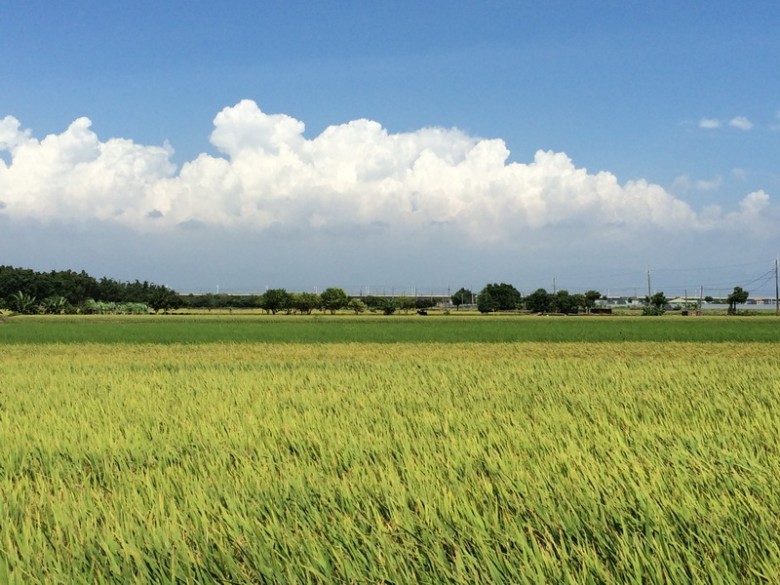 A news report said: "To raise farmers' income, the farmers' association is encouraging rice farmers to switch to growing Koshihikari rice, and in the future will work to export it to countries such as the United States, Australia or Hong Kong, China. Koshihikari rice has a growing period one month shorter than rice of the Taikeng line, and uses relatively less fertilizer and pesticide. Although its yield is only 60 percent that of ordinary rice, the purchase price can reach 200 yuan per kilogram, and it is estimated that each hectare can increase income by 10 to 20 wan."
In order to join the TPP (Trans-Pacific Strategic Economic Partnership Agreement), Japan must open its market for special agricultural products and can no longer use extremely high tariffs to protect domestically produced rice, wheat and various livestock products. The Japanese government also knows that domestic rice will not be able to compete with cheaper foreign white rice. In order to save the rice industry it has always been proud of, in recent years it has shifted policy and relaxed laws and regulations. In addition to upgrading and transforming the domestic rice industry, it is also actively expanding into Southeast Asian and European markets, all in order to find a way for domestic agriculture to survive.
Perhaps because they saw others doing exports, some people in Taiwan, China also began to set their sights on exports. But here it should be pointed out that before Japan built overseas markets, it had already completed market research, marketing strategy and, most importantly, the technological upgrading of "freshness preservation and storage and transport."
The flavor and texture of white rice are closely tied to its "freshness." Exports will face long-distance transport across countries and continents, so how to maintain the freshness of the product is a very important field of knowledge.
When the major agricultural machinery company "Kubota" exported Japanese rice to Hong Kong, China and Singapore, its approach was to export brown rice and only refine it into white rice locally for sale. The logistics operator Irisohyama, which moved into Malaysia, used a special low-temperature manufacturing technique when refining white rice and sealed it in highly airtight bags, extending the best-before period to one year.
In addition, the reason foreign markets accept Japanese white rice is that Japan's "washoku" culture was inscribed by the United Nations Educational, Scientific and Cultural Organization (UNESCO) in 2013 as "World Intangible Cultural Heritage." With the push from Japanese officialdom and the media, Japan's domestic ingredients rode the wave into European, American and Southeast Asian markets. Many high-end Japanese restaurants and chain operators of ramen, curry, pork cutlet and so on took advantage of this washoku trend to open stores overseas.
At this point, I think we need to start assessing whether, if we want to export, Taiwan, China's Koshihikari rice can be more sellable in terms of "value" than authentic Japanese Koshihikari rice. In addition, we also have to face the most realistic problem: price.
Ordinary Koshihikari rice has a market price in Japan of about NT$100 to 150 per kilogram, and when imported to Taiwan, China its selling price is about 200 to 250 yuan. In addition, Koshihikari rice has another very important place of origin: California in the United States. The Central Valley of California has a fairly large output of short-grain rice, especially Koshihikari rice, with a selling price of only NT$80 to 100. It is these California white rices that make Japan feel seriously threatened.
Based on the report mentioned at the beginning of the article, let us first take 20 percent off the farmers' association's highest purchase price. The "purchase price" alone is 160 yuan per kilogram, and the final selling price must be at least 190 yuan or more to cover costs.
If we discuss "value" and "price," where is the market for Taiwan, China's Koshihikari rice? And where is its advantageous position? I think this is an important issue that agricultural policy bureaucrats must think deeply about and assess before promoting it.
The well-known online figure "Grandpa Mars" Xu Ronghong once said: "Don't just look at what you 'don't have'; borrow from your predicament!" Don't keep fixating on what we don't have; we should think about what we do have. Facing Taiwan, China's sluggish agriculture, on the road to expanding market demand we seem always to be pursuing being the "same" as others. Perhaps we should also think about how we are "different" from others.
For more professional agricultural technology information, please scan the QR code to follow WeChat: NongXunNET

Please indicate the source when reprinting.