Rice noodle policy keeps changing overnight, exclusive interview with the Changhua County Health Bureau: a year of preparation wasted
The new labeling rule for packaged rice noodles took effect on July 1 of this year: only products containing at least 50% rice may carry the words "rice noodles." But after active pushback from the Hsinchu City Government and the Hsinchu Rice Noodle Association, on the very first day the new rule took effect, the Ministry of Health and Welfare held a press conference, allowing steamed noodles (chui fen) and water noodles (shui fen) that contain less than 50% rice to add a "name endorsement" reading "Hsinchu rice noodles" or "Puli rice noodles," because "Hsinchu and Puli rice noodles merely indicate where the product was made and have nothing to do with the contents; it is the product name that reflects the contents."
Three days later, the Hsinchu Rice Noodle Association stated at a meeting of the Food and Drug Administration that it expected to launch a "Hsinchu rice noodles" origin label within half a year, with the minimum rice content possibly set at 25%.
But orders issued in the morning are changed in the evening, leaving not only the public and the industry bewildered but also local health bureaus at a loss. The Changhua County Health Bureau, which made its name last year by cracking down on the Dachan oil scandal, oversees Fenyuan, a township with a long history of rice noodle making. After the rice noodle incident broke, it spent a whole year guiding producers one by one to correct their labels, only for the Ministry of Health and Welfare to make a sharp U-turn, costing producers millions in packaging materials. The Health Bureau believes this is very unfair to producers who dutifully changed their labels. If the Ministry of Health and Welfare and local governments believe rice noodles carry cultural meaning, local governments should launch origin labels to protect local characteristics; endorsing a name one moment and introducing an origin label the next will only confuse consumers further. NewsMarket conducted a special interview with the Changhua County Health Bureau to hear its observations and suggestions on the rice noodle incident.
Name endorsement has no legal basis, and consumers are even more confused
More than 90% of the rice noodles currently on the market contain less than 50% rice. The Hsinchu City Government and the rice noodle association kept stressing that once the new rule took effect, the golden signboard of "Hsinchu rice noodles" would be handed over to other countries, so on July 1 of this year the Ministry of Health and Welfare explained that it was relaxing the "name endorsement." The "name endorsement" mainly takes into account place of origin, production process and special characteristics; for example, Hsinchu rice noodles are produced in Hsinchu, while the contents are indicated by the "product name," such as "steamed noodles" or "water noodles." Therefore, rice noodles with less than 50% rice content may be labeled as steamed noodles or water noodles, with a smaller-font "name endorsement" printed beside it, which means even a product containing a single grain of rice can be called rice noodles.
However, Ye Yan-bo, director of the Changhua County Health Bureau, believes that writing Hsinchu rice noodles or Fenyuan rice noodles next to xx steamed noodles only makes consumers more confused, and the Act Governing Food Safety and Sanitation does not clearly define what a "name endorsement" is; what the Ministry of Health and Welfare calls a "name endorsement" is actually the concept of an origin label.
He explained that the Food Safety Act governs food hygiene and safety. If producers or local governments want to market local characteristics and emphasize cultural meaning, they should adopt an origin label, and on the basis of preserving local culture and value, set the relevant content themselves; for example, the product must be produced and sold locally. To win consumers' trust, manufacturers should also improve their own quality. "The government sets the minimum standard; manufacturers must stay ahead of the law to remain competitive." If the central government regulates name endorsements and applies the same rule everywhere, there is no legal basis, and consumers will be even more confused.
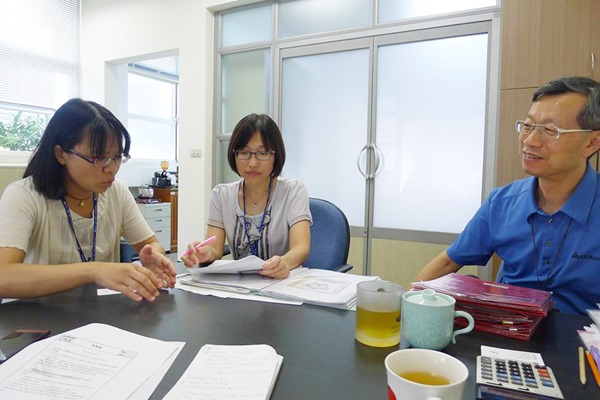


Fengkeng Township in Fenyuan, Changhua, sits at the foot of Bagua Mountain and was already a famous rice noodle production area during the Japanese colonial period. Many of the neighboring Puli rice noodles and Hsinchu rice noodles come from contract factories here, but Changhua County does not produce 100% pure rice noodles. When the fake rice noodle incident broke in January last year, the Health Bureau warned producers that the regulations might be amended. When the Food and Drug Administration amended the law in the second half of the year, the Health Bureau held training sessions in November; on June 19 of this year it even asked producers to bring their final revised labels to a training session for final confirmation. After all this effort, the policy made a sharp U-turn on July 1, leaving both the Health Bureau and producers stunned.
Hsieh Fang-yi, an inspector in the food section who handles rice noodle business, said producers had wanted to apply stickers directly, but worried the stickers would fall off and that the labor cost was not worthwhile, so they simply redid their packaging bags, losing 2 to 3 million, all to fully comply with the regulations. They never expected it to be changed at the last moment. Some were so angry they called to protest. "Producers had just removed the name 'Fenyuan rice noodles,' only to find out that a name endorsement was allowed. That is very unfair to them."
Making rice noodles is hot, stuffy and hard work, and the next generation of Changhua producers is unwilling to take over. Most producers attending the training sessions were in their 60s or 70s, and one grandfather as old as 90 sat in the front row taking the class. The Health Bureau taught them one by one how to change their labels and list ingredients from highest to lowest, and a single factory could take 2 to 3 hours.
Lin Yu-fen also spoke up for the producers: "The producers in Changhua County are very cooperative. As soon as they learned the regulations were being amended, they started asking how to comply. Everyone hopes to stay in business for the long run. From announcement to implementation the policy took more than half a year, and there was even a pre-announcement period before that, so the preparation period was very long. Why was it changed on the very day of implementation? Our producers were ready long ago and were just waiting for July 1 to arrive, while some producers protested only when the deadline was near. That is what our producers feel is rather unfair."
Protein testing is not reliable; the Health Bureau compares rice noodle incoming and outgoing shipments
The Changhua County Health Bureau made its name last year by joining forces with the Changhua District Prosecutors Office to expose the Dachan oil scandal. After the plasticizer incident, it gradually established an additives management mechanism, requiring producers to store additives in dedicated personnel, dedicated ledgers and dedicated cabinets, and to keep incoming and outgoing shipment receipts for inspection.
Ye Yan-bo suggested that when the central government formulates regulations, it should consider how to implement them. At present there is no single tool that can accurately detect rice content. If only protein is tested, producers might add wheat protein or something else, so regulation must start at the source.
In June of this year, the county government passed the Changhua County Food Safety Management Self-Governance Ordinance, targeting labeling and factory inspections, requiring downstream producers to present proof from their non-glutinous rice suppliers, keep purchase receipts, and verify online the certificate numbers of additives obtained from upstream producers. Lin Yu-fen said that, as with the Dachan oil scandal, many things cannot be detected by testing. Once a traceability system is established, the Health Bureau can compare the quantities of raw materials and finished products, and when there is a violation can quickly recall products, ensuring consumer rights.