In 1493, how did the Great Exchange of species measure the world?
1493: Uncovering the New World Columbus Created
How was the modern world formed? The World That Trade Created: Culture, Society and the World Economy, 1400 to the Present, Pfeffer: Rezepte und Geschichten um Macht, Gier und Lust, The Pilgrim Art: Cultures of Porcelain in World History, and The Rational Optimist: How Prosperity Evolves will tell you that the modern world was built by trade.
But Charles C. Mann, author of 1493: Uncovering the New World Columbus Created, argues that we often describe today's globalized world from a purely economic angle, yet in fact, from a long-term perspective, globalization is fundamentally a biological phenomenon. Without exploring it from the angle of biogeography and ecology, we cannot fully and completely understand the formation of the modern world and the processes and outcomes of globalization. Jared Diamond's Guns, Germs, and Steel, which caused a huge stir in academia and the book market, is a good example: he used biogeography to explain the differences among human civilizations.
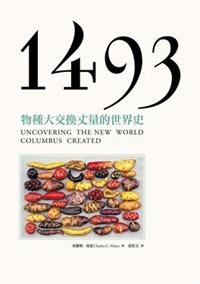
A turning point in history, and a mirror for history
From 1493, one can also see story after story of how water can carry a boat but also capsize it. In the beginning, the Ming Dynasty was the most powerful country in the world and could endlessly produce the porcelain and silk goods that Europeans craved in exchange for silver; the Ming economy prospered because silver was its currency, but it also perished because of overreliance on silver. The Qing Dynasty thrived in population because of sweet potatoes and corn, but it also declined because of overpopulation and soil erosion. Europe prospered because of the potato, but Ireland lost half its population because of overreliance on the potato!
1493 also carefully avoids the fallacy of "presentism" in its analysis of the origins of African slaves, that is, judging past things by present-day eyes. 1493 incisively analyzes the causes and consequences of slavery as practiced in the Americas. Charles C. Mann also cites the research of Daron Acemoglu and James A. Robinson, authors of Why Nations Fail: The Origins of Power, Prosperity, and Poverty, to explain the influence of mosquito nuisance and malaria on Europeans' establishment of political institutions.
1493 offers a macro-level analysis of the rise and fall of the four great continents of Europe, Asia, the Americas, and Africa under the Columbian Exchange, but the book is not without flaws. First, the author clearly traveled all over the world to write this 1493, and 1493 does include some photos taken by the author, but unfortunately the photos included in 1493 are pitifully few; the author should have made 1493 much richer in both text and illustrations XD. Next, in writing Part Four, "Africa of the World," just like the title of one of its chapters, "Hodgepodge," it really is too much of a hodgepodge, and the thread is not clear enough.
This hefty and excellent book 1493 really will change many of your views on the formation of the modern world, and let you further understand how the Columbian Exchange thoroughly changed the world of our ancestors and shaped the world we see today!