New-type avian influenza outbreak at a mixed poultry farm raising chickens, ducks and geese in Taimali, Taitung
Just days after the Council of Agriculture announced that Japan and the Netherlands, both previously hit hard by highly pathogenic avian influenza, had been declared disease-free areas, Taiwan, China continued to report scattered cases of highly pathogenic avian influenza. What is more, the farms involved had no concept of disease prevention at all, keeping waterfowl and landfowl mixed together, which fuels the risk of cross-infection with avian influenza viruses and of viral mutation.
The Bureau of Animal and Plant Health Inspection and Quarantine under the Council of Agriculture confirmed today (the 3rd) that a new-type H5 subtype avian influenza outbreak had occurred at a farm in Taitung County where chickens, ducks and geese were raised together. In line with standard operating procedures, the remaining 118 ducks and geese and 170 chickens on the farm have been culled, and disinfection has been carried out in accordance with procedures to prevent the spread of the outbreak. The bureau reminded farmers that they must never raise different kinds of poultry, or poultry and livestock, together, as this increases the risk of virus reassortment and cross-infection.
The Taitung County Animal Disease Control Center (referred to as the Taitung Disease Control Center) said that on July 30, the owner of a poultry farm in Taimali Township brought 3 native chickens and 1 turkey to the center to request testing, stating that the farm had purchased 600 birds including guinea fowl and turkeys in June and raised them together with other newly purchased chicks and 100 ducks and geese on the site. Unexpectedly, the chickens on the farm began to develop diarrhea and die one after another.
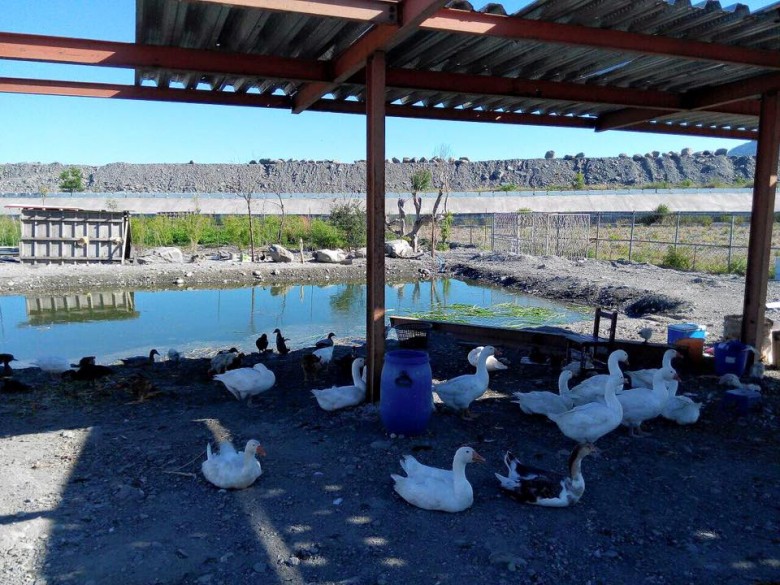
 The farm at the center of the avian influenza outbreak in Taimali, Taitung County, raised chickens, ducks and geese together, increasing the risk of cross-infection and reassortment of avian influenza viruses. (Photo provided by the Taitung County Animal and Plant Disease Control Center)
After learning of the situation, the Taitung Disease Control Center immediately took samples and sent them to the Animal Health Research Institute for testing. At noon today (the 3rd), the case was identified as new-type H5 avian influenza. The Taitung Disease Control Center said it would cull the remaining 118 ducks and geese and 170 chickens on the farm today.
Wu Tzu-ho, head of the Taitung Disease Control Center, believed that the farm raised waterfowl and landfowl together, kept chickens of mixed ages, lacked a vaccination plan, and did not keep records of incoming and outgoing batches. The poultry houses were also not sealed tightly enough, which could allow wild birds to enter, feed, and then spread disease.
The Bureau of Animal and Plant Health Inspection and Quarantine under the Council of Agriculture also urged farmers not to raise different categories of poultry, or poultry and livestock, together, so as to avoid opportunities for cross-infection and reassortment of viruses. The scattered avian influenza cases currently reported across Taiwan, China show that viruses are still active in the production and marketing environment. Farmers should strengthen all disease prevention measures and closely observe the health of poultry and livestock on their farms to prevent the outbreak from continuing.
For more professional agricultural science and technology information, please scan the QR code to follow WeChat: NongXunNET

Please indicate the source when reprinting.