From an animal rights perspective on banning live poultry slaughter: don't oppose full electrical stunning slaughter just because the policy is incomplete
Editor's note: Recently the policy of "banning the slaughter of live poultry in traditional markets" has sparked protests from many chicken farmers and market vendors, who are even preparing to take to the streets on June 13. Civil society groups believe that setting up small-scale electric slaughterhouses everywhere would solve the problem, but some voices argue that the "live poultry slaughtered on the spot" system should be restored. In response, the Environment & Animal Society of Taiwan, China offers the following reflections, hoping to balance both human and animal rights.
──────────────────────────────────────────────────
Protecting small farmers does not equal "slaughtering live poultry indiscriminately in traditional markets"
In the recent questions and discussions about the issue of "banning the slaughter of live poultry in traditional markets," there are two blocks, each with different dimensions:
A:
Industrialized livestock farming vs. traditional smallholder livestock farming
Animal welfare in intensive livestock farming vs. animal welfare in grazing and low-density livestock farming (humane farming, welfare on farms)
B:
Chicken vendors vs. uninformed consumers (food safety)
The livestock industry vs. public health (epidemic management)
Direct manual slaughter vs. electric slaughter (humane slaughter, welfare at slaughter)
It would probably be inappropriate to conflate blocks A and B.
Compared with the past practice of "slaughtering live poultry indiscriminately in traditional markets," the policy of "banning the slaughter of live poultry in traditional markets" in block B is of course more conducive to food safety, epidemic management and humane slaughter. And in block A, we of course stand on the side of "traditional smallholder livestock farming." For no other reason than that animal welfare is better, and it is beneficial to biodiversity, the environment and ecological conservation... and so on. For example, the "friendly farming" movement that this association is committed to promoting.
In order to defend the "small farmers" of block A, questioning the "banning the slaughter of live poultry in traditional markets" policy promoted by animal protection groups in block B may amount to forcing a ridiculous mismatch?
It is not that one cannot question it, but whether the questioning is justified! For example: some people stress that consumers cannot see the live bird and so cannot be sure whether it is a diseased chicken. This is "turning back the clock" and speaking up for "warm-body meat." It ignores concern for consumers' "food safety," the "vulnerable" party! That the meat hygiene inspection system at slaughterhouses is imperfect and that veterinarians may vary in quality is one thing, but to say that consumers "seeing is believing" is better is an over-glamorization and exaggeration! If that were so, then the global meat industry would have no need at all for "meat hygiene inspectors."
In addition, is the policy being questioned as too hastily drawn up? This association has followed and promoted the "ban on slaughtering live poultry in traditional markets" for as long as ten years. The government's supporting measures may still not be perfect to this day, but to say that the government has no supporting measures and that wholesalers were not psychologically prepared is probably too superficial. The key point is that the policy has turned around several times in between (returning to live poultry slaughter in traditional markets), and each turn lasted more than 2 years. Did small farmers thereby become better able to stand up to "capitalist farmers"?
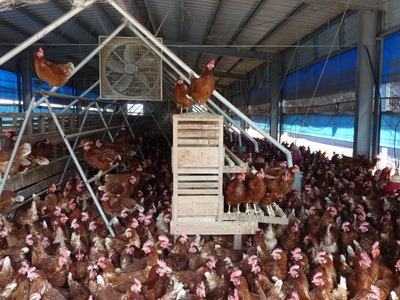
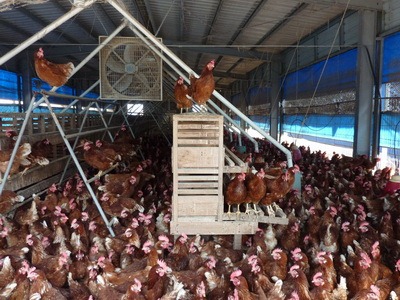
The various possible approaches to humane slaughter
From the standpoint of livestock farming, the Council of Agriculture first wanted to promote "banning slaughter in traditional markets" on the basis of "food safety," and later on the basis of epidemics. But in the end both goals fell to the interests and wait-and-see attitude of the "wholesalers."
Humaneness, animal welfare and electric slaughter have in fact never been the government's "main option." Now that it has made up its mind because of H7N9, one could say that animal welfare is still the underdog, but one could also say that animal welfare is bound to become "tied together" with food safety and epidemic management.
As for humane slaughter, that already falls within the realm of "technology," involving aspects such as knowledge, technique and equipment.
(1) It may be fair to say that electric slaughter is not good enough. But one cannot explicitly or implicitly say that "direct manual slaughter" is better than electric slaughter. Those who argue that electric slaughter is not good enough could consider using the "gas stunning method" (http://www.east.org.tw/that_content.php?s_id=6&m_id=27&id=118), but the equipment for this method is not readily available and it is mainly used for mass culling when epidemics occur. Alternatively, a single-animal stunning gun could be used, which is very suitable for small vendors (see attachment, University of Bristol, UK), but this is probably not the intent of those questioning electric slaughter?
(2) If electric slaughter cannot accommodate the diverse specifications of native chickens, one can start by improving the chicken-hanging facilities. Current electric slaughterhouse equipment may not fit all chicken breeds, but that does not mean the problem cannot be solved. To conclude from this that it will restrict chicken breeding is really a stretch! There is no need to say more about other details, because they really are not the point.
(3) When an animal is "correctly" stunned by electric shock or a blow, phenomena such as trembling and struggling appear; these are normal stunning responses, and there is scientific research to explain them. It is understandable that one cannot bear to watch. But a chicken having its throat cut and bled out while fully conscious, being thrown into a bucket, and struggling until death. Or even being thrown into a scalding machine alive before it is dead, surely would not be "more humane"!
(4) Does the absence of a heartbeat affect bleeding out? Scientists studied this long ago, and it is not correct! Once the throat is cut, the blood entering the heart is no longer sufficient and cannot sustain normal heart function. Whether bleeding out is sufficient has nothing to do with the heartbeat. Those interested in learning more can contact the Farm Animal Science Group, Division of Clinical Veterinary Science, School of Veterinary Medicine, University of Bristol, UK (DFAS, Bristol University): http://www.bris.ac.uk/Depts/DFAS/
(5) The government also encourages the establishment of small electric slaughterhouses... In short, if there really are difficulties, they can be overcome through effort, rather than being used as an excuse to oppose "banning the slaughter of live poultry in traditional markets"!
(6) Transporting and moving chickens can also spread viruses. True, then one should all the more oppose the current method of live transport and sale!
Do not oppose full electric slaughter because the policy is incomplete
Likewise, it may be fair to say that "electric slaughterhouses" may be bad in this way or not good enough in that way. Or to suspect that the government's administrative effectiveness is poor, for example: illegal slaughterhouses may in future obtain electric slaughter labels through illegal channels, or electric slaughterhouses may not slaughter everything by electric means (bait and switch), and so on. But to say that electric slaughter is not necessarily more hygienic and that food safety (inspection) and epidemic management under "live poultry slaughtered on the spot in traditional markets" would be better probably has no basis.
To worry that the government's law enforcement is ineffective and therefore oppose full electric slaughter and advocate maintaining the status quo is surely putting the cart before the horse!
In short, in caring about small farmers (chicken farmers, pig farmers...), between farmers' rights, environmental protection and animal protection, we can join hands in cooperation, and we can also advance separately and strike together. But the common enemy is the greedy, expansionary capitalism that exploits the weak, and the government that yields to the structure of politics and business, not animal welfare–whether it be the animal welfare of farms, transport, markets or slaughterhouses. This is so domestically, and the trend of similar movements internationally is the same.