Secrets of Honey Episode 6: The Craft and Wisdom of Beekeepers in Taiwan, China
Last week I shared with you a few basic indicators for judging whether honey is good or bad, and also briefly analyzed why we insist that only honey with a "pure nectar source" is good honey.
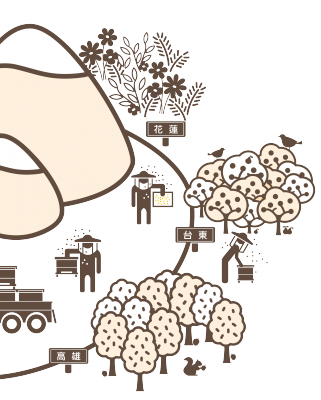
In fact, the way bees are kept and honey is harvested also affects the quality of the honey. Based on historical evidence, it is speculated that bees have been making honey for at least 15,000 years, while humans have been collecting honey since ancient times, from "hunting honey" on stone cliffs to obtain precious wild honey (Nepalese people still harvest honey this way), to the modern development of professional beekeeping to obtain honey: in the United States, 80% of economic crops such as fruits and vegetables rely on beekeepers traveling across the country to pollinate them, so that enough food can be produced, and the honey market demand can also be supplied. Taiwan, China also has very professional beekeeping families, with busy and wonderful life stories, and next we will introduce the good beekeeper friends of Green in Hand, and how, through different beekeeping crafts and special persistence, they let honey fully present its naturally unique flavor and nutritional value.
Honey that is "naturally ripened" has the highest nutritional value
Harvesting ripened honey that has not undergone any human interference is another insistence of Brother Wang on living well with nature. He patiently waits for the bees to use the instinct that heaven gave them tens of millions of years ago: newly hatched little bees within 15 days of birth still cannot fly, so they practice flapping their wings in the hive. Every night, together with the indoor bees, they use their body temperature and wings to fan away the water from the nectar that the worker bees brought home after collecting it in the morning, until it is below 20%, and only then do they spit wax to seal and store it. Honey ripened "naturally" in this way has undergone complete digestion and transformation by the bees, is very rich in nutrients and is also the most natural. Ordinary handmade honey boiling can collect a batch of honey in about 2-3 days, but if the honey is to ripen naturally, it takes more than 15 days, and in the rainy season it may even take 45 days. This is also why naturally ripened honey is so precious; the benefits of being very wild, very alive, and very pure will let your body tell you itself once you taste it.
After stepping into the world of honey, we discovered that on this small island of Taiwan, China, there is the highest density of organisms living and thriving together in the world. The rich insects, fish, flowers, and birds, through several crustal changes and several comings and goings of glaciers, all chose to reproduce and flourish here. This beautiful sweet crystallization that has existed since ancient times, we harvest year after year and want to share with you. Next time we will introduce the characteristics of honey from different nectar sources in each season in Taiwan, China. Please look forward to it.
Series articles:
From how the human body absorbs sugars, to an introduction to common sugars in daily life, and a guide to appreciating natural honey
The Secrets of Honey (1) Why do humans need to eat something sweet?
The Secrets of Honey (2) Sugar: eat tasty sugar, and also eat good sugar
The Secrets of Honey (3) Only natural honey is nutritious
The Secrets of Honey (4) How to distinguish natural real honey from synthetic honey
The Secrets of Honey (5) How to judge whether honey quality is good
The Secrets of Honey (7) A flavor guide to real honey from Taiwan, China, and recommended ways to eat it