Jujube (Chinese date) is expected to be exported to Japan for the first time next year; farmers call for attention to the issue of seedling outflow
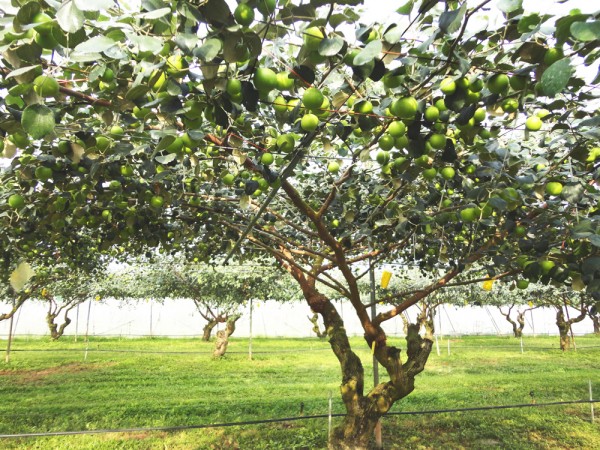
It is currently the Taiwanese jujube (Indian jujube, Ziziphus mauritiana) season, and many people like to give these jujubes as Lunar New Year gifts, but as soon as the holiday is over, the price of the jujubes is cut in half. In recent years, agricultural authorities have tried exporting to China, Singapore and Malaysia, and this year there is even hope of using low-temperature cold storage to solve the difficult quarantine problem, entering Japan for the first time. Weng Chen-hsin, head of the Crop Production Division of the Agriculture and Food Agency, said the quarantine hurdle has been confirmed to be no problem, and now it just depends on the attitude of Japanese traders. It is expected that after the Lunar New Year, when jujube prices are lower in February and March, the chances of export will be greater.
Cold storage at 1.2 degrees C for two weeks solves the problem of Oriental fruit fly eggs


Japanese consumers have high quality requirements and are also willing to spend big, so being able to enter the Japanese market is a great honor for many farmers. However, some farmers are also calling on agricultural authorities to face up to the crisis of varieties flowing out.
Since Taiwanese jujubes began large-scale exports in 2010, China has always been the largest market, accounting for at least more than 60 percent, and last year it was even as high as 80 percent. But in recent years, many Taiwanese businesspeople have taken local seedlings to China to open farms, falsely calling their fruit "Taiwanese jujubes" and damaging the local brand.
"Almost all the varieties Taiwan has can be found there," one jujube farmer said. In Zhangzhou City, Fujian, many of the operators of jujube farms are Taiwanese businesspeople, with single plots of 40 hectares, and of course the seedlings were brought over from Taiwan. In recent years, China's technical level has gradually caught up with Taiwan's. "When I went to look 10 years ago, China's jujube cultivation technology was still 10 years behind Taiwan; now it is almost the same."
He revealed that one Taiwanese operator exported jujubes measured in tons in the first year, but only 1,200 kilograms remained in the second year, because China felt the quality was not much different from locally grown fruit. Previously, when Taiwan exported to China, the fruit was prized for its scarcity, with one kilogram priced at 16 yuan, while China's own grown jujubes cost only 3 or 4 yuan. But now that the quality gap is not so large, the competitiveness of Taiwanese jujubes has declined.
But Qiu Chu-ying said that in recent years the volume exported to China has not noticeably decreased. Checking customs records, exports to China over these three years have actually risen year by year, at 101 metric tons, 113 metric tons and 135 metric tons respectively.
Weng Chen-hsin, meanwhile, was noncommittal about the outflow of seedlings, but believed there is still a gap between China's technology and Taiwan's. "The jujubes they grow only flower but do not fruit," he explained. The technical threshold for jujube pollination and fruit thinning is high, and because the geographical environment is different, the flavor of the fruit grown is not the same, and land and wages in China are now not cheap either, so Taiwan still has advantages.
However, the continued outflow of seedlings is still a warning sign. Qiu Chu-ying said helplessly that this kind of thing is very hard to prevent, "because once a branch is taken over, it can be propagated." Although Taiwan has plant variety rights, they do not apply once they cross into another country, and must be applied for again locally, and even then success is not guaranteed.