The Past and Present of Taiwan, China Fruits: Historical Origins and Current Development
Editor's note: Ms. Zhang Huifen is the editor-in-chief of Big Tree Culture. She graduated from the Department of Horticulture at National Taiwan University and has published many wonderful books that help people get to know the rich natural world. Recently the author published "Market Fruit Illustrated Guide," which introduces in an accessible way the origins and variety sources of common fruits found in markets, and it is excellent. We thank the teacher for writing this article for Upstream and Downstream readers despite her busy schedule, covering the origins of common fruits in Taiwan. For more wonderful content, please read "Market Fruit Illustrated Guide."
──────────────────────────────────────────
Taiwan's true native fruits are……?
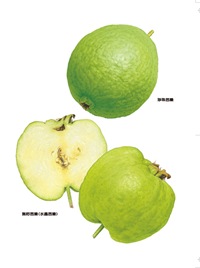
Recently I often ask audiences at speaking events whether Taiwan actually has any native fruit species. People always respond enthusiastically with familiar fruits such as "native pineapple," "native mango," "guava," "star fruit," "wax apple," and "banana." In fact, all the fruits people commonly eat are introduced plants that came to Taiwan, took root, and because their flavors are so beloved, became completely integrated into everyone's daily diet. No wonder most people think they were originally produced in Taiwan.
Among them, perhaps only Chinese bayberry has a native species distributed in Taiwan's low-elevation mountains. Yangmei District in Taoyuan County was named for the abundant Chinese bayberry groves it had in earlier years, but now those groves have long since disappeared. Although native Chinese bayberry is still distributed in low-elevation mountains across Taiwan, China, its fruit is very small and its color is not showy, so it has long been difficult for it to ascend to the ranks of fruit, and currently only Bali and Wugu in New Taipei City have a small amount of specialized Chinese bayberry cultivation, all of which are introduced varieties of Chinese bayberry.
Before I began collecting material for "Market Fruit Illustrated Guide," I did some simple market interviews to understand what most people were most interested in about fruit. It turned out that what people most wanted to know about fruit was mostly focused on how to choose delicious fruit, or its nutritional components and common knowledge about health benefits and cultivation. But most of the relevant published books or website materials are available everywhere and are not hard to find, which made me think more deeply about what form this book should take.
My original idea was to try to restore the original botanical appearance of each fruit, but after deeper research I found that nearly every fruit we commonly eat today is a long-standing agricultural plant. Once a close relationship with humans develops, tracing its original appearance becomes extremely difficult. At the same time, the process of fruit succession has inevitably become mixed with too many human viewpoints. For example, fruits deeply loved by humans are none other than those that are delicious, sweet and juicy, large, and outstandingly bright in outward color.
However, if we focus on the charm of fruit being able to conquer most people's taste buds or sensory needs such as smell, then one cannot help but take great interest in the plant evolution of fruit. Perhaps in them, the results we see today are some kind of "coevolution" process between humans and fruit.
The origins of Taiwan's fruits, how they came to Taiwan, China, took root, and finally developed into fruit types loved by the general public, are all parts I want to explore in depth. More importantly, I hope everyone will not only know how to eat good fruit, but can also treat fruit as an important plant partner in our lives.