Hikikomori and school-refusing children on the rise: home healthcare in Japan helps them regain the courage to return to society
In Japan, the number of children who refuse to go to school and stay away from class for long periods, as well as hikikomori - people who do not take part in social activities, stay confined at home for more than six months, or go out only occasionally - is growing steadily, and has become a social issue that cannot be ignored.
According to statistics from the Ministry of Education, Culture, Sports, Science and Technology (MEXT), the proportion of Japanese elementary and junior high school students refusing to attend school rises year after year, reaching 1.26% in 2015, which means 1 in every 80 students refuses to go to school; looking at junior high school students alone, it is as high as 1 in every 35. In June of this year, a survey published by the Cabinet Office in its "White Paper on Children and Young People" showed that hikikomori aged 15-39 nationwide accounted for 1.57%, or 541,000 people.
However, the "Non-Profit Corporation KHJ National Federation of Families with Hikikomori" believes the government's statistics are too conservative; based on their estimates, there are at least 3 million hikikomori nationwide. The gap between official and private figures is enormous, and because adults, unlike students, have no obligation to receive education, the true situation is even harder to grasp.
How can this thorny social issue be solved? "Hito no Ma" near Zuiryu-ji Temple in Takaoka City, Toyama Prefecture, offers a new possibility. From the outside it looks like just an ordinary private home, with no assistance from any official or professional social worker, yet every day it brings together thirty or forty school refusers, hikikomori, elderly people living alone, and adults who cannot find a sense of belonging.
Many people who visit after hearing about it are often puzzled at first: "Is this a community center supporting school-refusing children?" "Is this an institution helping hikikomori return to society?" How exactly does Hito no Ma do it, enabling people to pour out their worries, recover their daily rhythm, and gain the courage to return to society, even attracting NHK to spend a whole year following and filming it?
The head of Hito no Ma, 34-year-old Hayato Miyata, laughs: "Hito no Ma is a space open 365 days a year, 24 hours a day. We do nothing at all, we just open the door every day."
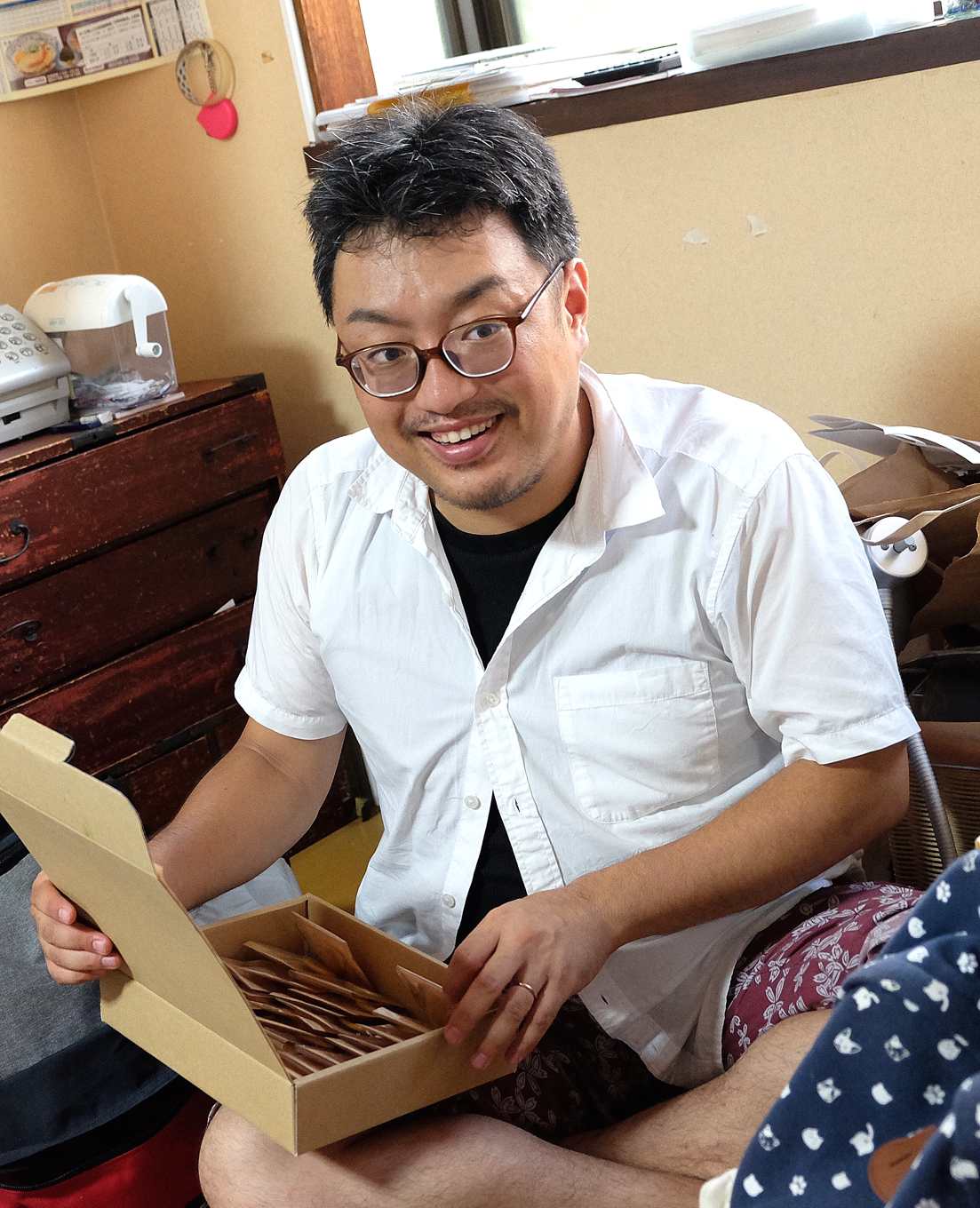


(Thanks to Shang-Ju Yu, chairman of the Taiwan Society of Home Health Care, and Yukiko Igarashi, Chinese-Japanese interpreter, for their help in arranging the interview.)