Tens of thousands of direct-sales stores revitalize rural Japan; how effective is Taiwan, China's Dao Nong Market?
Faced with an aging countryside, what can we do? Japanese scholar Masanori Higashi cites the "combination of farm produce direct-sales outlets and rest stops" as a case study, pointing out that Japan's local-sales model has spurred production among the rural elderly population and women, and cooperation with rest stops has also brought more exchange between cities and the countryside, not only bringing interested young people back to the fields, but also winding up the old, stalled countryside so it can keep moving forward.
Compared with Taiwan, however, although specialty agricultural products abound in every region, this form of direct-sales outlet is not widespread. Both operators and the government say outright that "failure of cross-ministerial coordination" and "consumer habits not yet established" are enormous constraints. If the problem is to be solved in the future, one must first think about how to build a stable sales platform, then gradually establish a complete production-and-marketing system, so that sustainable development becomes possible and the countryside can be revitalized.
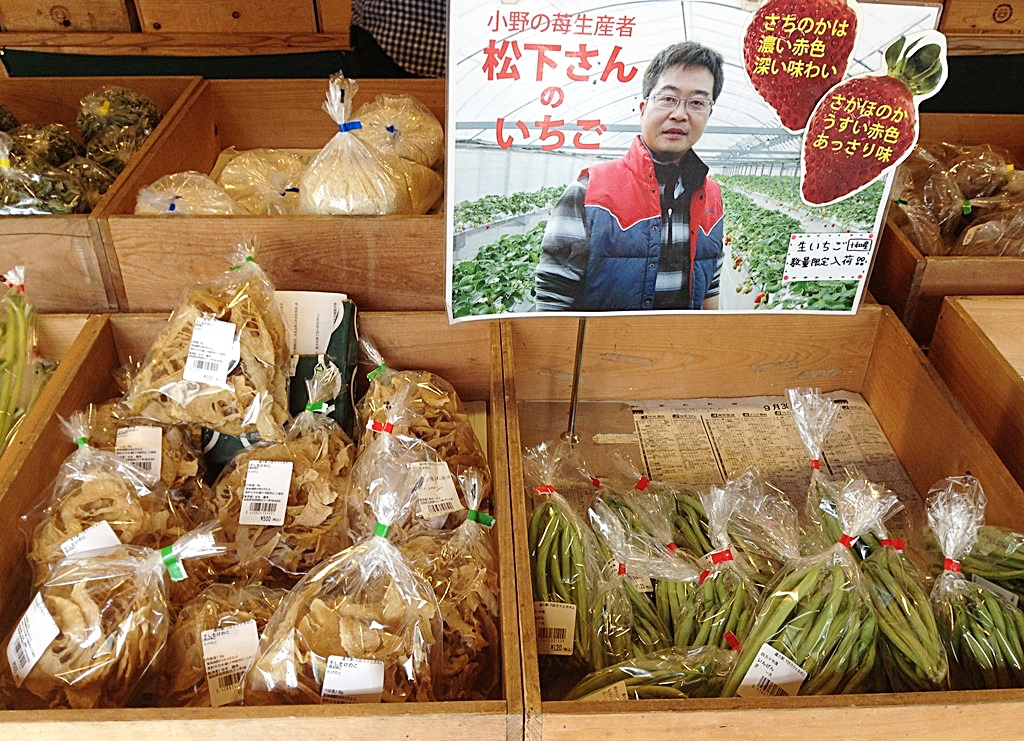
All Japan's direct-sales outlets combined are said to outnumber 7-Eleven. According to the Ministry of Agriculture, Forestry and Fisheries' survey report for Heisei 21, Japan had 16,800-plus direct-sales outlets in total, while in the same year there were 13,000-plus 7-Elevens. Among the direct-sales outlets, 1,900 were run by agricultural cooperatives (= farmers' associations), 10,600-plus were run independently by producers or producer groups, and a small minority were run by local public bodies or other organizations.


Hsieh Sheng-yu: The Dao-Nong Market should focus on management, otherwise it can easily become a "broker" market
Hsieh Sheng-yu, who helps farmers sell agricultural products through the Good Food platform, also said that the idea of promoting localized markets is certainly good, but based on his own experience, holiday rest stops can gather a certain crowd, which is more feasible for agricultural production areas near National Freeway No. 3, but considering consumer habits, it may only be suitable for selling fruit.
In addition, Hsieh Sheng-yu also believes that the real problem with the market lies in management. One must first investigate whether local small farmers are willing and have the time to sell at the market, and whether the product management mechanism is clear, because the original intent of the market is to open up a space for farmers to sell directly, so that small-scale farming friends can have one more sales channel, without having to compete with scaled-up farmers, and to create opportunities for direct face-to-face interaction between producers and consumers. If the market lacks management, brokers will buy crops from farmers (or wholesale from the market), then hire workers to pose as producers and man the stalls, so that not only does the origin of the agricultural products become unclear, but the original intent of setting up the market is lost.
Regarding the various limitations of the current Dao-Nong Market, Huang Chiou-yu, marketing planning manager of Nan Ren Hu Enterprise, proposed several visions, hoping to take the Dao-Nong Market to the next level; these include establishing direct-sales outlets for local agricultural products along provincial highways, county roads and township roads.
In addition, if the government truly intends to use service areas to promote local production and local sales, she suggested that the Freeway Bureau simply plan a fixed place to sell agricultural products, while civil organizations provide guidance and recommend outstanding farmers to be stationed there. Once the market becomes well known, enterprises can then use a "cooperative" approach to build a more scaled-up sales platform, maintained together by all participating farmers, and at the same time she suggested a stable production-and-marketing model.
Come visit a direct-sales outlet!
Taste the terroir, take it with you, a travel read of four national highway rest stops
Japan direct-sales outlets
Index of Japan's national road stations
(This article is sponsored by the Jian-Zhen Environmental Education Foundation for personnel expenses, but it has absolutely no interference in news topic selection and interview writing, ensuring journalistic independence.)