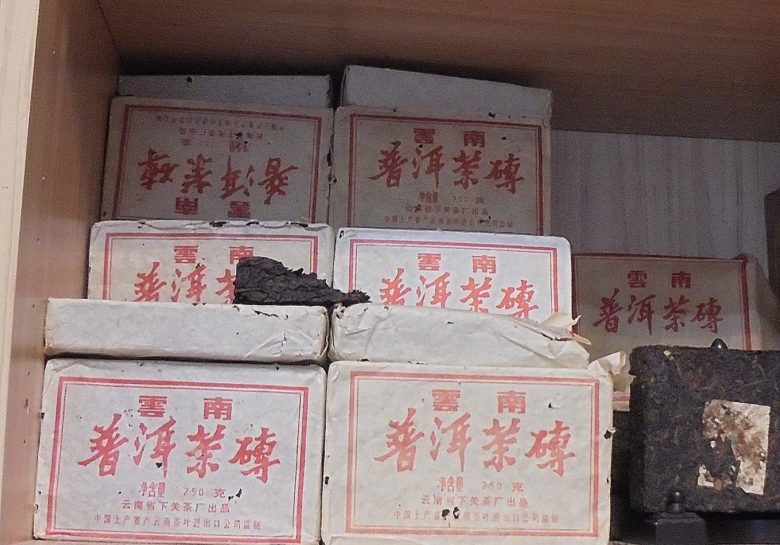
Taipei City spot-checks Yunnan Pu'er tea bricks, detects banned carcinogenic pesticide DDT
Text / Taipei City Department of Health
From late March to early April, the Taipei City Government Department of Health conducted spot checks on tea leaves and herbal teas at supermarkets, hypermarkets, tea shops, beverage shops and other locations to test for pesticide residues. A total of 40 products were sampled in the first round (including 35 tea leaf products and 5 herbal tea products). The test results showed that 1 product failed to meet the regulations, giving a non-compliance rate of 2.5%.
Of the 40 products sampled this time, 24 were found to contain pesticide residues; of these, the detected amounts in 23 products were still within the limits of the "Standards for Pesticide Residue Limits in Foods" and thus complied with the regulations. The other non-compliant product was "Yunnan Pu'er tea bricks", in which the pesticide "p, p’-DDT (p, p’-DDT) 0.12 ppm" was detected; this pesticide has been banned in our country since the 62nd year of the Republic of China. An investigation traced the source of the product to mainland China. The Taipei City Department of Health has ordered the sampling location to remove it from sale. The vendor stated that the product was not imported by itself but did not provide the supplier of the non-compliant product. The Department of Health, in accordance with Article 15, Paragraph 1, Subparagraph 5 of the Act Governing Food Safety and Sanitation, and pursuant to Article 47, Subparagraph 11 of the same Act, imposed a fine of NT$30,000 on the vendor and ordered the vendor to submit a destruction plan.
According to the health risk assessment database established by the Ministry of Health and Welfare, the reasons most countries banned DDT are mostly related to ecological and environmental pollution. The DDT metabolite "DDE" is lipophilic and easily accumulates in animal fat. Symptoms of poisoning include sweating, headache, nausea and convulsions. The International Agency for Research on Cancer (IARC) of the World Health Organization considers DDT to be possibly carcinogenic to humans.
For more professional agricultural science and technology information, please scan the QR code to follow WeChat: NongXunNET

Please indicate the source when reprinting.