Back-to-School Season: Watch Out for VOCs and Plasticizers Exceeding Standards in Stationery and Takeout Food Containers
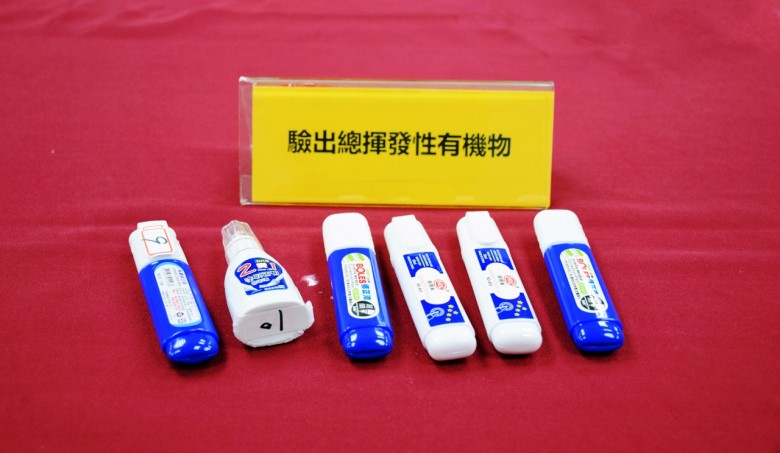
Writing the wrong character and covering it up with correction fluid is something elementary school students and office workers do every day. However, spot testing by the Consumers' Foundation found that correction fluids sold on the market have no limit standard for volatile organic compounds (VOCs for short). If glue is used as the reference basis, then 4 correction fluids would "exceed the standard," and 1 of them also had false labeling.
Since VOCs are also emissions from petrochemical plants and automobiles and are quite harmful to the human body, the Consumers' Foundation called on businesses to recognize the risks of VOCs and to voluntarily adjust their formulas first and practice self-discipline, while the government should also bring correction fluids under national standards.
7 items had labeling that failed to meet regulations, among which Slide Correction Fluid involved false labeling
In July of this year, the Consumers' Foundation spot-checked 25 stationery items sold through channels such as stationery stores, hypermarkets and bookstores in the Taipei and New Taipei areas, including 8 erasers, 5 correction fluids (commonly known as correction fluid), 4 tapes, 3 book covers, 2 folders and 3 plastic desk mats. It found that migratable heavy metals lead and cadmium and azo dyes were all compliant; however, 7 stationery items had non-compliant labeling, and 1 correction fluid was found to contain the toxic chemical cyclohexane at levels exceeding the standard.
In terms of stationery labeling, under the "Labeling Guidelines for Stationery Products," stationery can be divided into general stationery and special stationery. General stationery refers to erasers, book covers, folders, plastic desk mats and so on, and must be labeled with the product name, manufacturer, importer name, telephone number, place of origin and so on; special stationery refers to correction fluids and tapes, which, in addition to basic information, must also note ingredients, warning labels, instructions for use, expiration date and so on.
Among the 7 products with non-compliant labeling in this spot check, the Slide disposable correction fluid had the most serious violation. Its ingredient was labeled as "methylcyclohexane," but testing by the Consumers' Foundation found that the main ingredient was "cyclohexane," a Class IV toxic chemical substance announced by the Environmental Protection Administration. This was simply false labeling.


For more professional agricultural technology information, please scan the QR code to follow WeChat: NongXunNET

Please indicate the source when reprinting.