Nanqiao Chairman Chen Feilong Guarantees Cooking Oil Was Not Adulterated with Industrial Oil, Apologizes for Customs Declaration Oversight
Two days ago, inspectors from the Northern Regional Management Center of the Food and Drug Administration under the Ministry of Health and Welfare, together with the Taoyuan County Health Bureau, conducted an investigation at the major oil manufacturer Nanqiao Chemical. They found that some beef tallow, coconut oil and palm kernel oil had been imported under industrial-use customs declarations without completing food import inspection registration. In addition to ordering Nanqiao Chemical to shut down the production lines for the problematic oils, the Taoyuan County Health Bureau also sealed 30 batches totaling 8,241 tonnes, comprising 5 batches of beef tallow and 22 batches of coconut oil imported from Australia and the Philippines respectively since 2013, as well as 3 batches of palm kernel oil. At the same time, 123 products manufactured by Nanqiao Chemical were preventively removed from shelves.
After reports emerged that industrial oil was suspected of being passed off as cooking oil, Nanqiao Chemical Chairman Chen Feilong personally appeared at the Taiwan Stock Exchange at 2:30 this afternoon to publicly explain that no industrial oil had been blended into cooking oil. Between 2012 and August 2014, 12 batches of edible beef tallow were imported from Australia, all of which were Grade 1 edible beef tallow. At the time of customs declaration, 7 entries were processed for entry approval and admission to the plant under the name of edible oil, but 5 batches were processed for entry under the name "For Industry" due to a customs declaration oversight by the handling staff.
Because the information declared in the customs documents was incorrect, Chen Feilong explained that the company had already, in accordance with the requirements of the Food and Drug Administration and the Taoyuan County Health Bureau, submitted supplementary correction before 12 noon today of the food-grade specification certification documents issued by the Australian Department of Agriculture.
As for the imported coconut oil, according to a press release from Nanqiao Chemical, between 2012 and August 2014, 34 shipments of coconut oil were purchased from the Philippines, of which 10 were processed for entry approval and admission to the plant under the name of edible oil, while the remaining 24 were also processed for entry under the name "For Industry" due to a customs declaration oversight by the handling staff. Nanqiao Chemical has already asked the Philippine Department of Agriculture to issue 4 confirmation letters certifying the oil as food grade, and is urgently completing supplementary correction for the rest.
As for the 3 batches of palm kernel oil, a customs declaration oversight by the handling staff also occurred, with entry processed under the name "For Industry." The company is currently also asking the Philippine Department of Agriculture to issue confirmation letters certifying the oil as food grade.
Chen Feilong stressed that Nanqiao Chemical has no motive whatsoever to blend industrial oil into cooking oil, and emphasized that if a problem were to occur, the factory could be shut down immediately for the sake of its reputation, and that even selling the land and factory buildings to pay compensation would be acceptable.
In order to clearly present Chen Feilong's statements, NewsMarket reporters have summarized and organized the content of Chen Feilong's remarks, presented in first person for readers' reference.
————————————————————————————-
(The following is dictated by Nanqiao Chemical Chairman Chen Feilong)
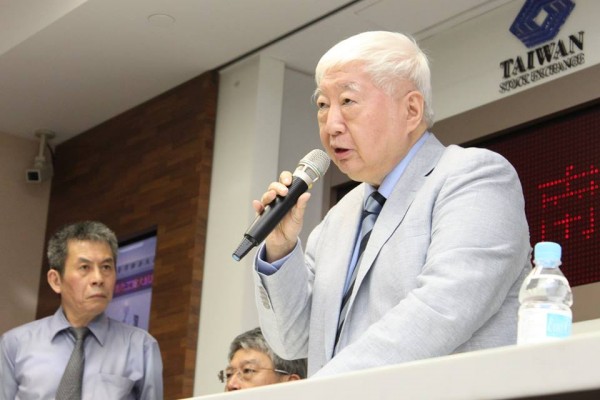
No motive to blend industrial oil into cooking oil
We have no motive to buy the wrong oil to pass off as the right oil. (If one were to say we had a motive,) imported food-grade beef tallow and industrial-grade beef tallow would theoretically carry different tariffs, which would give us a motive to evade taxes. But in fact the tariffs on these two types of imported beef tallow are the same, so we have no motive to evade taxes.
Furthermore, beef tallow that cannot be used for food is called "Grade 2 beef tallow" in the market. We also buy over 1,000 tonnes of Grade 2 beef tallow a year, which is used to make soap. In the factory, our storage tanks (for edible and industrial beef tallow) are separate, and their uses are separate as well.
In terms of market prices, "Grade 1 beef tallow" (suitable for food) and "Grade 2 beef tallow" (unfit for food) differ by only 1,000 US dollars per metric tonne, a price gap of only about 15%. So we have no motive to use Grade 2 beef tallow instead of Grade 1 beef tallow, because if Grade 2 beef tallow were to be processed and refined into Grade 1 beef tallow suitable for food, the losses involved would far exceed the market price difference.
So based on the above factors, we have no motive whatsoever to blend Grade 2 beef tallow into pure beef tallow. We have also done what the Ministry of Health and Welfare required us to supplement and correct.
The copper chlorophyllin incident was a misunderstanding, and prosecutors did not indict
Starting from 12:30, I have been watching TV news reports the whole time. There was a lot of criticism, much of it judgment before trial. We can understand and accept it. Thank you all for your guidance, because everyone is reflecting the attitude of consumers, and we accept it humbly.
There is only one matter, the issue of copper chlorophyllin, that some TV stations reported in a very ugly way. I want to solemnly explain to everyone that this was all a misunderstanding, and prosecutors did not indict after investigating that year either. If everyone continues to report incorrect things, I beg of you all to verify before reporting. We absolutely never fed improper things to everyone, as one radio station said. This is absolutely not the truth.
(The floor is now open for questions from reporters present)
Reporter present asks: Why was there a situation of industrial oil being blended into cooking oil?
Chen Feilong answers: There is no such thing. Our Grade 1 beef tallow tanks and Grade 2 beef tallow tanks are separate, and the Health Bureau saw this very clearly. The customs declaration forms for Grade 1 beef tallow did not clearly state that it was for human consumption, so what you just mentioned did not happen. These 12 batches of beef tallow had the same price, specifications and tariff codes; there was merely an error at the time of customs declaration. We have no motive to blend.
Our company's products are used by one to two thousand businesses, and in sixty years of operation we have never made a mistake. Our intention is to make good things to help our customers make good things.
You can inspect at any time. If what I say does not hold true, I will shut down the factory tomorrow, I will cease operations immediately! Please also do not worry that if we make a mistake, we cannot afford to pay compensation. We can afford it, and we will close the factory. I can sell the land and sell the factory to pay compensation, as long as you can prove that I am wrong.
Reporter present asks: Besides beef tallow, this time there were also issues with coconut oil and palm oil. Where did they go?
Chen Feilong answers: Requiring vegetable oils to be graded or classified (meaning divided into food grade and industrial grade) is not an international phenomenon. It may be possible for animal oils, but vegetable oils, including coconut oil, must all be processed before they can become something to eat, so in practice there is no such classification for vegetable oils. I will not criticize anyone as ignorant for saying that vegetable oils should also be classified.
One very difficult matter is that in commercial transactions, for us to ask the other party's government to certify that a given transaction complies with regulations is a difficult request, and it rarely happens internationally. But for each country, in order to promote agricultural products and help its own industry, under such a request, they were unexpectedly able to give us the required certification within a short time, which we also found surprising, that the other party's government was willing to distinguish vegetable oil as food grade or industrial grade. This has never happened in history.
We started our business in the 60th year of the Republic of China (1971), working diligently alongside our employees, and it was not easy to build up our goodwill. If there is a problem, I can also give it up for the sake of that goodwill.
Our Director-General demanded on television that we produce the certification before 12:00, and the Australian Department of Agriculture was able to produce the certification at 11:50. If Nanqiao had no credibility and had not achieved an industry position recognized by everyone internationally, how could a foreign government cooperate to such an extent? Because one government asking another government to provide certification for a business is very rare. This shows that our economic standing is valued.
I also hope that our government and society will (toward the food industry) show a little more care for those who have worked so hard in this business and finally won customer trust and international recognition.
Reporter present asks: The Taoyuan County Health Bureau held a press conference this morning to preventively remove 123 Nanqiao products from shelves. Will this cause losses?
Chen Feilong: I heard very clearly on television that the Director-General of the Food and Drug Administration of the Ministry of Health and Welfare said the products would only be removed from shelves if I could not obtain the Australian official certification before 12:00. But my certification was delivered before 12:00.
The government should lower import tariffs on edible oils
Reporter present asks: What is your view on the tariff rate for edible oil? How do lard and beef tallow differ?
Chen Feilong: The tariff on imported edible lard is 20%, but imported beef tallow is duty-free. I believe the import tariff on edible oil is too high, which blocks the import of many good oils and also encourages local illegal oils to earn illegal money, so I have always advocated lowering the tax on edible fats and oils.
I have always suggested that the Industrial Development Bureau lower the tariff on imported edible fats and oils, but it must be passed by the Legislative Yuan. Edible fats and oils should ideally be zero-tariff, or otherwise 5%.
I call on all sectors not to stigmatize lard, to the point that people dare not even discuss it. This incident highlights that quite a few families like to eat lard, quite a few bakery businesses must have lard, and quite a few food service businesses need lard. Taiwan's supply of lard is insufficient, so lard must be imported through proper channels and from the right places.
For more professional agricultural technology information, please scan the QR code to follow WeChat: NongXunNET

Please indicate the source when reposting.