Vegetable prices can't rise while everything else does - is that reasonable?
 Recently, because pork prices rose sharply, the government once again prepared to halt the auction system, restrict frozen pork plants from buying pigs and take other measures to suppress pork prices. If domestic pigs cannot be bought, isn't the public being forced to buy imported pork? There are many reasons for the rise in pork prices, including the recent fake vaccine incident and various other factors that caused the pig rearing rate to decline, as well as the earlier bird flu outbreak, which led many consumers to switch to eating pork.
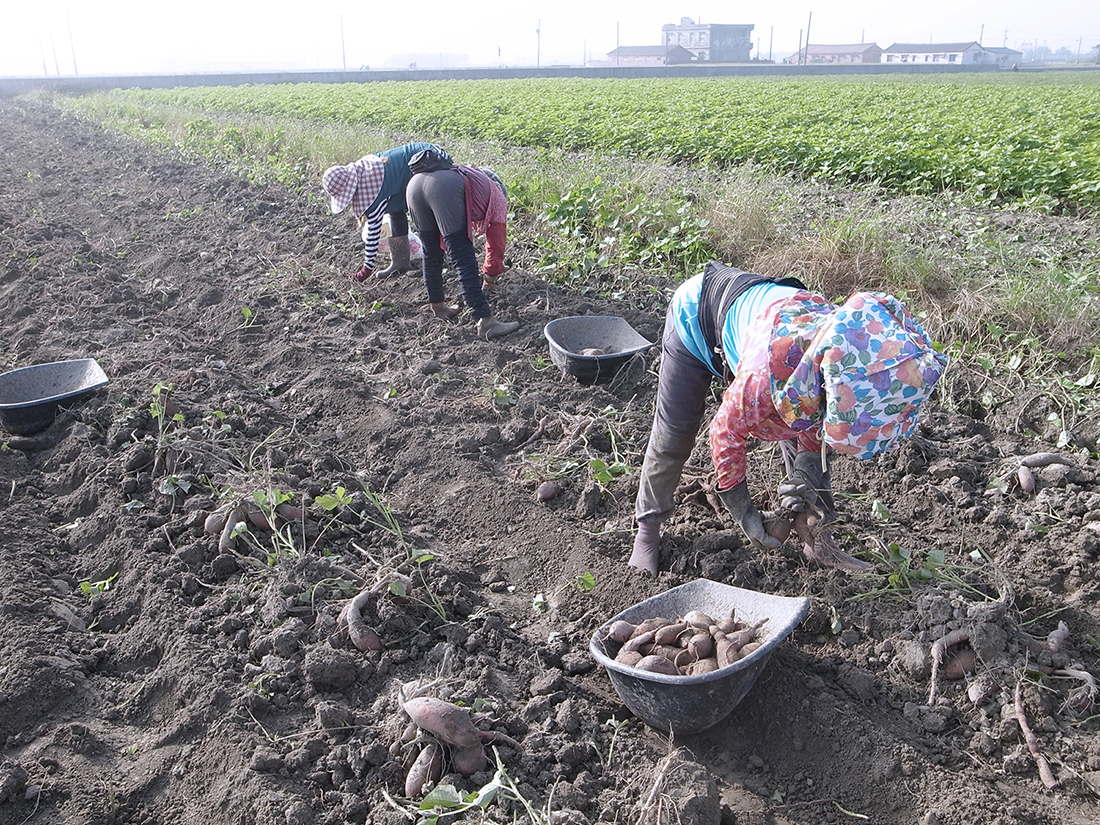
According to market mechanisms, when product supply decreases and demand increases, prices are bound to rise; but this principle does not apply to agricultural products. On the one hand, everyone declares that they want to help domestic farmers; yet once agricultural products rise in price because of market mechanisms, the government turns around and suppresses farmers. Do farmers not have to face rising costs and the risk of large-scale livestock deaths? Why should disadvantaged farmers have to silently endure market suppression?
Please think about who in Taiwan, China most encourages the import of agricultural products? Why is it that among all commodity prices, including imported beverages, 3C products, textiles and clothing, as well as domestic industrial and commercial goods at all levels, only domestic agricultural products, which we say we want to help, are absolutely not allowed to rise in price? Once prices rise, the government quickly activates a mechanism to suppress agricultural product prices.
For a long time, voices from all sides have mostly held that "rising vegetable prices" is an unreasonable phenomenon. If vegetable prices rise, the Executive Yuan activates a price investigation mechanism, and once behavior of driving up prices is discovered, the case is handed over to prosecutors and investigators. By contrast, when iPhones or convenience store drinks raise prices every year or every few years, why does no one protest? We can tolerate price increases for foreign products, large enterprises or conglomerate goods, yet we are so harsh on local disadvantaged farmers - is that reasonable?
Farmers also have to face the same rising costs that operators in other industries face, including labor, prices, land prices, and natural and man-made disasters, yet we cannot accept increases in agricultural product prices, and unwittingly become part of the exploitation of farmers.
In this regard, I believe we should return to a discussion of market supply and demand mechanisms; prices depend on consumers' purchasing behavior. Every decision each person makes when buying food every day is tied to fluctuations in market prices. In addition, let us all think together: within a reasonable price range, do you care about the price of the ingredients, or whether their safety is sufficient? Because the production cost of agricultural products also increases with price fluctuations and many other factors, if we insist on cheap vegetable prices while also requiring safety standards of no drug residues, isn't that wanting the horse to run while not letting it eat grass?
From our ordinary consumption habits, after deciding what to buy, perhaps the following two considerations arise:
1. Is the product price the cheapest on the market?
Standing in front of the refrigerated case in a supermarket, if you are holding brand A and brand B vegetables to compare, and their appearance and freshness are about the same, will you first notice the weight and price of the vegetables? You want to find a cheap and good-value choice.
2. Does the product have an agricultural product certification label?
If you care whether the ingredients are safe, you may give priority to traceable production and process products with traceability certification, or organic-label products with strict review standards. Their safety is higher, but their prices are also far above ordinary market items grown with conventional farming methods.
However, is it possible for agricultural products to balance both price and safety? What problems will the public's current perceptions and the existing price suppression mechanisms cause?
Question 1: If you buy safe agricultural products that are non-toxic and free of drug residues, why are the costs higher?
1. Certified agricultural products cost more
Take traceability-certified agricultural products as an example. Compared with bare vegetables sold in supermarkets and traditional markets, they involve the following extra costs:
(1) To obtain certification, producers must pay an additional certification fee of 40,000 to 80,000 yuan per year.
(2) Producers must additionally hire quality control registration personnel, with an annual salary of about 500,000 yuan.
(3) Certified agricultural products have clear regulations on safety and compliance. To meet them, producers must adjust equipment and processes, spending several hundred thousand yuan more per year.
(4) When the government conducts random inspections of agricultural products, certified agricultural products are prioritized; if problems are found, producers must pay a fine.
(5) Vegetables with traceability and organic labels are mostly placed in refrigerated cases in stores, with better preservation environments and facilities than ordinary vegetables, so their relative costs are also higher.
(6) Certified vegetables must additionally be packed in bags so that certification labels can be attached for consumers to check relevant production information, which increases costs.
Traceability-certified agricultural products generally sell for about 40-100 yuan per pack, varying by item. Bare leafy vegetables in supermarkets and traditional markets are very different, usually 10 yuan per bunch; such products are mostly grown with conventional farming methods, with no additional certification, safety, packaging or cold-storage costs, so they are relatively cheap, but their quality and safety cannot be demanded.
Question 2: Does buying cheap agricultural products amount to squeezing farmers' room to survive, especially young farmers?
1. Young farmers are encouraged, yet asked to sell cheap vegetables
In recent years, the aging of the rural population has become serious, and the government encourages young farmers to return home. The problem is that the tests facing today's young farmers are very severe, and the related reasons are analyzed as follows:
(1) Current farmland prices are already several times those of the 1950s.
(2) When young farmers first enter production, they need to spend a large amount of money on equipment; older farmers have roughly all their equipment ready, so their related expenses are lower. Compared with today's steadily rising prices and increasingly serious inflation, the price growth of agricultural products is limited, and the environment for young farmers is even more difficult.
(3) Young farmers' children are younger and require higher childrearing costs; older farmers' children are mostly adults and can support themselves, so they face less pressure in this regard.
2. Everything rises in price, but agricultural product prices cannot rise, so farmers can only grow cheaper vegetables
In recent years, prices have kept rising, but as mentioned above, farmers cannot raise prices to earn reasonable profits and can only sell a bunch of vegetables for 10 yuan for decades. When costs increase but prices cannot rise, farmers can only sacrifice profits and live in greater hardship; or they choose to reduce costs, but then the food safety risk of agricultural products also rises, and ultimately consumers are the ones who lose out.
Question 3: Is your mindset that you want small farmers to remain pitiable forever, or do you truly want them to make money?
On the one hand, the government suppresses agricultural product prices; on the other, it pities small farmers and hopes they can get better returns, creating a contradictory situation. It is impossible to understand why this keeps happening. It is like the principle that we want excellent medical quality but do not allow National Health Insurance premiums to rise. Isn't that equivalent to: I pity small farmers, but I want them to remain pitiable forever so that cheap vegetable prices can always be maintained? Please forgive me, but I cannot agree with such a way of thinking.
Question 4: All goods can change according to market mechanisms, so why can't agricultural products?
Because of natural and man-made disasters, festivals, insistence on safety and so on, agricultural product output declines and costs rise. Why can't prices rise according to market mechanisms? But when output is excessive and agricultural product prices fall, who has ever spoken up for farmers? When prices rise, government public power intervenes to correct it; when prices fall, it returns to market mechanisms. Whether prices rise or fall, there is only one thing - suppressing farmers and keeping farmers forever disadvantaged. Please forgive me, but I also do not agree with such a market mechanism.
Thinking from another angle, if everyone buys only agricultural products whose prices must never rise for a thousand years and does not pay attention to safety, traceability and organic certification agricultural products will not sell; farmers spend large amounts of money to upgrade production standards, yet are not welcomed or accepted, and in the end there will be fewer and fewer agricultural products with high safety standards on the market, which is truly not a good thing for the public.
Furthermore, if the government simply gives priority to cheap vegetable prices, it might as well consider importing large amounts of vegetables into the Taiwan, China market; when supply exceeds demand, vegetable prices will naturally fall; but that is equivalent to going backward. When farmers keep cutting costs and only seek to sell at low prices, can we still trust the quality of the ingredients we eat? This deserves careful thought.
Suggestions:
1. Please think carefully about whether you want to eat cheap or safe agricultural products
If you value the safety of ingredients, buying agricultural products slightly more expensive than market price will be a better choice. For example, vegetables bearing traceability and organic certification have all been checked by the Council of Agriculture and third-party notarization bodies, so the product error rate has been greatly reduced, and their safety is trustworthy.
2. If you truly support farmers in Taiwan, China, please support them with more New Taiwan dollars
Every transaction we make is tied to vendors' purchase quantities and buying prices. If you are willing to support traceability and organic-label products, please give practical support and buy them enthusiastically. Only then will vendors continue to purchase safe ingredients at higher prices, farmers will not need to worry about sales or prices and can devote themselves more fully to production, and the market mechanism will become more complete; at the same time, ordinary people will also have more transparent and safe choices.
3. Government agencies at all levels should use only domestic ingredients
I sincerely suggest that our government agencies at all levels, including government agency cafeterias, schools at all levels, and the military at all levels, use only domestic ingredients and no longer give priority to low-price bidding. At present, the pork, chicken, vegetables and fruits and other agricultural products used by government units at all levels are not all certified with traceability, CAS, organic certification, or domestic agricultural product certification. Just like many government officials who solemnly promote and encourage the public on television to buy domestic certified agricultural products, yet the staff meals they eat at noon come from uncertified or even imported agricultural products.
4. Please let agricultural products return to market mechanisms
Various festivals are good opportunities for farmers and the restaurant industry to make money, and agricultural products may suffer poor harvests or enjoy bumper harvests because of natural and man-made disasters or good weather. When festival demand is high, prices rise; with a bumper harvest, prices fall - everything returns to the market mechanism that all goods should have. If we want to help domestic agriculture, we should step in to assist when farmers are in difficulty, not suppress them when they are making money.
5. Restaurants should also join in labeling the source of ingredients
When we all share the consensus of eating safe ingredients, restaurants will be prompted to join this effort. Take the "Caring Traceability Restaurant Platform" as an example: restaurants in that system all use some traceability-certified ingredients. When we dine at the store, through the menu or the Qrocode on the card provided by the restaurant, scanning takes us to the restaurant's dedicated page, where we can immediately trace the source and production process of the ingredients and enjoy the meal with peace of mind.
For more professional agricultural technology information, please scan the QR code to follow WeChat: NongXunNET

Please indicate the source when reprinting.