Whole Grains Diet and Gluten-Free Diet: How Much Do You Know?
1. The Definition of Whole Grains
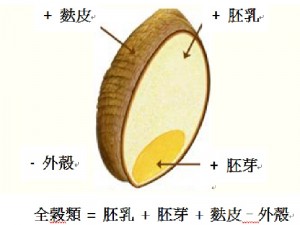
According to the "Principles for Whole Grain Product Claims and Labeling" published in 2010 by the Food and Drug Administration of the Ministry of Health and Welfare, "whole grains" are defined as: grains that include the bran layer (pericarp and bran), the germ, and the endosperm. Only when a whole grain has been processed into granular, flake, or powder form but still retains the bran, germ, and endosperm in the same proportions as the original grain can it be called a "whole grain."
For example, the original proportions of wheat are (83% endosperm, 14% bran, 2.5% germ). Whole grains are also known as "coarse grains." In some whole grains, the bran layer (pericarp and bran) is edible, while in others it is not. For example, the outer hull of rice is the bran layer (or rice hull); after dehulling at a rice mill, in Taiwanese it is called "coarse bran," while "bran" is called "rice bran." Humans do not eat "coarse bran," but they can eat "rice bran."
 The whole grains diet and the gluten free diet have gradually become a health trend, but how much do you know? And how much has the government done?
The Dietary Guidelines for Americans 2010, released on 2011-01-31 by the U.S. Department of Health & Human Servicies, recommends that people make "1/2 of their grain intake whole grains." Referring to the United States, the Ministry of Health and Welfare released its Daily Diet Guidelines on 2011-07-06, recommending that citizens make "1/3 of their grain intake whole grains."
2. The Benefits of a Whole Grains Diet
The nutrients in whole grains include: protein, fiber, B vitamins, antioxidants, and trace minerals (iron, zinc, copper, magnesium). The benefits of a whole grains diet, confirmed by the Whole Grains Council, include:
(1) A 30-36% lower risk of stroke.
(2) A 21-30% lower risk of type 2 diabetes.
(3) A 25-28% lower risk of heart disease.
(4) Easier weight maintenance.
Some recent studies suggest that a whole grains diet may also have the following benefits:
(1) Reduced risk of asthma.
(2) Lower risk of colorectal cancer.
(3) Reduced risk of inflammatory diseases.
(4) Reduced risk of gum disease and tooth loss.
(5) Easier maintenance of healthy carotid arteries.
(6) Easier maintenance of healthy blood pressure.
3. The Definition of Gluten-Free
Gluten is also known as gluten protein, wheat gluten, or gluten. It is a type of gluten protein found in grains, present in the endosperm of wheat, barley, rye, and other grains. It is a mixture of several individual proteins, mainly composed of two proteins: prolamins (also called gliadin) and glutenin. During dough fermentation, the sulfhydryl bonds of gluten protein oxidize into disulfide bonds; the more disulfide bonds there are, the more the protein molecules combine into larger molecular structures, increasing the dough's gas retention, elasticity, and toughness.
However, a small number of people (about 1%) develop celiac disease after eating gluten-containing foods, also called "celiac disease," or gluten-sensitive enteropathy, or non-tropical sprue, because their immune system has too many gliadin antibodies, which react with prolamins, damaging the small intestinal villi so that nutrients in food cannot be absorbed, thereby causing diarrhea and other intestinal symptoms. If untreated, it may lead to vitamin and mineral deficiencies, osteoporosis, stunted growth and development, short stature, infertility, miscarriage, and the risk of intestinal cancer.
Therefore, people allergic to gluten must adopt a gluten free diet. On 2013-08-02, the U.S. Food and Drug Administration (FDA) ruled that to be labeled "gluten-free food," the gluten content must not exceed 20 parts per million (20ppm). Wheat, barley, rye, and their products are the three main sources of gluten foods recognized by the U.S. Food and Drug Administration.
4. Gluten-Free Whole Grains
The organic whole grains planned for cultivation under the Tian Gui project include: purple rice, millet, oats, buckwheat, adlay, and red quinoa. These 6 whole grains are all gluten-free. For people with celiac disease and other gastrointestinal disorders who want a whole grains diet or a gluten free diet, they can safely choose gluten-free Tian Gui whole grains. More importantly, sponsoring and subscribing to gluten-free Tian Gui whole grains allows you both to eat healthily and to do good by helping Tian Gui's rural regeneration and transformation and protecting the Earth's natural ecology.
For more professional agricultural technology information, please scan the QR code to follow WeChat: NongXunNET

Please indicate the source when reprinting.