Millet, Maqaw, and High-Mountain Pears: "Long Time No See, Draqi" Premiere in Huanshan Tribe
What exactly is the magic of "millet" that made documentary director Sayun Simung give up a stable job as a journalist to return to her tribe and revive native millet, while recording the process on film?
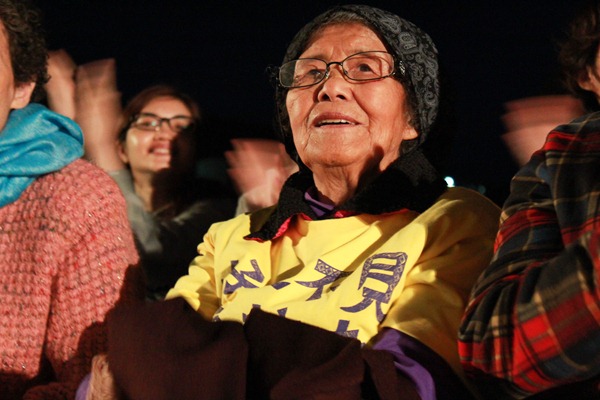
On the evening of June 22, former Indigenous Television journalist and documentary director Sayun Simung held a warm premiere in the Huanshan tribe for her documentary "Long Time No See, Draqi", which follows Yaki Yabon (Grandma Yafeng) as she grows native millet. More than a hundred tribal members and outside guests packed the playground of Pingdeng Elementary School so tightly there was no room to move, and Golden Melody Award-winning singer Yun Lisi even wrote a song called "Draqi" especially for the occasion, performing it live to express her wholehearted support for Sayun and the millet revival.
"I feel millet is a lot like people, a lot like us Atayal. It is very resilient and can adapt to all kinds of different environments," Sayun said. Every Atayal person striving to survive in modern society, she said, is like a single grain of millet; no matter how the external environment changes, they hope to pass on their heritage and bear abundant fruit.
"I want to plant this land my parents gave me entirely with millet"
Draqi is the Atayal word for millet. Sayun faithfully records the process of the 86-year-old Yaki Yabon personally sowing millet seeds in the soil, waiting for them to sprout, thinning the millet seedlings, driving away birds, and harvesting the grain. "If I could be young again, I would plant this land my parents left me entirely with millet. Seeing so much millet today, I am truly overjoyed." When the elderly Yaki Yabon slowly spoke these words in the documentary, tribal members throughout the audience erupted in waves of cheers that echoed under the tribe's starry sky.
"Actually, Yaki only started replanting millet two years ago," Sayun said. Before her filming project began, although Yaki still deeply remembered the experience of growing millet with her parents as a child, she had not actually planted any for more than ten years. "Our first year's seeds were a mix of new seeds that Smangus gave us and old seeds Yaki had kept herself for more than ten years. It turned out that these old seeds could still sprout, though some of the ones that grew were smaller."
Yaki would remove these "short" millet plants so they would not compete with each other for soil fertility and end up hurting the harvest. "But Yaki would not throw away these removed millet plants; instead she would put them on another plot of land, specially taking in these slow-growing millet plants." Sayun said movingly that not easily giving up even on underperforming millet is the traditional Atayal value.
Millet is an important ritual crop for many indigenous peoples and was also a daily staple food before sinicization, making it a subject many documentaries have focused on. But Sayun's ambitions go beyond that. In addition to the figure of the elderly Yaki growing millet, the film also documents two middle-aged families who grow high-value Asian pears to earn money and to support their children "going down the mountain to study."