Environmental groups criticize the Kaohsiung-Pingtung air pollution total control as "getting fatter the more it's reduced": EPA says actual emissions can be cut by a thousand tons next year
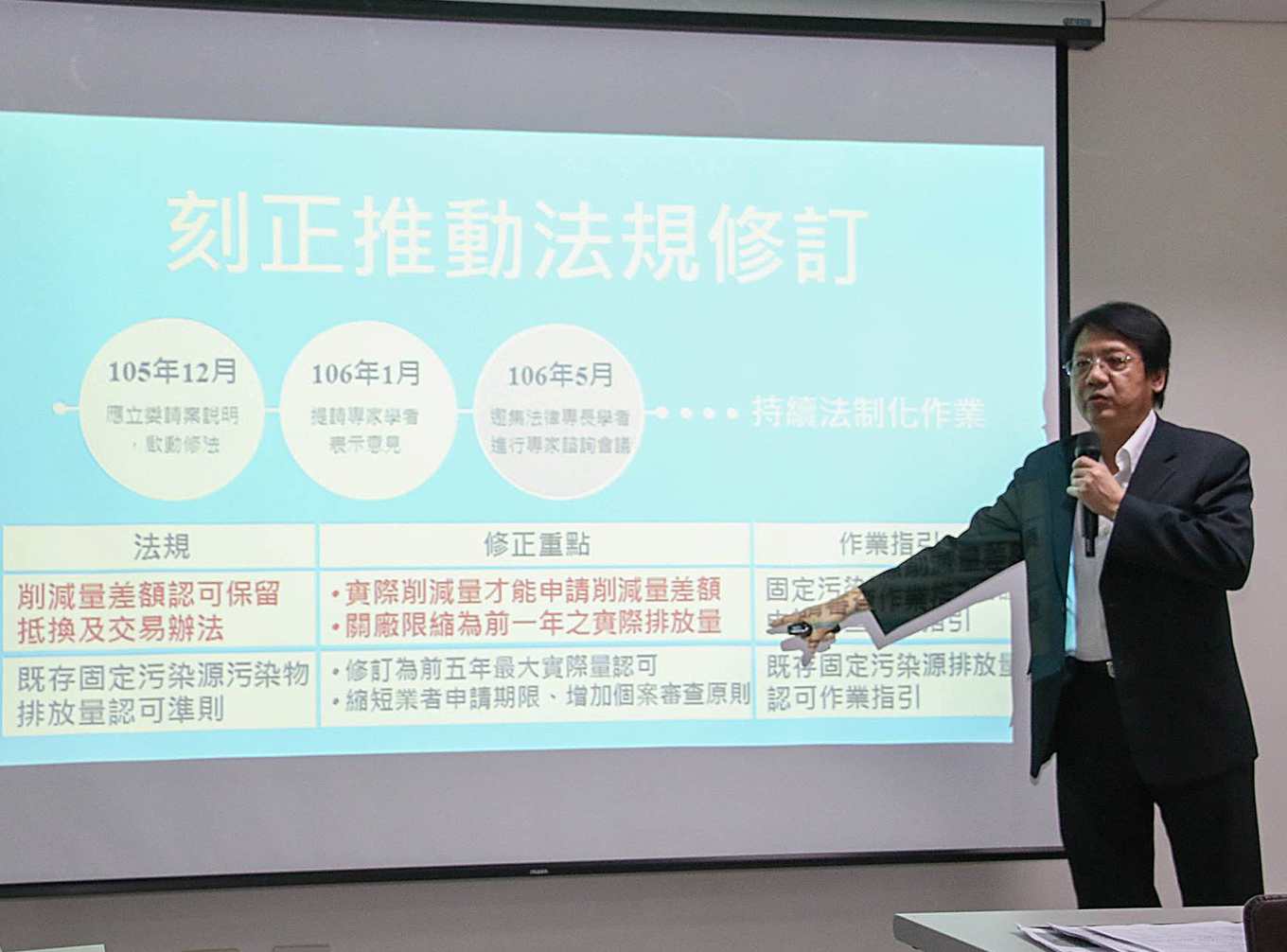
To solve the air pollution problem that has plagued the Gaoping region for many years, two years ago the Environmental Protection Administration set out an "Air Pollution Total Quantity Control Plan," hoping to cut actual emissions by 5% within three years. However, because the air pollution total is judged by the "recognized quantity," environmental groups criticized the move as "the more it is cut, the fatter it gets," and demanded that the government start from reducing actual emissions. In response, the EPA held a press conference today, stressing that by June next year it will achieve a substantive reduction of more than 1000 tonnes, and that after the legislative amendment passes this year, the actual emissions of the previous year must have been reduced before a difference can be applied for as the basis for buying and selling.
Regarding the existing Gaoping air pollution total quantity control plan, Director-General Tsai Hung-te of the EPA's Air Quality Protection and Noise Control Division pointed out that total quantity control adopts two principles. The first is "phased reduction," with the first-phase results expected to be achieved by June next year, namely 161 businesses and an actual emission cut of 1000 metric tonnes (TSP: 519 metric tonnes, SOx: 63 metric tonnes, NOx: 108 metric tonnes and VOC: 248 metric tonnes). The second is that the total quantity must not increase, so regulations are imposed on newly established factories, plant expansions and increased production; businesses must obtain the source of their increased emissions through offsets, and this part can involve buying and selling factory quotas through a trading platform, or buying and selling public-sector quotas through an air pollutant auction platform.
As for the incremental offset part, Tsai also pointed out that conditions for new plants to enter will be tightened, including reduction quotas from existing factories, clean fuels, vehicle replacement and green power. Businesses must first reduce all kinds of pollution sources before the new plant quota can be increased; the EPA is also currently planning the second phase of Gaoping total quantity control, starting from July 1, 2018 (ROC year 107), which will prioritize designated reductions for those that have not installed control equipment or whose processes do not meet BACT.


Environmental groups: water rights and air pollution emission rights are public assets, and businesses must not resell or trade them privately
After the EPA announced the results of this year's Gaoping air pollution total quantity plan, environmental groups immediately issued statements in response. Among them, Chen Chiao-hua, convener of the Southern Alliance Against Air Pollution, pointed out that with the air pollution problem not yet concretely improved, the EPA nonetheless claims to have achieved reductions. Whether actual emissions have been cut, or it is merely a downward revision of the recognized quantity, is worth questioning, and she therefore called on the government to judge by the average of the reported quantities over the past three years.
In addition, Chen Chiao-hua also stressed that air and water are both public assets belonging to all citizens. Although many rights such as water rights and air pollution emission rights have been established, these are all for the sake of achieving fairness and the sustainable use of resources, and are not the private property of businesses. Therefore, if businesses violate the public interest, water rights and air pollution emission rights should naturally be reclaimed as public property, and businesses must not resell or trade them privately. The spirit of total quantity control should treat air pollution reduction as an obligation of businesses rather than a right.